


The Problem with Store-Bought Jams
Walk down any grocery aisle in India and you'll find a rainbow of jams, jellies, and marmalades. While convenient, many of these commercial products have a common secret: they are built on a foundation of sugar. Often, sugar or high-fructose corn syrup
is the first ingredient, overpowering the delicate taste of the fruit itself. To achieve that familiar thick, wobbly texture, manufacturers rely on commercial pectin, thickeners, and gelling agents. The result is a consistent but often lacklustre product where the texture is artificial and the fruit flavour feels like an afterthought, sometimes boosted by 'nature-identical' flavouring substances. You're tasting sweetness more than you are tasting strawberry, mango, or pineapple.
What Are Slow-Churned Preserves?
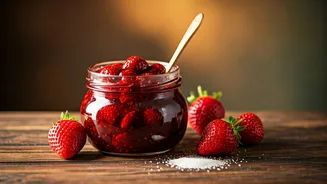
The term 'slow-churned' might bring to mind ice cream, but in the world of preserves, it refers to a philosophy and a method rather than a specific machine. It’s about a patient, slow-cooking process that honours the fruit. Instead of boiling fruit rapidly with a large amount of sugar and pectin, this method involves gently simmering chopped fruit over low heat for an extended period. This slow evaporation process coaxes out water, naturally concentrating the fruit’s sugars and flavours. The fruit breaks down slowly, creating a rich, rustic texture that is part sauce, part jam. It’s not a perfectly smooth gel, but something far more interesting—a celebration of the fruit in its most intense form.
The Flavour-First Philosophy
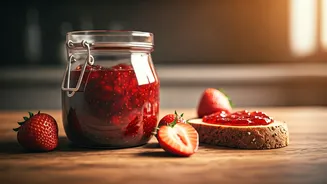
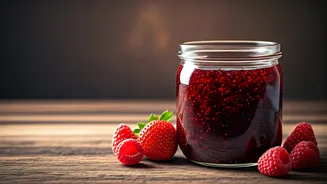
The primary benefit of this method is unparalleled flavour. Because you’re not relying on a mountain of refined sugar or added pectin to create a set, you can use significantly less sugar. This allows the fruit’s natural complexity—its sweetness, its tartness, and its unique aromatic notes—to shine through. A slow-churned strawberry preserve tastes deeply of sun-ripened strawberries, not just red-coloured sugar. A mango preserve made this way captures the floral, tangy essence of the fruit. The texture is also a revelation. It’s softer, more spreadable, and you can feel the natural fibres of the fruit. This is the difference between a condiment and a delicacy.
The Basic Tools You Already Have
Making your own preserves sounds intimidating, evoking images of sterilised jars and complicated canning equipment. But for small, refrigerator-ready batches, the process is incredibly simple. You don't need any special gear to get started. The essential toolkit is likely already in your kitchen: a heavy-bottomed pot or kadai (to prevent scorching), a wooden spoon or spatula, a knife for chopping fruit, and some clean glass jars for storage. The key ingredients are just as simple: fresh, ripe fruit, a moderate amount of sugar (to your taste), and a splash of lemon juice. The lemon juice provides a bit of natural pectin and, more importantly, a touch of acidity that brightens the flavour and helps preserve the colour of the fruit.
A Simple Method to Get Started
Ready to try? Start with your favourite seasonal fruit. A good ratio to begin with is 4 parts fruit to 1 part sugar by weight. Chop your fruit and combine it with the sugar in a bowl. Let it sit for about an hour; this process, called maceration, draws out the fruit’s natural juices. Then, transfer the mixture to your heavy-bottomed pot. Add a generous squeeze of lemon juice and bring it to a gentle simmer over low heat. Let it cook slowly, stirring occasionally to prevent sticking. The mixture will gradually thicken as the water evaporates. After 45 minutes to an hour (or more, depending on the fruit), it will be darker, thicker, and intensely fragrant. To test if it's ready, place a small spoonful on a cold plate; if it wrinkles when you push it with your finger, it’s done. Let it cool and transfer to a clean jar. It will keep in the refrigerator for several weeks.