







The Sticky Side of the King of Fruits
We all know the bliss of slicing into a ripe, fragrant mango. But we also know the frustrating downside: the sticky, milky sap that oozes from the stem. This sap, or latex, isn't just messy. For many people, it can be a real irritant. It contains compounds,
including traces of urushiol (the same substance found in poison ivy), which can cause contact dermatitis. This often manifests as a rash or small blisters around the mouth, a condition sometimes called 'mango mouth' or 'mango itch'. Beyond the irritation, the sap carries a bitter, astringent flavour that can mar the taste of the fruit, especially near the stem end. Many of us try to wipe it away, but the residue often lingers.
Introducing the Saltwater Solution
Here's the trick that grandmothers in mango-loving regions of India and Southeast Asia have known for generations: soak your mangoes in saltwater before you cut them. It sounds incredibly simple, almost too simple to work, but this small step transforms the mango-eating experience. It's not just a folk tale; there's real food science behind why this method is so effective. By giving your mangoes a quick bath, you can significantly reduce the sap, neutralize the irritants, and some even swear it enhances the fruit's natural sweetness. It's a low-effort, high-reward technique that every mango aficionado should have in their arsenal.
How to Do It Right: A Simple Guide
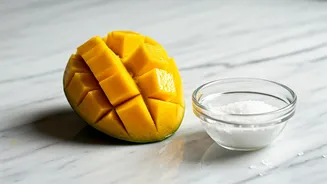
Ready to try it? The process couldn't be easier. All you need is a bowl, water, salt, and your mangoes.
1. **Prepare the Brine:** Fill a large bowl with enough room-temperature water to fully submerge your mangoes. You don't need a highly concentrated solution. A good rule of thumb is to add about one tablespoon of regular table salt for every litre of water. Stir until the salt is mostly dissolved.
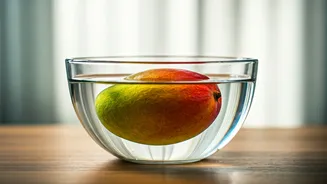
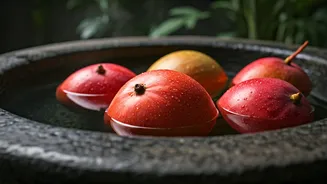
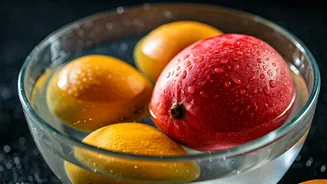
2. **Submerge the Mangoes:** Place your whole, unpeeled mangoes into the saltwater bath. Make sure they are fully submerged. If they float, you can place a small plate on top to keep them down.
3. **Let Them Soak:** Leave the mangoes to soak for at least 30 minutes. Some people prefer to soak them for an hour, but 30 minutes is usually sufficient to see the benefits. You might notice the water becoming slightly cloudy as the sap is drawn out.
4. **Rinse and Enjoy:** After the soak, remove the mangoes from the saltwater, give them a quick rinse under fresh running water to wash off any salty residue, and pat them dry. Now, they are ready to be peeled, sliced, and enjoyed with far less mess and bitterness.
The Science Behind the Magic
So, what's actually happening during that saltwater soak? Two key scientific principles are at play. First, osmosis. The salty water creates a brine that is saltier than the fluid inside the mango's skin and stem pores. This difference in concentration causes the water and sap within the mango's surface ducts to be drawn out into the surrounding saltwater, effectively leaching out the sticky, irritating latex. Second, this process helps remove the enzymes and phytic acid present in the skin and sap. Phytic acid is an anti-nutrient that can have a slightly bitter taste and, in large quantities, can interfere with nutrient absorption. By drawing it out, you're left with a cleaner, purer fruit flavour. Some also argue that the slight saltiness, even after rinsing, enhances our perception of sweetness, much like how a pinch of salt makes caramel or chocolate taste richer.
A Time-Honoured Tradition
This isn't a modern kitchen 'hack' but a piece of traditional wisdom. In Ayurvedic practice, mangoes are considered a 'heating' (ushna) food. Soaking them in water, especially saltwater, is believed to reduce this heating property, making them more balanced and easier on the digestive system. While the 'heating' and 'cooling' effects of foods are a concept from traditional medicine, the practical outcome aligns perfectly with the science: the tradition successfully identified a way to remove the fruit's less desirable elements. By adopting this practice, you're not just improving your fruit; you're connecting with a long history of culinary wisdom.