






Understanding the 'Recent Ruling'
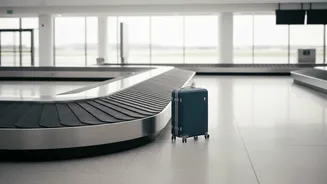
While major aviation laws haven't changed overnight, recent consumer court judgments have consistently empowered passengers. In a ruling dated July 22, 2026, a district consumer commission ordered an airline to pay over ₹53,000 to a passenger whose luggage
was delayed by just three days. The court found the airline guilty of a "deficiency in service" for not just the delay, but for failing to provide compensation as per the Ministry of Civil Aviation's Passenger Charter. This decision reinforces a crucial point: airlines are liable, and passengers who meticulously document their cases can win. These rulings strengthen existing frameworks like the DGCA's domestic travel regulations and the Montreal Convention for international flights.
Immediate Action: What to Do at the Airport
The single most important step happens before you leave the airport. Do not leave the baggage claim area without filing a Property Irregularity Report (PIR). This is a non-negotiable step. The PIR is an official document that airlines use to record any issue with checked baggage—be it delayed, lost, or damaged. Go to your airline’s dedicated baggage service desk, which is usually located in the arrival hall. You will need your boarding pass and, crucially, your baggage claim sticker (usually stuck on the back of your boarding pass). Without a PIR, the airline has no official record of your missing bag, and your claim for compensation could be rejected outright. When you file the report, you’ll receive a copy with a unique 10-character reference number. This number is your key to tracking your bag and filing a formal claim later.
Building the Paper Trail: Your Most Powerful Tool
Documentation is your best defence. Your 'paper trail' starts with the PIR, but it doesn't end there. Keep a dedicated folder for everything related to the incident. This should include your original boarding pass, the baggage claim sticker, and the PIR form. If your bag is delayed and you are forced to buy essential items like toiletries or clothing, keep every single receipt. A recent consumer case saw a passenger reimbursed for ₹8,923 in essential clothing purchases during a three-day delay. Take photos of these receipts. Also, document every interaction you have with the airline. Note the date, time, name of the person you spoke to, and a summary of the conversation. If you communicate via email, save every message. This detailed record proves you have been proactive and gives the airline less room to dispute your claim.
Know Your Rights: Compensation Limits
The compensation you are entitled to depends on whether your flight is domestic or international. For domestic flights within India, the Directorate General of Civil Aviation (DGCA) caps the airline's liability at ₹20,000 per passenger for delayed, lost, or damaged baggage. This is often calculated at a rate of around ₹450 per kilogram. For international flights to and from India, the Montreal Convention applies. The liability limit is set in Special Drawing Rights (SDRs), an international reserve asset. This is currently around 1,288 SDR, which translates to approximately ₹1.5 lakh per passenger. Remember, a bag is considered 'delayed' for the first 21 days. Only after 21 days is it officially declared 'lost', which triggers claims for the full value of its contents up to the liability limit.
Escalation: When the Airline Fails to Respond
Filing a PIR and submitting a claim doesn't always guarantee a smooth process. If the airline is unresponsive or offers an unsatisfactory resolution, you have further recourse. The first step is to escalate the issue to the airline's Grievance Redressal Officer, whose contact details are mandatorily published on their website. If you are still not satisfied, you can file a complaint on the government's AirSewa portal. As seen in the recent consumer case, having a record of filing a complaint on a government portal strengthens your case significantly. For more serious disputes, you can approach a consumer disputes redressal commission. As numerous recent judgments show, these forums are increasingly ruling in favour of passengers who can present a well-documented case of service deficiency.