





The Tireless Robotic Vanguard
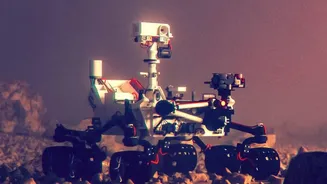
For decades, our only presence on Mars has been robotic. Orbiters like the Mars Reconnaissance Orbiter have mapped the planet in stunning detail, helping scientists select safe and interesting landing sites. On the ground, rovers like Curiosity and Perseverance
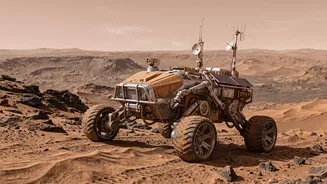
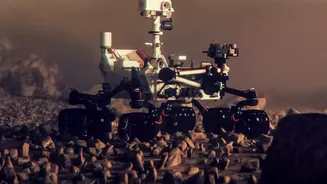
have acted as tireless geological field assistants. They can withstand extreme temperatures, analyze soil composition, and patiently search for signs of ancient microbial life in ways no human could. The Ingenuity helicopter, initially a technology demonstration, proved that powered flight is possible in the thin Martian atmosphere, completing 72 flights and acting as an aerial scout for the Perseverance rover. These machines are our eyes, ears, and hands on a world millions of miles away, operating with a persistence that human biology simply does not allow. They don't need to eat, sleep, or breathe, and they can endure the harsh radiation of the Martian surface for years on end.
The Irreplaceable Human Element
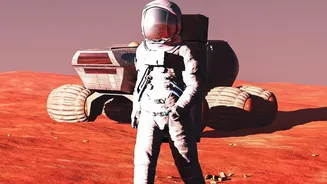
For all their resilience, robots lack the one thing that defines human exploration: intuition. An astronaut can spot an unusual rock formation and, based on a wealth of experience, decide to investigate it on a whim. While rovers are slow, methodical explorers, a human geologist could cover more ground and make intuitive leaps in a fraction of the time. Humans can improvise, fix complex problems on the spot, and perform dexterous tasks that are still beyond the reach of even the most advanced robotic arms. Furthermore, the physiological and psychological challenges of a Mars mission for a human crew are immense, including long-term exposure to radiation, the effects of reduced gravity on bone and muscle, and the strain of isolation. Paradoxically, it is these very frailties that make human presence so valuable. The drive to overcome these challenges pushes technology forward and the human capacity for real-time, complex decision-making remains unparalleled.
Scouting for a Safer Footprint
The core of NASA's 'Moon to Mars' strategy is not a competition between robots and humans, but a phased approach where one enables the other. Every robotic mission is, in essence, a reconnaissance run for future human explorers. The Perseverance rover isn't just looking for past life; it's actively testing technologies crucial for human survival. One of its key instruments, MOXIE (Mars Oxygen In-Situ Resource Utilization Experiment), has successfully demonstrated that it can produce oxygen from the carbon dioxide in Mars's atmosphere. This technology is vital, as future astronauts could use it to create breathable air and, more importantly, the liquid oxygen propellant needed to launch their return vehicle back to Earth. This reduces the immense cost and complexity of having to haul all that oxygen from our home planet.
Testing the Gear for Future Explorers
Beyond generating resources, robots are testing the very materials astronauts will wear. Perseverance carries samples of spacesuit fabrics, allowing scientists to study how they withstand years of exposure to the harsh Martian radiation and abrasive dust. This data is critical for designing suits that can protect astronauts on long-duration surface missions. Rovers also help quantify the radiation danger. The Curiosity rover's Radiation Assessment Detector (RAD) has measured how natural terrain features, like cliffs, can provide some shielding from dangerous space radiation. This information will directly influence where the first human habitats are built and what kind of natural protection to look for. By sending robots to map resources like subsurface water ice, analyze atmospheric conditions, and test key equipment, we are methodically reducing the risks and unknowns for the first human crew.