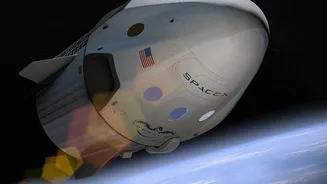







A SpaceX Dragon capsule successfully splashed down in the Pacific Ocean on November 21, marking the end of the 35th commercial resupply mission for NASA and returning a precious haul of scientific research from the International Space Station.
A Successful Splashdown Concludes the Mission
After undocking
from the International Space Station (ISS) on November 20, the uncrewed Dragon spacecraft completed its journey home, parachuting into the waters off the coast of California. The successful recovery of the capsule by SpaceX teams concluded a 39-day mission that began with a launch from Florida on October 13. This particular Dragon capsule was a seasoned veteran, completing its fourth flight to the orbiting laboratory, underscoring the reusability at the heart of the commercial spaceflight program. The mission, a key part of NASA's Commercial Resupply Services (CRS) contract with SpaceX, ensures the ISS remains a bustling hub of research and activity.
Delivering Supplies and Power to the Station
On its way up, the CRS-35 mission delivered over 6,300 pounds of cargo to the astronauts aboard the ISS. This delivery included fresh crew supplies, spacewalk equipment, and new hardware for the station. A critical part of the unpressurized cargo was the final pair of ISS Roll-Out Solar Arrays (iROSA). The installation of these new arrays completes a major power system upgrade for the station, increasing its power generation capacity by about 30 percent and ensuring it has the electricity needed to support its full range of scientific and operational functions for years to come.
Science from the Heavens Returns to Earth
While the upward delivery is vital, the Dragon's unique ability to return cargo intact to Earth is what makes these missions so scientifically valuable. The CRS-35 return was packed with time-sensitive experiments that can now be analyzed in ground-based labs. Among the critical research samples were frozen tumor organoids that had been exposed to cancer treatments in microgravity. Scientists hope studying these tiny, lab-grown tissue models will reveal new information to improve cancer therapies and advance personalized medicine. The capsule also carried a 3D-bioprinted blood vessel structure, which will help researchers study cardiovascular disease and the aging process by observing how tissues developed in the near-weightless environment of space.
From Superbugs to Better Sleep
The returned cargo also contained frozen microbial samples for an ongoing study into how antibiotic-resistant bacteria, or 'superbugs', survive and adapt in space. This research could lead to better ways to protect astronauts on long-duration missions and provide insights into how these dangerous bacteria evolve on Earth. In addition to biological samples, the Dragon brought back a specialized lighting system that had been tested on the station for over three years. This system was designed to see if specific light patterns could help support astronauts' sleep cycles and well-being, a crucial factor for maintaining health and performance during extended stays in orbit. Even an EMU spacesuit was returned to Earth for servicing after years of use on the station.