



The Star’s Great Shrinking Act
For billions of years, a star exists in a delicate balance between the outward push of nuclear fusion in its core and the inward crush of its own gravity. But when a star exhausts its primary fuel, that balance is broken. For stars like our sun, this
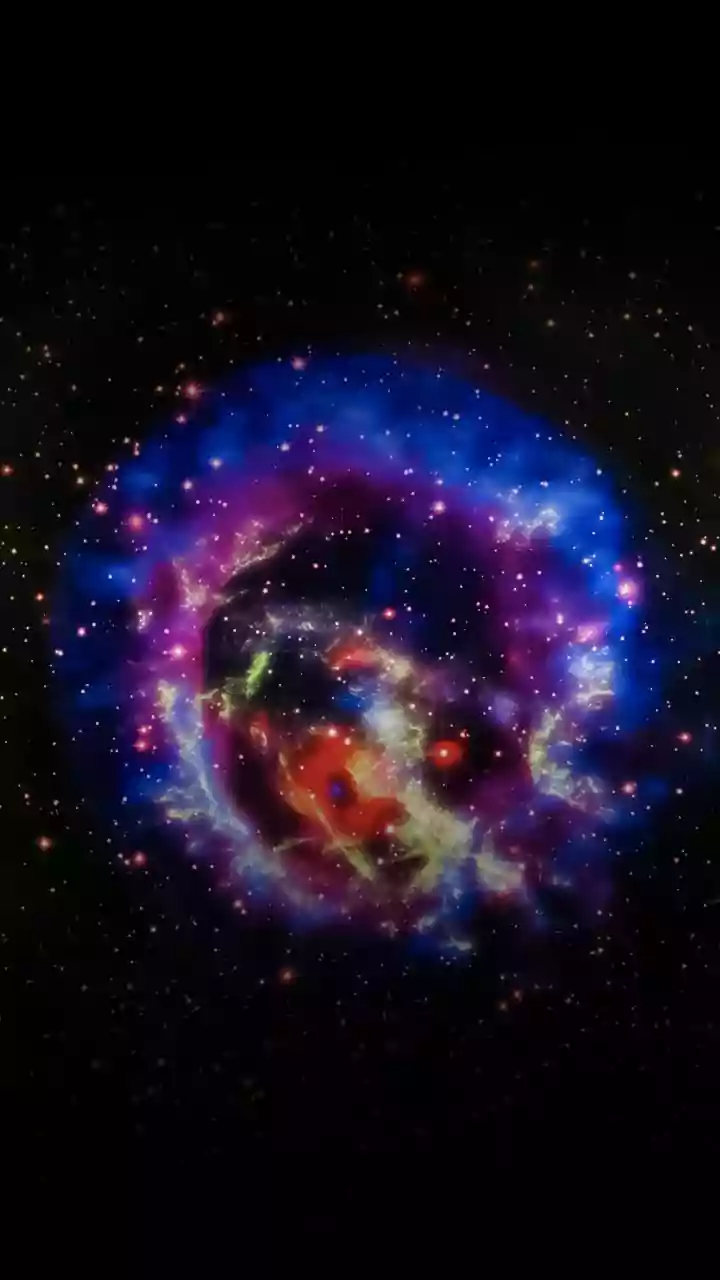
kicks off a dramatic final act. The star swells into a behemoth known as a red giant, expanding its outer layers to engulf its innermost planets. After this phase, the star sheds its outer atmosphere into space, leaving behind only its hot, incredibly dense core: a white dwarf.This process is not a gentle retirement. A star can shed around half of its total mass as it transitions into a stellar remnant. The result is an object roughly the size of Earth but with the mass of a star, making it one of the densest objects in the universe, second only to neutron stars and black holes. This newly formed white dwarf now exerts a very different gravitational influence on whatever remains of its planetary system.
Gravity’s Loosening Grip
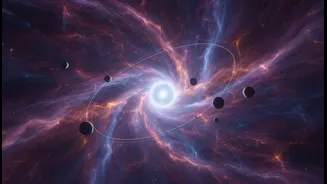
Newton's law of universal gravitation tells us that the force of gravity between two objects depends on their mass. When a star sheds a huge portion of its mass to become a white dwarf, its gravitational pull on its surviving planets weakens significantly. Think of it like a tether being stretched. The planets, still carrying their orbital momentum, are no longer held as tightly by their parent star. As a result, they begin to drift outward.Simulations and observations of these ancient systems confirm this effect. Astronomers predict that surviving planets, like Jupiter and Saturn in our own solar system, will migrate to orbits roughly twice as far from their star as they are today. This principle—that mass loss leads to orbital expansion—is a key prediction of how solar systems evolve after their stars die. Recent studies have even confirmed that this mass-loss effect is the dominant force shaping these evolved systems, more so than gravitational nudges from other nearby stars.
The Puzzle of a Planet That Moved In
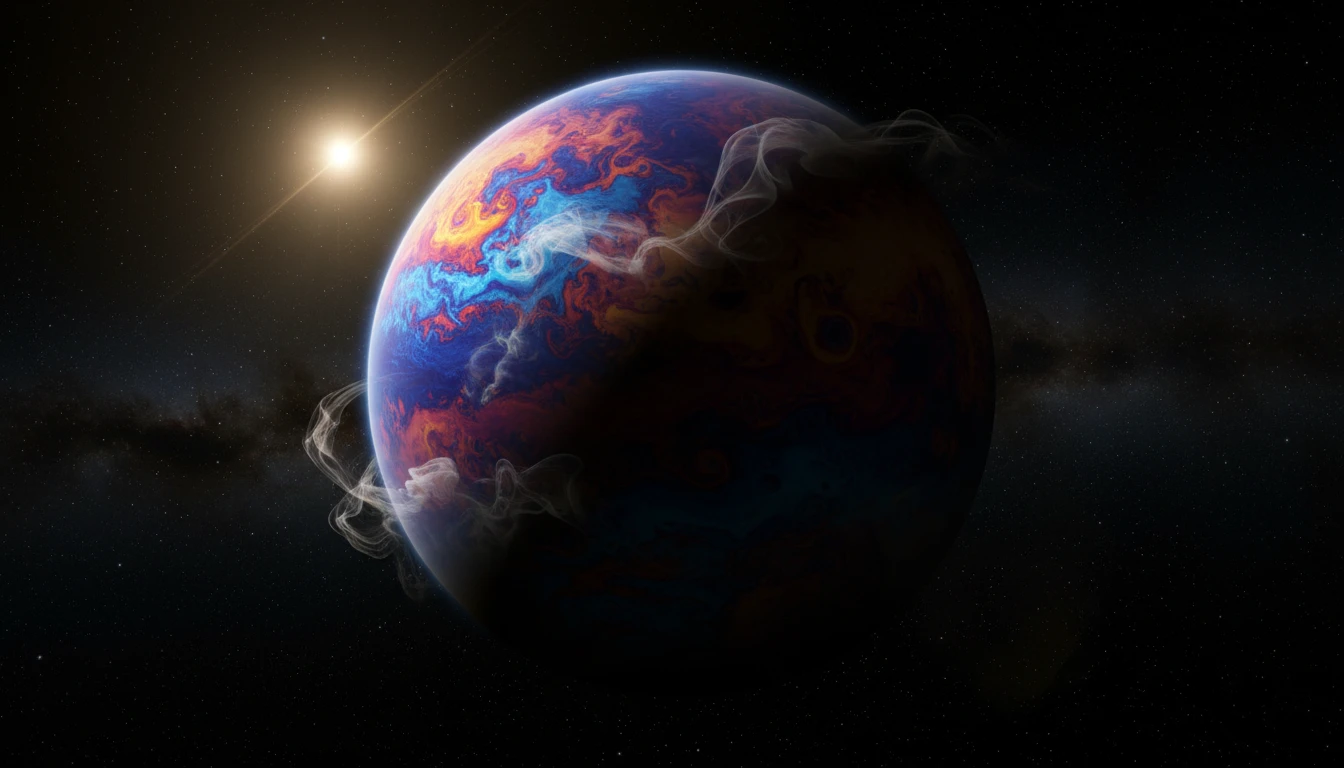
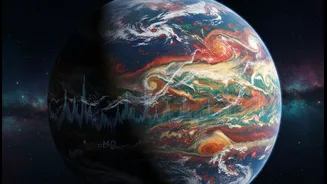
While the rule of thumb is that planets move out, the universe is full of exceptions that challenge our understanding. One such puzzle is the planet WD 1856 b, a gas giant similar to Jupiter found orbiting a white dwarf 81 light-years from Earth. Instead of drifting away, it is now incredibly close to its dead star, completing an orbit in just 1.4 days. This is far too close; it should have been destroyed during the star's red giant phase. So how did it get there?Scientists are exploring several possibilities. One leading theory suggests the planet survived at a much safer distance, but was later pushed into its tight, precarious orbit by the complex gravitational nudges of two other red dwarf stars that are part of the same triple-star system. This case demonstrates that while the star's own mass loss is a primary factor, the gravitational landscape of an entire system, including companion stars, plays a crucial role in the chaotic dance of post-death planetary evolution.
When Worlds Are Torn Asunder
Another dramatic fate awaits any object that gets too close to a white dwarf. The star SDSS J1228+1040 provides a visceral example. Astronomers have observed a small, dense planetary body, likely the iron-rich core of a larger planet, whipping around this white dwarf. This planetesimal survived its star’s death, but only because it is incredibly dense. Other, less sturdy objects that strayed too close were not so lucky.The intense gravity of the white dwarf shreds asteroids and planetary fragments that venture within its reach, a region known as the Roche limit. This process, called tidal disruption, tears the objects apart and smears their remains into a glowing disk of gas and debris that slowly falls onto the star. The system around SDSS J1228+1040 showcases the two new realities of gravity around a stellar remnant: only the strongest survive in close orbits, while the rest are violently recycled.