



A New Policy, A New Universe
The major catalyst for this transformation is the Indian Space Policy of 2023. This policy marked a fundamental shift, moving to actively encourage private companies to participate in end-to-end space activities—from building rockets and satellites to providing
space-based services. Before this, the sector was almost exclusively the domain of the Indian Space Research Organisation (ISRO). Now, with regulatory bodies like the Indian National Space Promotion and Authorisation Centre (IN-SPACe) streamlining approvals, the stage is set for a vibrant commercial space ecosystem. The goal is to grow India's share of the global space economy from its current 2-3% to over 8% in the next decade, potentially turning an approximately $9 billion industry into a $44 billion powerhouse.
The Rocket Builders and Launch Specialists
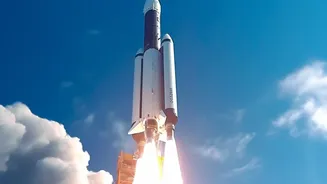
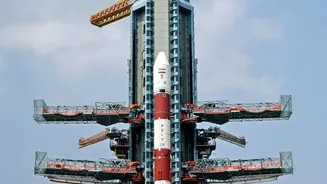
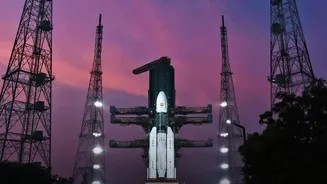
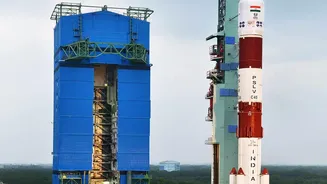
The most visible part of the new space race is the development of private launch vehicles. Companies like Skyroot Aerospace, with its Vikram series, and Agnikul Cosmos, with its 3D-printed rocket engine, are at the forefront. This has created a massive demand for engineers specialising in propulsion, avionics, structural design, and materials science. These aren't just jobs for aerospace engineers; mechanical, electrical, and systems engineers are all critical to designing, building, and testing the rockets that will carry satellites into orbit. The growth of these launch providers also creates a ripple effect, generating thousands of jobs in the manufacturing and ground support ecosystem for specialists in logistics, production management, and control systems.
Satellite Data Scientists and Analysts
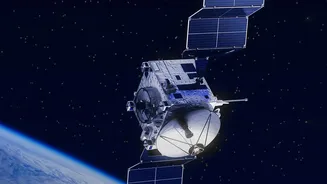
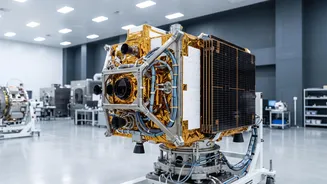
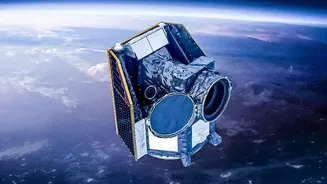
Once satellites are in orbit, they generate enormous amounts of data. This is where the downstream space economy thrives, and it's one of the fastest-growing areas for jobs. Companies like Pixxel, SatSure, and others are hiring data scientists, geospatial analysts, and machine learning engineers in large numbers. These professionals turn raw satellite imagery and data into actionable business intelligence. Their work helps farmers monitor crop health, insurance firms assess disaster damage, and urban planners manage infrastructure growth. A career in this part of the space industry often requires skills in remote sensing, Geographic Information Systems (GIS), and data modelling. It's a field where expertise in another domain, like agriculture or finance, can be as valuable as an aerospace background.
Software, AI, and Robotics Engineers
Modern space missions are powered by software. Aerospace software engineering is a booming field, with specialists needed to develop everything from on-board flight software and autonomous navigation for spacecraft to the complex algorithms for mission planning. Professionals with strong coding skills in languages like C++ and Python are highly sought after. Furthermore, artificial intelligence and robotics are becoming central to space exploration. AI specialists are needed to develop autonomous systems for rovers and to create machine learning models that can analyze vast datasets from space. As missions become more complex, the need for robotics engineers to design and build the next generation of space exploration hardware will only grow.
The Non-Engineering Space Professionals
The expanding space economy isn't just for scientists and engineers. As the industry commercializes, it has created a need for professionals in a variety of other fields. Space lawyers are now required to navigate the complexities of international treaties, intellectual property, and licensing for private launches. The high-stakes nature of space missions has also given rise to a specialised space insurance sector. Furthermore, private companies need business development managers, marketing strategists, and finance experts to help them scale and secure funding. Policy advisors are also crucial, working with government bodies like IN-SPACe to help shape the regulatory landscape for this new industry.