



The Sobering Statistics of Lost Cats
It’s an unfortunate reality that many cats go missing. Studies have shown that only a small percentage of cats that enter shelters are ever reunited with their owners. Unlike dogs, many cats tend to hide when they are lost and scared, often close to home
but out of sight. While many cats do return on their own, relying on chance is a stressful gamble. The good news is that proactive measures drastically increase the odds of a happy reunion. A combination of visible and permanent identification is the most effective strategy to ensure your feline friend can always be traced back to you.
The First Defence: Collars and Tags
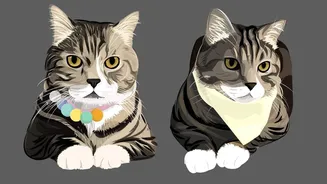
The simplest form of identification is often the most immediate. A collar with a clearly engraved ID tag is the fastest way for a neighbour or a Good Samaritan to contact you. The tag should include your cat’s name and, most importantly, your current mobile number. When choosing a collar, always opt for a ‘breakaway’ or ‘quick-release’ model. These collars are designed to snap open under pressure, which can save your cat from choking or injury if the collar gets snagged on a branch or fence. While there is a risk the collar could be lost, its value as an immediate, visible identifier is undeniable. Some modern tags even feature QR codes that link to a more detailed online profile.
The Power of the Microchip
A microchip is a permanent form of identification that can't fall off or be removed like a collar. It's a tiny electronic chip, about the size of a grain of rice, that is injected under your pet’s skin by a veterinarian. The procedure is quick, safe, and similar to a routine vaccination. It's crucial to understand that a microchip is not a GPS tracker; it does not show your cat's real-time location. Instead, it holds a unique identification number. When a lost cat is found and taken to a vet or shelter, they can scan for the chip, retrieve the number, and look it up in a registry to find your contact details.
Why and How to Update Your Details
A microchip is only as good as the information it's linked to. The most common reason microchips fail to reunite pets with their owners is not due to faulty technology, but because the registered contact information is outdated. If you move, change your phone number, or even change your email address, you must update your details with the microchip registry company. In India, services like Pet Chip India or Whizzles maintain databases for this purpose. To update your details, you’ll need your pet’s microchip number, which should be on your vet records. You can then visit the registry's website or contact them to log in and update your address and phone number. It’s a five-minute task that can save a lifetime of worry.
Advanced Tracking: GPS and Bluetooth
For owners who want extra peace of mind, especially for adventurous outdoor cats, GPS trackers offer the next level of security. These devices attach to your cat’s collar and use satellite and cellular technology to show your pet’s location in real-time on a smartphone app. Key features to look for include a lightweight design, good battery life, and waterproofing. Most GPS trackers require a monthly subscription fee for the cellular service they use. While more expensive than a simple tag, a GPS tracker can be the difference between finding your cat in minutes versus searching for days. They are a powerful tool to be used in combination with, not as a replacement for, a permanent microchip.