
The Galactic Architect
For decades, astronomers have worked to understand the intricate dance between supermassive black holes (SMBHs) and their host galaxies. It seemed intuitive that these behemoths, millions to billions of times the mass of our sun, must have a profound
effect on their surroundings. The mystery, however, was how. An SMBH is incredibly dense but occupies a relatively tiny space compared to the vast expanse of its galaxy. How could it influence star formation happening thousands of light-years away? The prevailing theory involved 'feedback' — a process where the black hole releases enormous amounts of energy back into the galaxy. But the exact mechanisms were unclear, leading to a cosmic chicken-and-egg debate: does the black hole's activity help or hinder the birth of new stars?
A New Perspective on Feedback
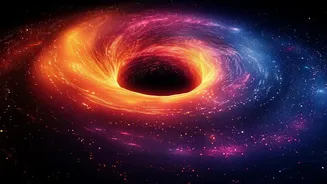
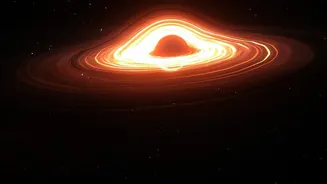
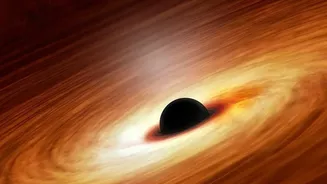
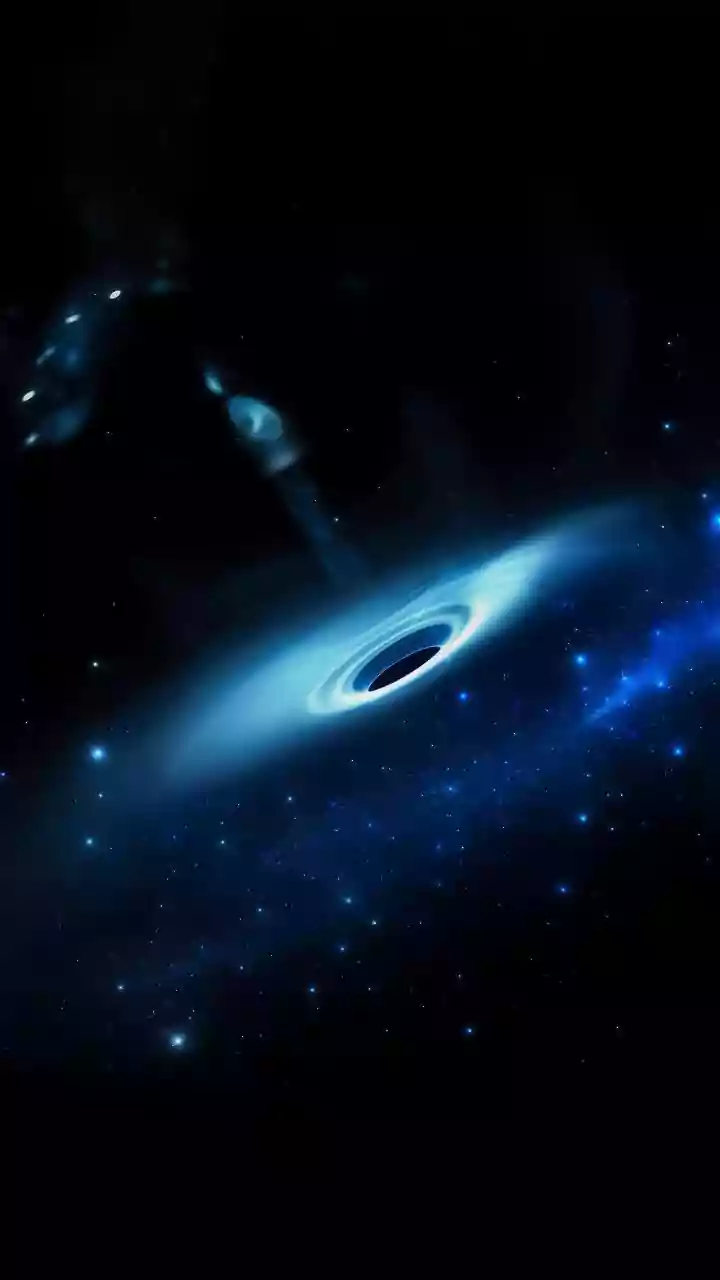
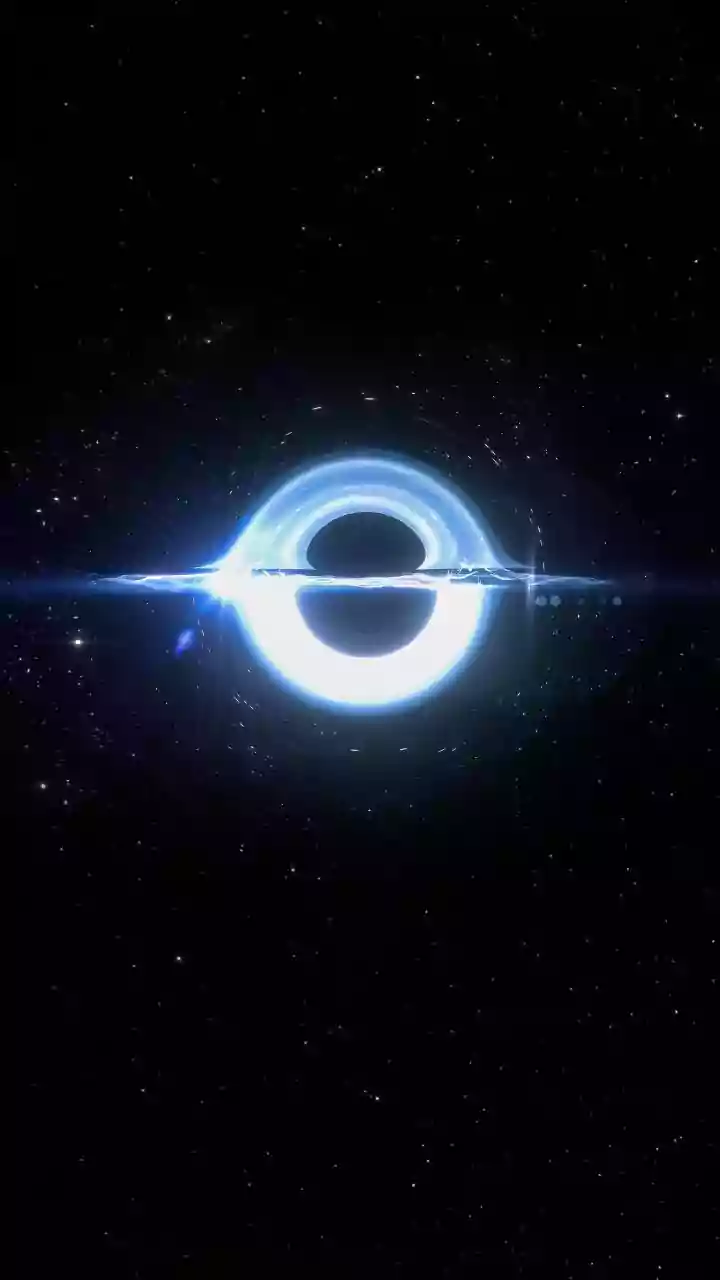
Recent findings are finally providing a clearer picture, suggesting the relationship is far more complex than a simple 'on' or 'off' switch for star-making. A new study focusing on nine nearby galaxies has shown that the feedback from an active black hole can actually contribute to star formation in some areas while suppressing it in others. Researchers observed that as material swirls into an SMBH, it doesn't just disappear. The immense energy creates what are known as active galactic nuclei (AGN), which blast out radiation and powerful outflows. These outflows collide with the interstellar medium — the gas and dust between stars — creating shockwaves.
Triggering and Quenching Stars
This is where the dual role comes into play. In some instances, these shockwaves and outflows can compress clouds of gas, triggering a burst of new star formation in rings or arcs around the galactic center. In these cases, the black hole acts as a cosmic gardener, tilling the galactic soil to sprout new stars. However, this same energetic output can also have the opposite effect. The powerful winds and jets can heat the gas in a galaxy to such extreme temperatures that it can no longer cool and collapse to form stars. In other scenarios, the outflow can be so strong that it literally blows the star-forming gas right out of the galaxy, effectively 'quenching' its ability to create new stars and causing its slow death.
Cosmic Weather and Galaxy Evolution
Think of it as a form of cosmic weather system. The black hole's activity creates high-pressure fronts (the outflows and shocks) that sweep through the galaxy. Depending on the local conditions, this front can either lead to a storm of star birth or create a hot, dry spell where no stars can form. This dynamic helps explain why some galaxies are bursting with young, blue stars while others are filled with older, redder stars and seem to have ceased their star-forming activity. According to some analyses, galaxies with more massive black holes may have had a faster rate of initial star formation, which then led to the black hole growing more massive and eventually slowing down or stopping later star formation.
A Unified Model Emerges
These new insights, built upon decades of observation from instruments like the Very Large Telescope (VLT) and various space observatories, are helping to refine our models of galaxy evolution. The 'DECADE' in the headline alludes not to a single project, but to the culmination of over a decade of research and the development of more sophisticated simulations and observational techniques. We now understand that black holes are not isolated monsters, but integral components of a galactic ecosystem. They consume, they eject, and in doing so, they regulate the life, growth, and eventual fate of the very galaxy that houses them. This complex feedback loop is a fundamental process in shaping the universe as we see it today.