


The Unforgiving Lunar Night
The Moon's south pole is a region of strategic interest for space agencies globally, including for its potential water ice reserves. However, it is also a land of extreme contrasts. With virtually no atmosphere to trap heat, the 14-day lunar night sees
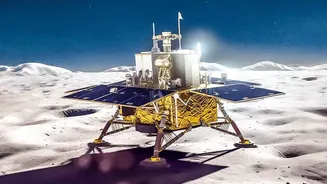
temperatures plummet to as low as -200°C (-328°F). This intense cold is a mission-killer for electronics and power systems. Standard lithium-ion batteries, which contain liquid electrolytes, simply cannot function. The liquid would freeze, damaging the battery's internal structure and rendering it useless. This very challenge was a limiting factor for India's historic Chandrayaan-3 mission. Its Vikram lander and Pragyan rover, which successfully operated for a full lunar day, were not equipped with heating units to survive the night and ceased operations once darkness fell.
Enter SPEARS: A Solid Solution
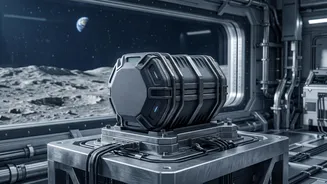
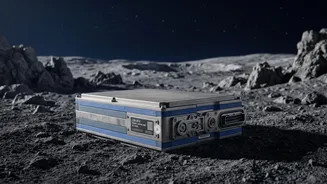
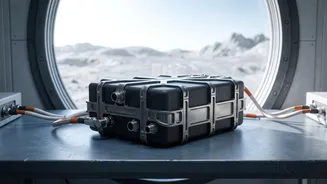
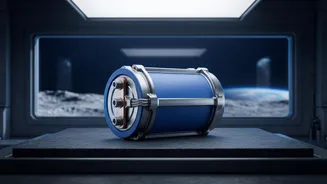
To solve this deep-freeze dilemma, NASA is developing a new generation of power sources under a project named SPEARS. The acronym stands for 'Solid Power for Extreme Environment Adaptability and Resilience in Space'. Led by NASA's Glenn Research Center, the project aims to create solid-state batteries. Unlike the batteries in your phone or laptop, these batteries replace the vulnerable liquid electrolyte with a solid, ceramic- or polymer-based material. This fundamental design change makes them far more robust. Not only do they avoid the problem of freezing, but they are also safer and more stable at the high temperatures of lunar daytime, which can reach 120°C (250°F). This resilience is crucial for powering rovers, scientific instruments, and astronaut equipment for long-duration missions under the Artemis program.
How the New Batteries Work
The SPEARS batteries aren't designed to operate at the full extremity of -200°C. Instead, the breakthrough is their ability to 'survive' the cold. The strategy is to let the batteries get cold during the lunar night without sustaining damage, and then use small, efficient heaters to warm them to their operational temperature when the sun rises or when power is needed. This 'sleep through the night' approach is vastly more energy-efficient than trying to keep a battery warm for 14 straight days, which would require a huge and heavy power source. Recent tests have been highly promising. Small prototype cells have survived exposure to temperatures as low as -170°C. They have demonstrated good performance between -60°C and 80°C, and were still able to deliver power with reduced performance at -80°C. This proves the core concept: the batteries can wake up and function after enduring a simulated lunar night.
Powering the Artemis Generation
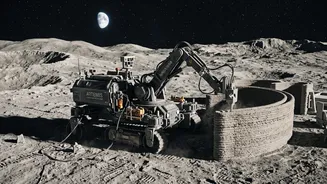
This research is not just a lab experiment; it is a critical enabler for NASA's Artemis campaign, which aims to establish a sustained human presence on the Moon. To build a lunar base, conduct long-range rover expeditions, and eventually support human missions to Mars, a reliable power grid is essential. Technologies like SPEARS are a foundational piece of that puzzle. By providing a durable power solution that can withstand the lunar environment, NASA can extend mission timelines from a couple of weeks to months or even years. This allows for more ambitious science and exploration. Furthermore, the adaptability of solid-state technology means different versions could be developed for various needs, from high-power bursts for drills and vehicles to long-term, steady power for scientific instruments.