






A Sanctuary for the Stars
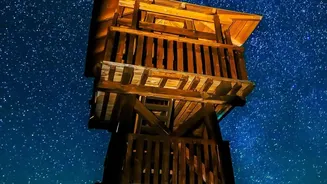
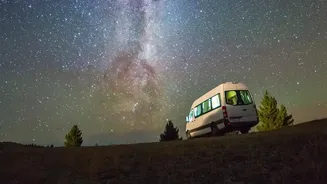
Imagine a place so dark that the Milky Way casts a faint shadow on the ground. This is the reality in Hanle, a high-altitude village in Ladakh's Changthang region, now home to India's first official Dark Sky Reserve. Designated in 2022, the reserve is a protected
zone spanning a 22-kilometre radius, designed to shield one of the world's most pristine night skies from the ever-growing threat of artificial light pollution. This initiative is a collaborative effort between the Indian Institute of Astrophysics (IIA), the UT Ladakh administration, and the Ladakh Autonomous Hill Development Council (LAHDC), creating a blueprint for science-driven sustainable development.
Why Hanle's Sky is Unique
Hanle's location makes it a global treasure for astronomy. Situated at an altitude of 4,500 metres within the Changthang Wildlife Sanctuary, the region benefits from a unique combination of factors. Its cold, arid desert climate and thin atmosphere result in minimal humidity and over 300 cloud-free nights a year, offering exceptional clarity for stargazing. These superior conditions are why the IIA established the Indian Astronomical Observatory (IAO) here, one of the highest observatories in the world. The sky quality in Hanle is rated Bortle 1, the darkest classification possible, a rare distinction held by only a few locations globally.
The Fight Against Light Pollution
Light pollution is a significant threat to astronomical research, brightening the night sky and washing out faint celestial objects like distant galaxies and nebulae. Even in remote areas like Hanle, the creep of unshielded lights from development and tourism poses a danger. To combat this, the Hanle reserve has implemented a strict light management plan. This involves distributing special shielded light bulbs, thick curtains, and shades to every household to prevent light from spilling upwards. Furthermore, regulations are in place to control the headlights of vehicles passing through the reserve, ensuring the sanctuary remains truly dark.
A Community-Powered Movement
The success of the Hanle Dark Sky Reserve is deeply rooted in community involvement. Rather than imposing rules, the project has empowered local residents to become guardians of their night sky. A key component is the 'Astronomy Ambassador' program, which has trained 24 villagers, two-thirds of whom are women, to operate telescopes and guide visitors. These ambassadors, many of whom also offer homestays, now lead stargazing sessions, sharing the wonders of the cosmos with tourists. This initiative not only protects the scientific integrity of the observatory but also creates a new, sustainable source of income for a community traditionally dependent on pastoralism.
More Than Just a View
The Hanle project is about much more than preserving a beautiful view; it's a holistic model for the future. The rise of 'astro-tourism' is bringing economic benefits directly to the local population, creating jobs and encouraging the reverse migration of people back to the village. It fosters a powerful connection between science, conservation, and cultural heritage, showcasing how protecting a natural resource can uplift a community. Visitors come for the mountains but are encouraged to stay for the stars, experiencing a profound connection to the universe that is impossible in brightly lit urban centres. This initiative ensures that the celestial spectacle our ancestors witnessed is preserved for generations to come.