






The Grand Vision: Gaganyaan
Project Gaganyaan is one of India's most ambitious scientific undertakings: to demonstrate the capability of sending a crew of three astronauts to an orbit of 400 kilometres for a three-day mission and bringing them safely back to Earth. Success would
make India only the fourth country in the world, after the United States, Russia, and China, to have an independent human spaceflight capability. The programme is not just about sending people to space; it's a massive national endeavour expected to yield benefits in technology, scientific research, and inspire a new generation towards careers in science and technology. However, the journey to this historic milestone is paved with meticulous preparation, with astronaut safety being the absolute highest priority.
Practice Before Perfection
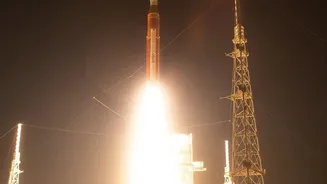
In the unforgiving environment of space, there are no second chances. This is why the Indian Space Research Organisation (ISRO) has planned a series of comprehensive uncrewed missions before the first 'vyomanauts' (Indian astronauts) take their seats. These flights are not mere rehearsals; they are full-scale, heavily instrumented tests designed to validate every single component of the mission in real-world conditions. The purpose is to demonstrate the technology, verify the safety and reliability of all systems, and study their performance from launch to splashdown. Recent updates from ISRO officials confirm that several uncrewed missions are planned before the crewed launch, which is now targeted for 2027.
The Anatomy of a Safety Flight
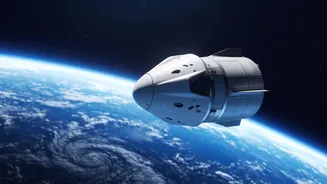
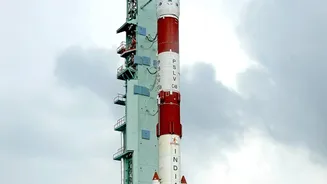
Each uncrewed flight is a dress rehearsal for the final event, testing the complex sequence of operations. The first uncrewed mission, G1, is targeted for the latter part of 2026. It will feature the human-rated LVM3 rocket (HLVM3), the Orbital Module—comprising the Crew Module and Service Module—and a host of critical systems. A key passenger on this flight will be 'Vyommitra', a sophisticated humanoid robot developed by ISRO. Vyommitra will simulate human functions, monitor the cabin environment, and operate switch panels, providing invaluable data on how life support and control systems perform in space. The flights will test everything from the integrity of the crew module's re-entry heat shield to the precise deployment of the parachute system needed for a safe splashdown.
Simulating a Crisis to Avert One
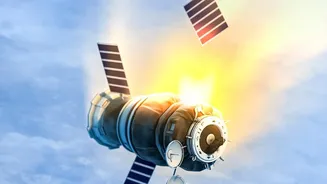
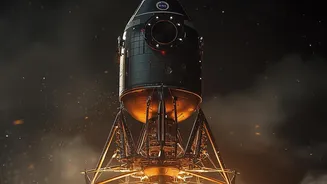
Perhaps the most crucial element being tested is the Crew Escape System (CES). This system is designed to save the astronauts' lives in the event of an emergency on the launchpad or during ascent. ISRO has been rigorously testing this system through a series of 'abort tests'. A successful Pad Abort Test in 2018 demonstrated the system's ability to pull the crew module away from a stationary rocket. More recently, the TV-D1 mission in October 2023 successfully performed an in-flight abort test, simulating a failure at supersonic speeds. The test vehicle deliberately triggered an abort, and the CES flawlessly jettisoned the crew module, which then descended safely under parachutes. These tests, which intentionally create crisis scenarios, are essential for building a robust and reliable escape mechanism.
The Patient Path Forward
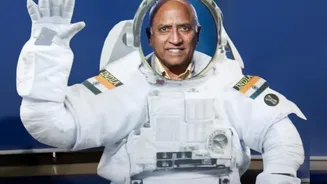
While the nation eagerly awaits the final launch, those closest to the mission, including astronaut Group Captain Angad Pratap, have stressed the importance of patience. He has noted that delays are a natural part of developing a new human spaceflight programme from scratch. The designated astronauts are actively involved in the development process, providing crucial operational feedback on the design and human-machine interface. This iterative process of testing, learning, and refining is fundamental. Each successful uncrewed flight and abort test brings India one giant leap closer to its Gaganyaan dream, ensuring that when the final countdown begins, it is with the utmost confidence in the safety and success of the mission.