



Understand the Enemy: Light Trespass
The main challenge for urban stargazers isn't just the general 'sky glow' above a city, but the more immediate problem of 'light trespass'. This is the unwanted light spilling onto your property from streetlights, neighbours' security lamps, or nearby
buildings. Tackling this direct glare is the most effective first step. By blocking light sources in your immediate vicinity, you create a pocket of darkness that allows your eyes to adapt and see fainter objects in the sky above. Even in a heavily light-polluted area, reducing direct glare can make a surprising difference.
Control Your Immediate Environment
The simplest step is to eliminate light sources you control. Turn off all your own balcony and patio lights. Go inside and switch off any rooms that cast light onto your balcony, or draw the curtains and blinds. The goal is to make your viewing spot as dark as possible. This creates a high-contrast environment, making it easier for your eyes to pick up on the subtle light from stars and planets. This has the added benefit of ensuring your own lights aren't contributing to the neighbourhood's overall light pollution.
Build a Temporary Light Shield
To block light from sources you can't control, a physical barrier is your best friend. You don't need a permanent structure; a simple, movable shield works wonders. Amateur astronomers have long used DIY shields made from PVC pipes and dark, opaque fabric or tarps. You can construct a lightweight frame and drape a dark sheet over it to block a specific streetlight. Even a large beach umbrella or a strategically placed piece of cardboard can serve as an effective, immediate barrier against a single intrusive light. The idea is to create a 'shadow cone' around you and your telescope or binoculars.
Let Your Eyes Adapt to the Dark
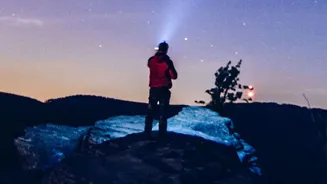
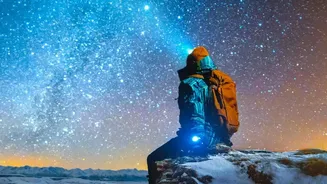
Your eyes need time to become sensitive to low light. This process, called dark adaptation, can take 20 to 30 minutes. During this time, avoid all bright lights, including your phone screen. A single glance at a bright white light can reset your night vision, forcing you to start the process all over again. If you need to check a star chart or find equipment, use a dim red-light flashlight. Red light has the least impact on your night vision, which is why astronomers use it exclusively in the dark. You can find red-light apps for your phone or simply cover a regular flashlight with red cellophane.
Choose Smarter Outdoor Lighting
If you must have outdoor lighting, make dark-sky friendly choices. The best fixtures are fully shielded, meaning they cast light downwards where it's needed, not up into the sky. This prevents glare and light trespass. Furthermore, opt for bulbs with a warm, amber, or red tint. Blue-spectrum light scatters more easily in the atmosphere, contributing significantly to sky glow. Many lighting manufacturers now offer certified "Dark-Sky Approved" fixtures that are designed to minimize light pollution while still providing safety and security.
Leverage Technology for City Skies
While technology can be a source of light pollution, it can also be a powerful tool for the urban stargazer. Numerous stargazing apps can use your phone's GPS to show you exactly what planets, constellations, and satellites are visible from your specific location and time, even with light pollution. Some telescopes also come with light pollution filters, which are specialized eyepieces designed to block common wavelengths of light emitted by streetlights, improving the contrast of celestial objects. These tools don't eliminate light pollution, but they help you make the most of the view you have.