






A Frozen Trade Relationship
Official trade between India and Pakistan has been effectively frozen since 2019. Following the Pulwama attack, India revoked Pakistan's 'Most-Favoured Nation' (MFN) status and imposed heavy tariffs on its goods. In response, Pakistan formally suspended
bilateral trade after India's constitutional changes in Jammu and Kashmir. This tit-for-tat escalation brought direct commerce to a near standstill, shutting down official channels like the Wagah-Attari land port, which had been a key artery for cross-border business. The result was a dramatic fall in bilateral trade, which had already been underperforming for years.
The Dubai Detour
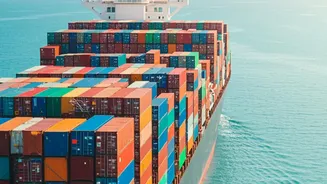
Despite the political freeze, economic compulsions have carved out new, indirect pathways for trade. The most prominent of these is the 'Dubai detour'. Indian goods are shipped to transit hubs like Dubai, Singapore, or Colombo. In these locations, they are often stored in bonded warehouses, where documentation can be altered and the products relabelled to show a new country of origin, such as the UAE. From there, they are re-exported to Pakistan. This 'grey-zone' strategy, as described by the Global Trade Research Initiative (GTRI), allows businesses to bypass direct trade restrictions, albeit at a higher cost. While not always illegal, it operates in a regulatory grey area, allowing commerce to flow where politics forbids it.
The Cross-Border Shopping List
The goods making this indirect journey are not luxury items, but essentials. At the top of the list are pharmaceuticals and their raw materials. Pakistan's pharmaceutical industry has long depended on cost-effective active pharmaceutical ingredients (APIs) from India. Even after the official trade suspension, Pakistan made exceptions for certain life-saving medicines and therapeutic goods. Other key products finding their way to Pakistan include organic chemicals, dyes, plastics, rubber, and some agricultural products. This highlights a critical dependency for certain Pakistani industries, which find Indian supplies to be the most viable in terms of cost and quality, even with the added expense of routing them through a third country.
Necessity Over Politics
The persistence of this indirect trade speaks volumes about the powerful pull of economic necessity. For Pakistani businesses, sourcing these essential goods from more distant markets in Europe or China would mean significantly higher costs and longer delivery times. The geographical proximity of India makes it a natural and cost-effective supplier. According to the Pak-India Business Council, the trade suspension has resulted in enormous economic losses for Pakistan, estimated to be around $40 billion since 2019, due to increased costs for industries like textiles and pharmaceuticals. Resuming direct imports could save the pharma industry alone billions of dollars annually.
The Hidden Costs
This roundabout trade route comes at a cost for everyone involved. Pakistani consumers and businesses ultimately pay higher prices for Indian goods due to the added logistics, storage, and middlemen fees associated with the 'Dubai tax'. For India, while the goods are still being sold, exporters lose out on the higher margins that are captured by intermediaries in Dubai. Furthermore, the Indian government loses potential customs revenue. The entire arrangement underscores a fundamental paradox: while political decisions have severed direct links, the underlying economic interdependence remains so strong that it forces trade into more expensive and less efficient channels.