







A Hug in a Bowl
The connection between rain and soup is more than just a desire for warmth; it's deeply psychological. Gloomy weather and less sunlight can lead to a dip in serotonin, the brain's 'happy chemical'. This dip can make us feel tired or a bit low. In response,
our brains seek out comfort foods, which are often rich in carbohydrates and warmth. These foods can trigger the release of feel-good chemicals, providing a sense of pleasure and relaxation. A hot bowl of soup acts as a restorative embrace, offering a feeling of safety and well-being that counters the dreary weather outside. It's an emotional response as much as a physical one, a simple act of self-care on a day that feels a little slower and quieter.
The Science of Warmth and Aroma
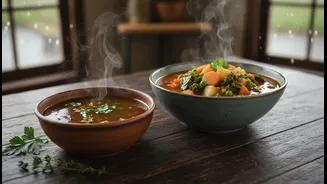
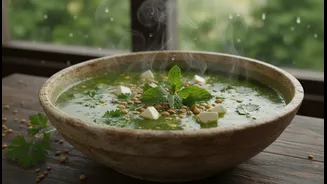
There's a physiological reason for our cravings, too. When the temperature drops, our bodies naturally want to stay warm. Eating or drinking something hot helps raise our internal body temperature, making us feel cozy from the inside out. Soups are particularly effective at this. Beyond temperature, the sensory experience plays a huge role. Moist air on a rainy day helps smells travel better. The steam rising from a bowl of dal or rasam carries its aromatic spices—like cumin, ginger, and pepper—more intensely. This heightened aroma makes the food more inviting and satisfying. The combination of warmth, a full-bodied aroma, and the gentle sounds of rain creates a powerful, comforting sensory experience that is hard to resist.
Echoes of Tradition and Immunity
In India, the link between monsoons and specific foods is a tale told over generations. Traditional Indian cuisine has always been deeply connected to the seasons. The monsoon, in particular, is a time when the digestive system is believed to slow down, making light, warm, and easily digestible foods like soup an ideal choice. Many traditional soup recipes, such as dal shorba or bele saaru from Karnataka, are not just for comfort but also for health. They are often packed with spices like turmeric, ginger, and garlic, which have antibacterial properties and are believed to boost immunity against seasonal illnesses that are common during the monsoon. These recipes are a form of culinary wisdom, passed down to keep the body nourished and strong when the weather changes.
Nostalgia on the Menu
For many, the appeal of a traditional soup recipe lies in its connection to memory. The smell of a specific dal tempering or a tomato shorba simmering on the stove can transport us back to our childhood kitchens, evoking feelings of being cared for and safe. These food memories are powerful emotional triggers. A rainy day often encourages us to slow down and stay indoors, creating a natural setting for nostalgia to surface. Opting for a traditional recipe—one that perhaps a parent or grandparent used to make—is a way of reconnecting with those comforting memories. In a world of complex and fast food, the simplicity of a classic lentil or vegetable soup offers a grounding, familiar pleasure that feels both authentic and deeply personal.