


The Philosophy of the Feast
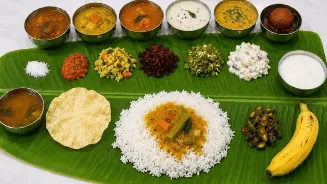
An Onam Sadhya, meaning 'banquet' in Malayalam, is a purely vegetarian spread that signifies abundance and commemorates the annual harvest festival. The meal is a complex and harmonious balance of flavours—sweet, sour, salty, spicy, and bitter—with each
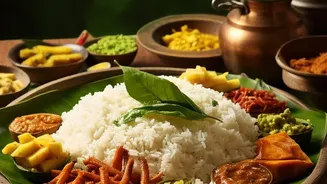
of the 20-plus dishes playing a specific role. Traditionally served on a banana leaf, the placement of each item is deliberate, designed to guide the diner through a culinary journey. The foundation of the feast rests on seasonal vegetables native to Kerala, like yam, ash gourd, pumpkin, and raw plantain, making it a true celebration of the harvest.
The Core Foundation: Rice and Lentils
Every Sadhya begins with the essentials. At the centre of the banana leaf is a serving of 'Choru', typically the nutty, reddish Kerala Matta rice. The first course involves pouring 'Parippu', a simple and comforting curry made from moong dal (green gram) and seasoned with coconut and cumin, over the rice. A spoonful of 'Ney' or ghee is drizzled on top, adding a rich fragrance that marks the official start of the feast. These foundational elements provide a mild, earthy base for the stronger flavours to come.
Showcasing Seasonal Vegetables
The heart of a traditional Sadhya lies in its vegetable preparations, which highlight the seasonal bounty. 'Avial' is a quintessential dish, a thick mixture of vegetables like yam, drumstick, raw banana, and pumpkin cooked in a coconut and yogurt gravy. 'Thoran' is a dry stir-fry, often made with finely chopped cabbage or beans tossed with grated coconut. 'Olan' offers a milder counterpoint; it’s a gentle curry of ash gourd and red cowpeas simmered in coconut milk. Another star is 'Erissery', a mildly sweet dish of pumpkin and black-eyed peas cooked with a roasted coconut paste.
The Supporting Cast of Curries
Beyond the foundational dishes, a variety of curries add depth and complexity. 'Sambar', a familiar South Indian staple, is made thicker for a Sadhya, rich with vegetables like drumsticks and pumpkin. 'Kaalan' is a thicker, sour curry made with yam and raw plantain in a yogurt base, while 'Pulissery' is a lighter, thinner yogurt-based curry, often made with pineapple or cucumber for a sweet and tangy profile. These dishes are meant to be mixed with rice in small quantities, allowing you to create different flavour combinations with each bite.
A Symphony of Sides
The small accompaniments, or 'Thodu Curries', served on the upper half of the leaf are crucial for balance. 'Puli Inji' is a dark, sweet, and sour pickle made from ginger, tamarind, and jaggery that acts as a palate cleanser. You will also find various 'Achar' (pickles), like sharp lime or mango, to provide pungent kicks. 'Pachadi' and 'Kichadi' are yogurt-based sides; Pachadi is typically sweeter (like pineapple or beetroot), while Kichadi is more savoury, often featuring cucumber or okra. And no Sadhya is complete without the crunch of 'Pappadam' and salty banana chips ('Upperi').
The Sweet Conclusion: Payasam
The feast traditionally ends with dessert, and 'Payasam' is the star. Often, more than one type is served. 'Ada Pradhaman', considered the king of payasams, is a rich pudding made with rice flakes (ada), jaggery, and coconut milk. 'Palada Payasam' is a creamier version made with rice flakes and cow's milk. Another common variety is 'Parippu Payasam', made with moong dal and jaggery, offering a more earthy sweetness. A small, ripe banana is often served alongside to be mashed into the payasam, adding another layer of flavour.