



Decoding the SHAPE Experiment
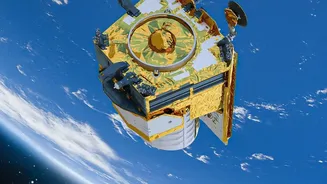
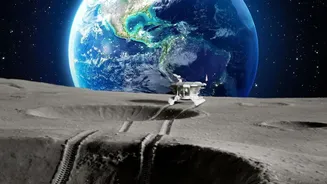
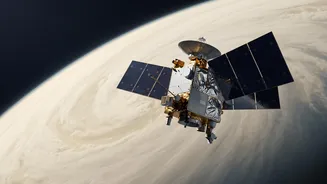
SHAPE, which stands for Spectro-polarimetry of Habitable Planet Earth, is a unique scientific instrument that was a value-added payload on the Chandrayaan-3 mission's propulsion module. After carrying the Vikram lander and Pragyan rover to a 100 km lunar
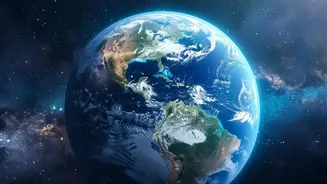
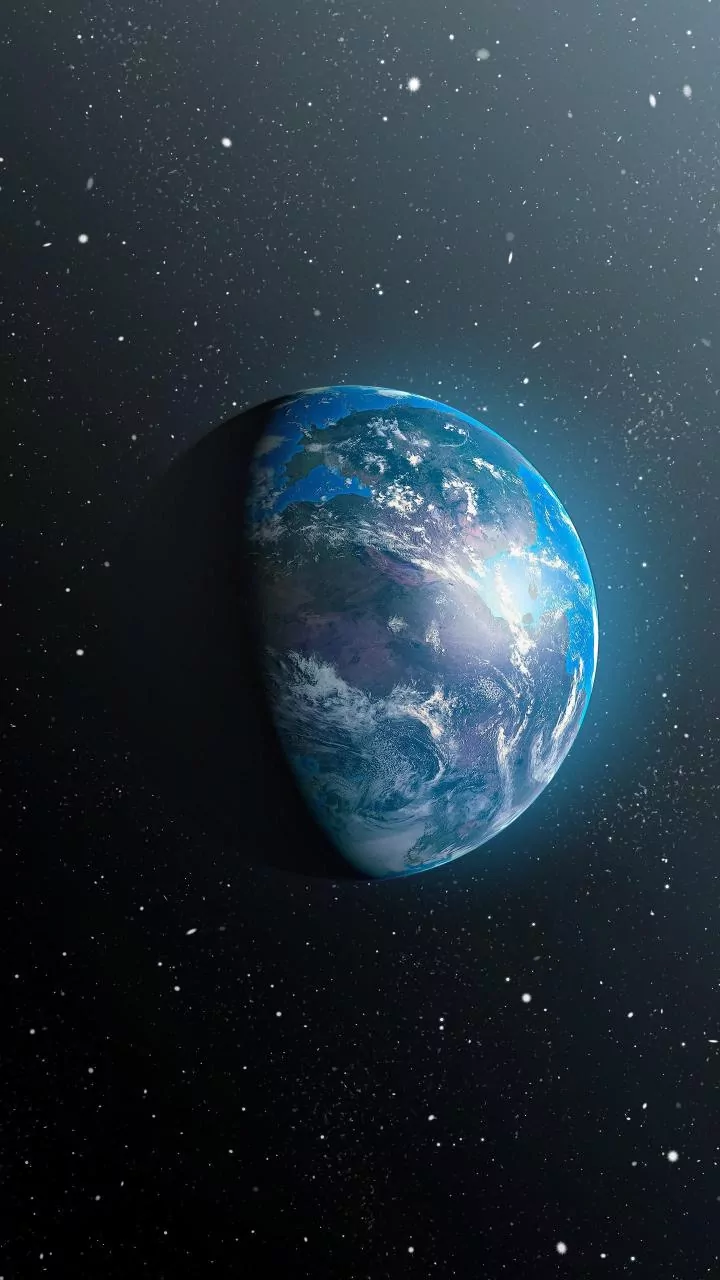
orbit, the propulsion module’s primary job was done. But its mission continued. From its vantage point orbiting the Moon, it turned its gaze back towards Earth, using the SHAPE payload to conduct a remarkable experiment: to observe our planet as if it were a distant exoplanet. The goal is to capture the unique light signature of a known life-bearing world, creating a benchmark for future telescopes to hunt for 'Earth 2.0'.
Seeing Earth in a New Light
SHAPE's method, spectro-polarimetry, is a powerful way to analyse light. Spectroscopy breaks light down into its constituent colours, revealing information about the chemical composition of a planet's atmosphere. Polarimetry, on the other hand, studies the orientation of light waves as they travel. Think of it like wearing polarised sunglasses to cut down glare; the instrument measures how sunlight is changed after it reflects off Earth's atmosphere, clouds, and oceans. When light from a star bounces off a planet, it becomes polarised. The specific way it polarises can reveal a treasure trove of information that simple brightness measurements can't, such as the presence and properties of clouds, the existence of oceans, and even potential biosignatures—substances that provide evidence of life.
A Blueprint for Finding Other Earths
The core logic of the SHAPE experiment is beautifully simple: to understand what an exoplanet looks like, it helps to first study a planet we know is habitable. By observing the disc-integrated light from Earth—meaning, the light from the entire planet blurred into a single point, just as we see distant exoplanets—SHAPE is cataloguing the specific spectral and polarimetric signatures of a life-hosting world. This data creates a template, or a 'fingerprint,' of a habitable planet in the near-infrared spectrum. Future, more powerful space telescopes, like NASA's planned Habitable Worlds Observatory, can then use this benchmark. When they look at a rocky exoplanet in a star's habitable zone, they can compare its light signature to the one SHAPE recorded for Earth, looking for tell-tale similarities that might indicate an Earth-like atmosphere and surface.
A New Tool in the Planet-Hunting Kit
For decades, scientists have primarily used two methods to find exoplanets. The 'transit method', used by telescopes like Kepler and TESS, detects the tiny dip in a star's light as a planet passes in front of it. The 'radial velocity' or 'wobble' method measures the slight gravitational tug a planet exerts on its star. While incredibly successful for finding planets, these methods tell us little about their potential for life. Spectro-polarimetry, the technique used by SHAPE, is a game-changer for characterisation. It adds a crucial layer of data, helping to solve ambiguities that flux-only observations present. It is particularly sensitive to clouds, which play a huge role in a planet's climate, and can distinguish between different types of surfaces. This makes it an indispensable tool for moving beyond simply counting exoplanets to actually understanding what they are like.
Beyond the Moon: ISRO's Cosmic Ambition
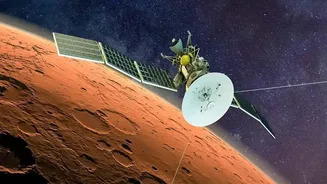
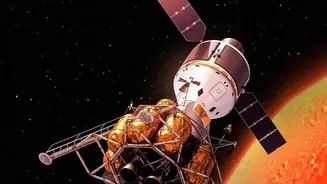
The SHAPE experiment is not just an isolated project; it showcases ISRO's forward-thinking approach to space science. It serves as a vital proof of concept and a test bed for future missions. The technology and learnings from SHAPE are crucial for developing more advanced instruments. There are already plans to incorporate similar payloads on future Indian planetary science missions, including Shukrayaan to Venus and a potential second mission to Mars. By studying planets with vastly different atmospheres—one thick and toxic, the other thin and barren—ISRO can build a comprehensive library of planetary signatures. This long-term vision positions India as a key player in one of the most profound scientific quests of our time: determining if we are alone in the universe.