


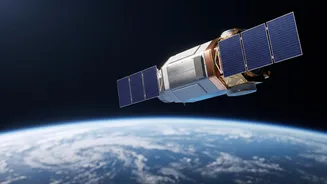


Introducing the Bharatiya Antariksha Station
India's next giant leap in space exploration has a name: the Bharatiya Antariksha Station (BAS). This ambitious project, spearheaded by the Indian Space Research Organisation (ISRO), aims to establish a permanent Indian outpost in low-Earth orbit by 2035.
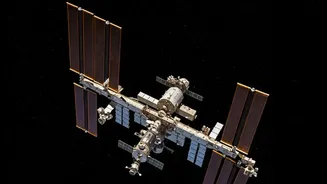
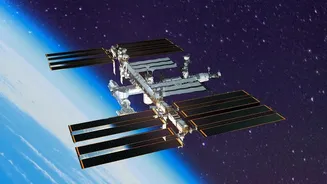
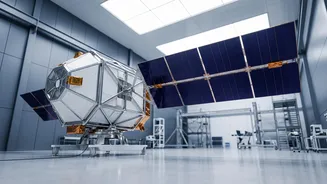
Unlike a monolithic satellite, the BAS is designed as a modular station, meaning it will be constructed piece by piece in space. The full station is planned to be a 52-tonne, five-module structure orbiting at an altitude of about 400-450 kilometres. This modular approach allows for a phased rollout, with the first component, a robotic module designated BAS-01, targeted for launch by 2028. This initial module will serve as the foundation, allowing ISRO to test critical technologies before the station is ready for human habitation.
Building on the Gaganyaan Foundation
The journey to the Bharatiya Antariksha Station doesn't start from scratch. It's the logical and ambitious next step following the Gaganyaan mission, India's inaugural human spaceflight programme. Gaganyaan is focused on developing the core capabilities required to send a crew of three astronauts into orbit for a short duration and bring them back safely. Think of Gaganyaan as learning to sprint, while the BAS is about training for a marathon. The technologies perfected for Gaganyaan—including life support systems, crew escape protocols, and the human-rated LVM3 rocket—are the essential building blocks for a long-duration presence in space. The orbital station project is an official extension of the Gaganyaan programme, indicating that every successful test and mission brings India one step closer to not just visiting space, but living and working there.
What New Capabilities Will It Unlock?
Having a space station is a game-changer for a nation's space programme. First and foremost, it enables long-duration human spaceflight. Instead of missions lasting a few days, Indian astronauts, or 'Gaganauts', could stay in orbit for three to six months. This sustained presence is critical for conducting complex scientific experiments in a microgravity environment, something that is impossible to replicate on Earth for long periods. Research in microgravity has profound implications for fields like medicine, materials science, and biotechnology. Scientists can study the effects of weightlessness on the human body, grow purer protein crystals for drug development, and manufacture unique alloys. The station will also serve as a crucial testbed for technologies needed for future interplanetary missions, including India's goal of a crewed lunar landing by 2040.
The Science of a Home in Orbit
The BAS will be a state-of-the-art laboratory in the sky. It allows for continuous research without the constraints of gravity, which affects everything from fluid dynamics to cell growth. For example, studying how muscle stem cells regenerate or how resilient organisms like tardigrades reproduce in space can yield insights beneficial for both astronaut health and treating diseases on Earth. Furthermore, experiments with edible microalgae could lead to sustainable life support systems that generate oxygen and food, a vital technology for long-haul space travel. The station also opens doors for developing advanced materials, like crystal-free optical fibres or stronger, lighter metal foams, which have significant industrial applications back home. It's a unique platform where the pursuit of fundamental knowledge can lead to tangible technological and economic benefits.
A New Stature on the World Stage
Operating an orbital station is a capability currently held by a very select group of nations. By building the BAS, India will join this exclusive club, cementing its status as a major global space power. This move enhances India's strategic autonomy in space, reducing its reliance on international partners for long-duration experiments or astronaut training. The station's planned orbital inclination could also make it accessible to spacecraft from the US, Russia, Europe, and Japan, opening avenues for international collaboration on India's own terms. As the International Space Station (ISS) ages, new national and commercial stations are expected to form the next era of human activity in orbit. By investing in the BAS, India is not just catching up; it is strategically positioning itself to be a key player in the future architecture of human space exploration.