


First Steps: Prep for Success
The moment you walk in with drenched shoes, the clock starts ticking. Before you do anything else, a little preparation can make all the difference. First, remove the insoles and laces. Insoles act like sponges, holding a huge amount of moisture, while
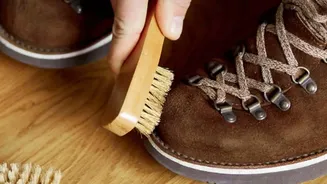
laces can prevent air from circulating freely inside the shoe. Drying them separately speeds up the entire process significantly. If your shoes are caked in mud, give them a quick clean with a brush and a mild detergent solution before you begin drying. Starting with clean shoes prevents dirt from setting into stains and stops odours before they start. Shake out any excess water and give the exterior a quick wipe with a dry cloth.
The Newspaper Method: An Old-School Classic
There's a reason this trick has been passed down for generations: it works. Newspaper is highly absorbent and perfect for drawing moisture out from the inside of your shoes. Crumple up several sheets of black-and-white newsprint—avoiding glossy, coloured pages, as the ink can transfer—and stuff them loosely inside each shoe. Pack the paper all the way to the toe, ensuring it fills the space to help the shoe keep its shape. For exceptionally wet shoes, you may need to replace the newspaper every few hours as it becomes saturated. Simply swap the damp paper for fresh, dry sheets to continue the absorption process. It’s a scientifically sound method that outperforms many alternatives without causing any damage.
Fan It Out: The Power of Airflow
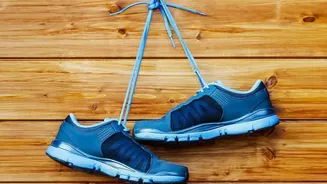
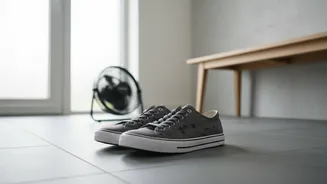
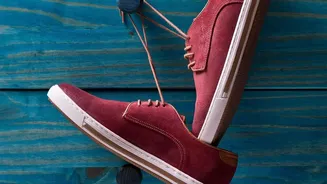
For a faster, yet equally safe, drying method, turn to a simple room fan. Good airflow is one of the most efficient ways to evaporate moisture without resorting to risky heat. After prepping your shoes, place them in front of a table or floor fan. You can prop them up on their sides or even hang them from the fan's grill by the laces (if you didn't remove them) to ensure the cool air circulates directly into the shoe's interior. This technique is much faster than air-drying alone and is completely safe for all shoe materials, from canvas to leather. Depending on how soaked they are, your shoes could be dry in just a couple of hours.
Critical Mistakes to Avoid
What you don't do is just as important as what you do. The biggest mistake is using direct, high heat. Never place your sneakers on a radiator, in front of a heater, or use a hair dryer on a high setting. Intense heat can weaken adhesives, causing the soles to separate, and can make materials like leather crack or warp. Similarly, tossing your shoes into a clothes dryer is a bad idea; the tumbling can damage the shoe's structure, and the heat can cause them to shrink or deform. Also, avoid leaving your shoes to dry in direct sunlight for too long, as UV rays can cause colours to fade and materials to become brittle. Finally, never store shoes away until they are completely dry, as this creates a breeding ground for odour-causing bacteria and mould.
Banishing Odours and Staying Fresh
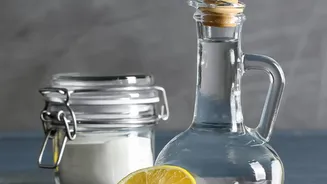
Even with proper drying, the dampness of monsoon season can leave shoes with a lingering musty smell. Once your shoes are mostly dry, you can tackle odours by sprinkling a bit of baking soda inside each one and letting it sit overnight. The baking soda will absorb any remaining moisture and neutralise bad smells. Simply vacuum or shake out the powder in the morning. Another helpful habit is to rotate your footwear. Wearing the same pair every day doesn't give them enough time to fully air out, trapping moisture and encouraging bacterial growth. By alternating between two or three pairs, you give each one at least 24 hours to dry completely.