







From Startup to Spacelift
Founded in 2018 by former ISRO scientists Pawan Kumar Chandana and Naga Bharath Daka, Hyderabad-based Skyroot Aerospace was born from a simple but audacious goal: to make spaceflight as accessible and affordable as air travel. For years, the global space industry
was dominated by government agencies and a few mega-corporations, leaving a gap for smaller satellite companies that needed quick, reliable, and cost-effective launches. Chandana and Daka saw an opportunity, anticipating an explosion in the small satellite market. They set out to build launch vehicles tailored for this emerging demand, a move that placed them at the vanguard of India's commercial space revolution.
A Historic First Step
The company's vision became a reality on November 18, 2022. On that day, Skyroot launched Vikram-S, India's first-ever privately developed and launched rocket. The suborbital mission, named 'Prarambh' (The Beginning), was a landmark moment. Though a relatively small rocket, its successful flight to an altitude of 89.5 km validated Skyroot's core technologies, from its all-composite structure to its advanced avionics. More importantly, it sent a powerful signal to the world: India's private sector was officially in the space race. The launch was a culmination of government policy shifts, including the 2020 establishment of IN-SPACe, a body designed to facilitate private participation in the space sector.
The Next Frontier: Vikram-1
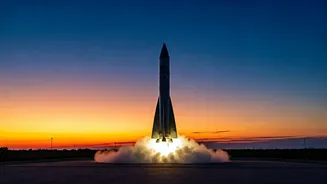
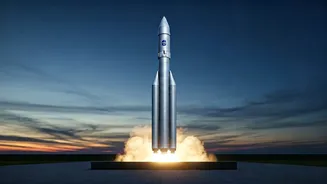
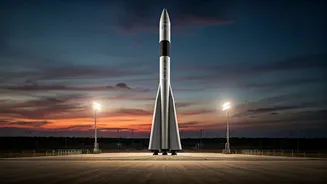
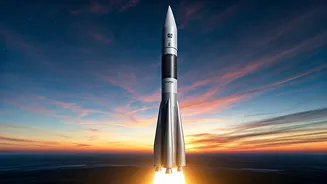
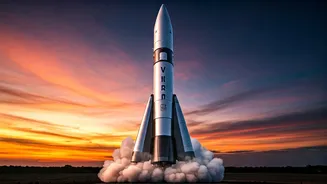
Skyroot is now preparing for its most ambitious mission yet: the launch of Vikram-1. Unlike its predecessor, Vikram-1 is an orbital-class rocket, designed to deploy satellites into Low Earth Orbit. The upcoming mission, named 'Aagaman' (The Arrival), is scheduled for a launch window between July 12 and August 4, 2026. This multi-stage vehicle is capable of carrying payloads up to 350 kg to an altitude of 450 km. A successful orbital launch would be a monumental achievement, proving that a private Indian company can compete with established global players. It will be a partially commercial flight, with the company planning to commence full commercial operations after one or two successful demonstrations.
Technology Fueling the Dream
At the heart of Skyroot's momentum is its innovative approach to rocket science. The company leverages cutting-edge technologies like 3D printing to manufacture its engines, dramatically reducing cost and production time. The Vikram-1 rocket features an all-carbon fibre body, making it one of the lightest vehicles in its class. Its engines, named 'Dhawan' after Indian rocket scientist Satish Dhawan and 'Kalam' after former President A.P.J. Abdul Kalam, are a mix of solid and liquid propulsion systems. The successful test of its Dhawan-II cryogenic engine, for example, demonstrated the viability of using 3D-printed components for complex, high-performance systems. This focus on agile manufacturing and modular design is key to their goal of a high launch cadence.
Powering a New Space Economy
Skyroot's rise is emblematic of a larger shift in India's economic landscape. The government's space reforms, including the Indian Space Policy 2023, have opened the floodgates for private investment and innovation. Since the sector was opened up in 2020, over 400 space-tech startups have emerged in India. India’s space economy, valued at around $8.4 billion, is projected to grow to $44 billion by 2033. Skyroot, which recently became India's first space-tech unicorn with a valuation over $1.1 billion, is a leading example of this potential. The company has attracted significant funding from global investors like Singapore's GIC, BlackRock, and Sherpalo Ventures, signalling strong confidence in its business model and India's growing ecosystem.