




A Faint Clue, Light-Years Away
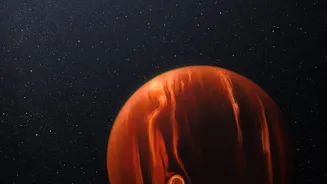
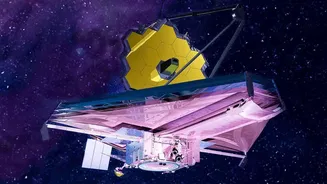
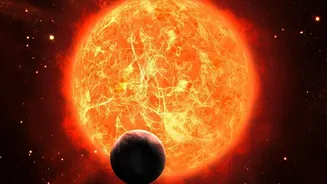
The breakthrough comes courtesy of the James Webb Space Telescope (JWST), which has once again proven its extraordinary capabilities. The telescope analyzed the atmosphere of a Saturn-sized planet named TOI-199 b, located more than 330 light-years from
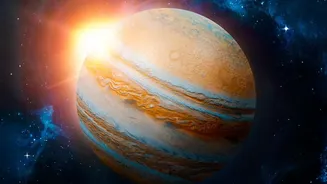
Earth. By studying the starlight that filtered through the planet's atmosphere—a technique known as transmission spectroscopy—researchers identified the chemical fingerprint of methane. This planet is unique because it's a 'temperate' gas giant, neither scorching hot like the 'hot Jupiters' often found close to their stars, nor frozen like the giants in our own solar system. Its estimated temperature is a relatively mild 79 degrees Celsius, making it a rare and valuable subject for study.
Why Methane Matters
On Earth, methane is a gas intimately linked with life. From microbes in wetlands to the digestive tracts of animals, biological processes produce it in vast quantities. In the context of exoplanets, this makes methane a tantalizing 'biosignature'—a potential sign of life. The gas is chemically unstable in an atmosphere, meaning that photochemical reactions, especially from starlight, break it down relatively quickly. For a planet to have a methane-rich atmosphere, something must be constantly replenishing it. While there are non-biological sources, the sheer quantity of methane in Earth's atmosphere is sustained by living organisms. This is why finding it elsewhere, particularly on a rocky planet in the habitable zone, is a primary goal for astrobiologists.
Not Aliens... Yet
It is crucial to temper excitement with scientific caution. The detection of methane on TOI-199 b is not proof of extraterrestrial life. Firstly, TOI-199 b is a gas giant, similar in size to Saturn, not a rocky, Earth-like world where we might expect to find surface life. Secondly, methane can be produced by purely geological processes. Volcanoes, reactions in hydrothermal vents, and even asteroid impacts can all release methane into an atmosphere. Scientists stress that the context of the discovery is everything. A truly compelling biosignature would likely involve detecting methane alongside other gases, such as carbon dioxide, but with a notable absence of carbon monoxide. This specific combination is hard to explain with non-biological chemistry alone, as many geological processes that produce methane would also produce carbon monoxide.
A Telescope's Triumph
Regardless of its source, the detection of methane on a temperate giant like TOI-199 b is a significant achievement. Models had long predicted that such planets would contain methane, and the JWST's observation provides the first concrete confirmation. This helps scientists refine their theories about how planets and their atmospheres form and evolve, especially for classes of planets that don't exist in our own solar system. Before the JWST, methane had been surprisingly elusive in exoplanet atmospheres, leading to complex theories about why it might be absent. This clear detection shows the telescope is performing exactly as hoped, capable of parsing the subtle chemical clues from worlds light-years away.