






Why Humidity Is a Game-Changer for Exercise
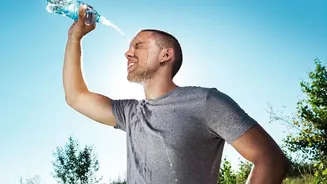
When you exercise, your body produces heat, and you cool yourself down by sweating. As sweat evaporates from your skin, it takes heat with it. However, when the air is already saturated with water vapor—as it is in high humidity—your sweat can't evaporate efficiently.
As a result, your body's primary cooling mechanism is compromised. To compensate, your body sends more blood to the skin to try to radiate heat away. This means less blood, and therefore less oxygen, is available for your working muscles. Your heart has to pump harder to circulate blood for both cooling and muscle work, leading to an increased heart rate even at a slower pace. This double-duty strain is why a familiar workout can feel significantly tougher and why your usual pace is not a reliable measure of effort.
From Pace to Perception: A Smarter Metric
Instead of fixating on your watch's pace data, shift your focus to your Rate of Perceived Exertion (RPE). RPE is a scale from 1 to 10 that measures how hard you feel your body is working. A 1 would be sitting on the couch, while a 10 is an all-out, unsustainable sprint. In humid conditions, aiming to maintain your usual effort level rather than your usual pace is a safer and more effective training strategy. For example, if an easy run normally feels like a 3-4 on the RPE scale, you should aim for that same feeling in the humidity, even if it means your pace is 30 or 60 seconds slower per kilometre. Studies show that in hot conditions, both heart rate and RPE increase for the same amount of work, confirming that your body is genuinely under more stress. By running by feel, you allow for these daily environmental fluctuations and ensure your easy days are truly easy and your hard days are appropriately challenging, not dangerously taxing.
Key Body Signals to Monitor
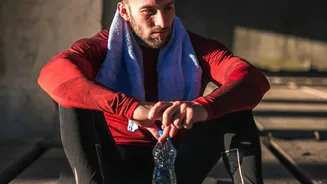
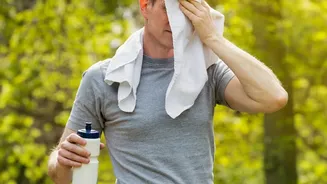
Listening to your body means paying attention to specific signals. First, monitor your breathing and heart rate. If they feel excessively high for your effort, it’s a clear sign to slow down. Second, notice your sweat. While heavy sweating is normal, if it's paired with cool, clammy skin, it could be an early sign of heat exhaustion. Conversely, if you stop sweating altogether, it's a major red flag indicating your body's cooling system is overwhelmed. Third, pay close attention to any feelings of dizziness, lightheadedness, nausea, or a headache. These are not signs of a good workout; they are urgent signals that your body is struggling to cope with the heat and you need to stop, cool down, and hydrate.
Practical Adjustments for Humid Workouts
Adapting to the humidity involves more than just slowing down. Hydration is crucial, so be sure to drink plenty of water before, during, and after your workout. For longer sessions, a sports drink can help replace lost electrolytes. Consider the timing of your workout; early mornings or late evenings are typically cooler and less humid. Adjust your route to include more shade, and choose lighter, moisture-wicking clothing to help what little evaporation can occur. Also, be willing to change the workout itself. A long run might need to be shortened, or a high-intensity interval session might be better replaced with a steady, low-effort day. Allowing your body 10 to 14 days to gradually acclimate to the heat can also make a significant difference in how you feel and perform.
Recognising the Danger Zone: Heat Exhaustion vs. Heatstroke
It's vital to know the difference between normal workout fatigue and heat-related illness. Heat exhaustion often begins with symptoms like heavy sweating, a rapid but weak pulse, cool and clammy skin, muscle cramps, dizziness, and nausea. If you experience these, you must stop exercising, move to a cooler place, and rehydrate immediately. If left untreated, heat exhaustion can progress to heatstroke, which is a life-threatening medical emergency. Signs of heatstroke include a high body temperature (above 104°F or 40°C), a fast and strong pulse, confusion or disorientation, and hot, red skin, which may be dry or moist. If you suspect someone is suffering from heatstroke, seek immediate medical help.