




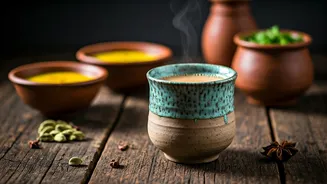


Why Immunity Matters in Monsoon
The rainy season creates an ideal environment for bacteria, viruses, and fungi to thrive. [12, 17, 25] Fluctuating temperatures and contaminated water can weaken our body's natural defenses, making us more prone to illness. [10, 17, 21] According to Ayurveda,
our digestive fire, or 'agni', can also become sluggish during this season, affecting overall health. [3] A strong immune system is your best shield, and incorporating specific, nutrient-rich foods into your diet is a simple and effective way to support it. [19]
The Golden Healer: Turmeric
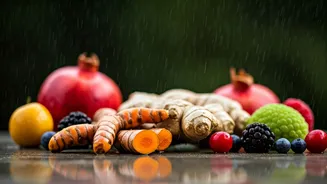
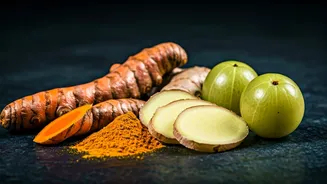
A staple in every Indian kitchen, turmeric is prized for its medicinal properties. [20, 28] Its active compound, curcumin, has powerful anti-inflammatory and antioxidant effects that help fortify the immune system against infections. [13, 20, 28] Enjoying a warm glass of 'haldi doodh' (turmeric milk) before bed is a traditional remedy to help soothe coughs and colds and strengthen resistance. [4, 19, 20] You can also add a pinch of this golden spice to your daily curries and soups. [4, 27]
The Warming Spice: Ginger
Ginger is another kitchen hero, especially during damp weather. Known for its warming effect, it is highly valued for its ability to aid digestion and fight respiratory issues. [5, 13, 27] The active compound gingerol has potent anti-inflammatory and antiviral properties, making it effective against the common cold and sore throats. [5, 27] A hot cup of ginger tea, often brewed with tulsi or lemon and honey, is a comforting and beneficial drink for the season. [5, 20]
The Potent Protector: Garlic
Garlic is a powerful natural protector thanks to a compound called allicin, which has strong antimicrobial and antiviral properties. [4, 28] Studies suggest allicin enhances the disease-fighting response of certain white blood cells when they encounter viruses, like those that cause the common cold and flu. [4, 13] To get the maximum benefit, it's best to consume garlic crushed or chopped. [13] Adding it to dals, rasam, or stir-fries is an easy way to incorporate this immune-supporting food into your meals. [5]
The Vitamin C Powerhouse: Citrus Fruits
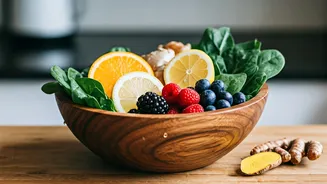
Citrus fruits like lemons, oranges, and especially amla (Indian gooseberry) are packed with Vitamin C. [3, 7] This essential nutrient is known to boost the production of white blood cells, which are key to fighting infections. [6, 28] Amla, in particular, is celebrated in Ayurveda for its incredibly high Vitamin C content and antioxidant properties. [23] Starting your day with a glass of warm lemon water or adding fresh amla to your routine can significantly support your body's defenses. [19]
Gut Health Guardians: Probiotics
A healthy gut is directly linked to a strong immune system. [8, 19] Probiotic-rich foods like yoghurt (curd) and other fermented foods help maintain a healthy balance of gut bacteria. [3, 4] This supports digestion and enhances your body's ability to fight off pathogens. [8] Opt for plain, low-fat yoghurt and consume it during the daytime. [3, 6] You can also include traditional fermented foods like idli and dosa in your diet. [3]
Seasonal Fruits and Vegetables
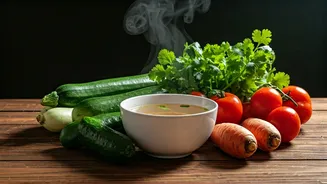
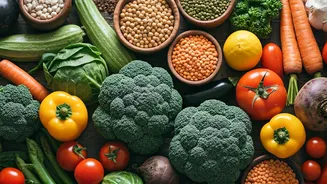
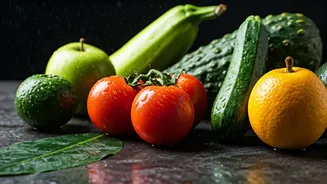
The monsoon brings a bounty of beneficial fruits and vegetables. Jamun (black plum), with its deep purple hue, is rich in iron and antioxidants. [22, 23] Pomegranates are another excellent choice, packed with vitamins and antiviral properties. [2] Gourds such as bitter gourd (karela), bottle gourd (dudhi), and snake gourd (chichinda) are recommended as they are easy to digest and full of nutrients. [9, 11] It's generally advised to lightly steam or cook vegetables during this season rather than eating them raw to avoid contamination. [3]