



A Perfect and Unchanging Sky
For centuries, the prevailing view of the cosmos in Europe was inherited from the ancient Greek philosopher Aristotle. He proposed a geocentric, or Earth-centred, universe. In this model, the Earth was imperfect and changeable, while the heavens—everything
beyond the Moon—were perfect, eternal, and unalterable. The stars were thought to be fixed to a celestial sphere that rotated around the Earth. This idea, that change could only happen in the 'sublunary' sphere below the moon, was a cornerstone of both physics and philosophy for nearly two millennia.
A New Star Appears
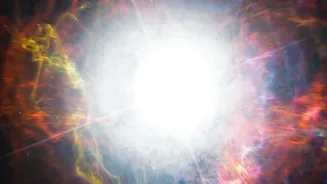
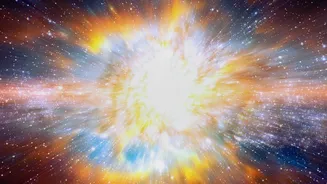
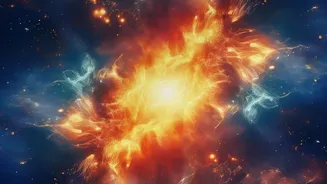
In early October 1604, observers in Italy, China, and Korea noted the sudden appearance of a 'new star' (or 'stella nova') in the constellation Ophiuchus, the serpent-bearer. It was astonishingly bright, at its peak appearing more brilliant than any star or planet, and was even visible during the day for over three weeks. The timing was remarkable; many astronomers were already watching that patch of sky for a significant conjunction of planets. This new arrival, in a realm that was supposed to be immutable, created an immediate and fierce debate. Some argued it must be a phenomenon in Earth's upper atmosphere, as the heavens themselves could not change.
Enter Johannes Kepler
Though not the first to see it, the German astronomer Johannes Kepler began his own meticulous observations on October 17 from Prague. He tracked the star for over a year until it faded from naked-eye view. His detailed work, published in 1606 in the book 'De Stella Nova in Pede Serpentarii' (On the New Star in the Foot of the Serpent Handler), became the definitive account of the event. By making careful measurements, Kepler demonstrated that the star showed no detectable parallax—the apparent shift in position when viewed from different locations. This was crucial proof that the object was not nearby, but located far away in the realm of the 'fixed' stars.
Shattering the Celestial Spheres
Kepler's star, following just 32 years after another supernova observed by Tycho Brahe in 1572, delivered a powerful blow to the Aristotelian worldview. If new stars could appear and then fade away in the supposedly perfect heavens, then the heavens were not unchanging after all. This observation provided powerful evidence for astronomers like Kepler and Galileo Galilei who were challenging the old models. It helped pave the way for a new, dynamic understanding of the cosmos, one where the Earth was not the centre and the universe was a place of dramatic transformation. It was a pivotal moment, shifting astronomy from philosophical doctrine toward empirical observation.
What We Know Today
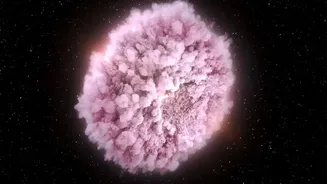
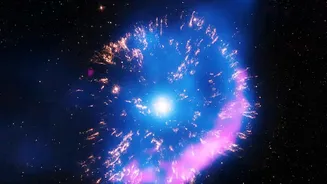
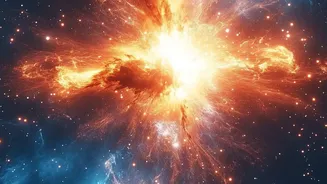
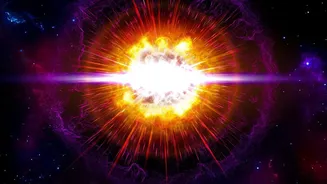
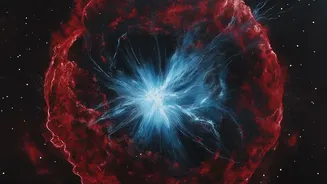
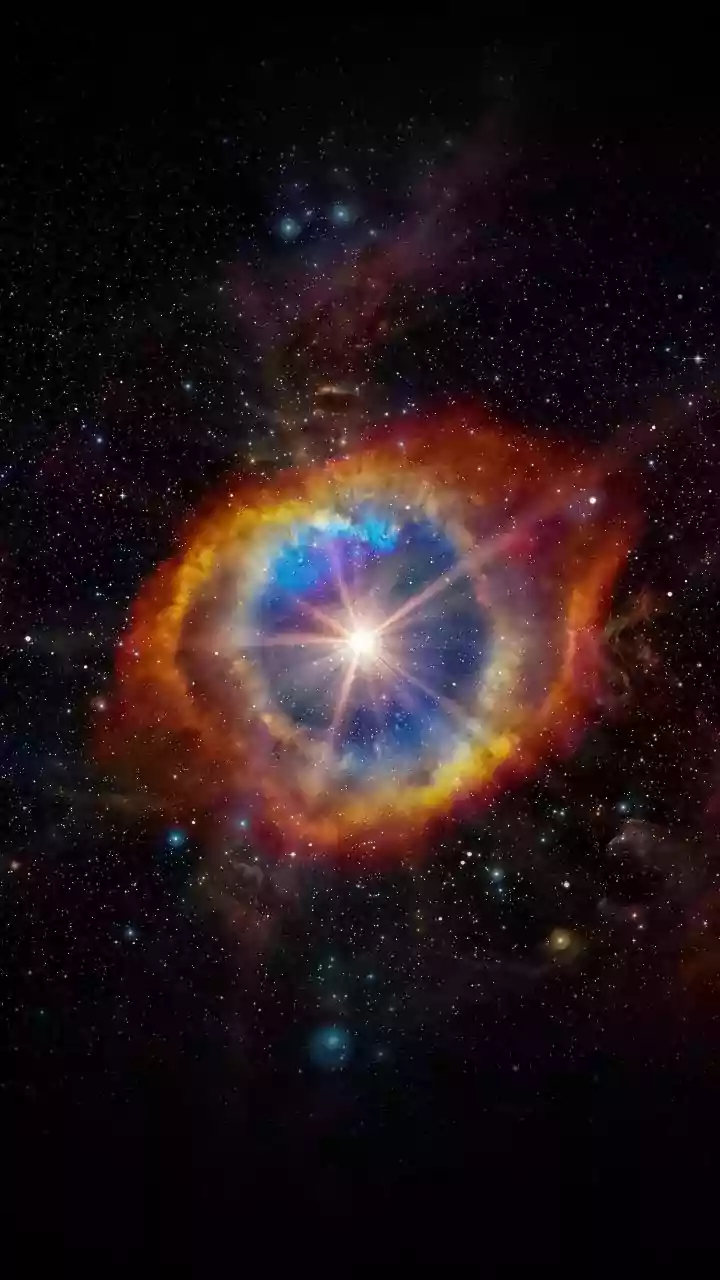
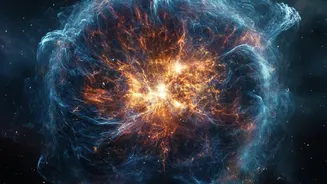
Today, we know that what Kepler observed was not the birth of a star, but its violent death. Designated SN 1604, it was a Type Ia supernova, the thermonuclear explosion of a white dwarf star in a binary system. Located about 20,000 light-years from Earth, it is the most recent supernova to have been observed with the naked eye in our own Milky Way galaxy. Modern telescopes like the Chandra X-ray Observatory can study the expanding cloud of debris, known as a supernova remnant. By analysing this remnant, astronomers have found that some material is blasting outwards at incredible speeds, up to 25,000 times the speed of sound on Earth, providing valuable clues about the dynamics of these powerful cosmic explosions.