



A Tale of Two Telescopes
On the surface, the Hubble and Roman space telescopes share a key piece of DNA: a 2.4-meter (7.9-foot) primary mirror. This is the heart of the telescope, the curved surface that collects light from the universe's most distant corners. But that’s where
the similarities largely end. Think of Hubble as a specialist, a surgeon capable of performing incredibly deep and detailed observations of very specific, small targets. Roman, on the other hand, is a surveyor, designed to map vast regions of the sky with incredible speed and efficiency. It's less about which one is 'better' and more about how their different designs serve unique and complementary scientific goals.
The Power of a Panoramic View
The single most significant difference between the two observatories is their field of view. Roman's Wide Field Instrument can capture an area of the sky at least 100 times larger than Hubble's cameras in a single shot, all while maintaining a similar, razor-sharp image resolution. To put that in perspective, in its 30-plus years of operation, Hubble has managed to observe about 0.1% of the entire sky. In its initial five-year mission, Roman is projected to image an area 50 times larger than what Hubble has covered in its entire lifetime. This panoramic capability is like swapping a keyhole for a giant bay window, allowing astronomers to create enormous cosmic maps far more quickly.
New Quests: Dark Energy and Exoplanets
This wide-field superpower enables Roman to tackle some of the biggest mysteries in cosmology, namely dark energy and dark matter. These enigmatic forces are believed to make up roughly 95% of the universe, and Roman is designed to study their effects on a grand scale. By surveying billions of galaxies, the telescope will map the large-scale structure of the cosmos and observe distant supernovae to measure the expansion rate of the universe over time. It will also conduct a massive census of exoplanets, planets outside our solar system, using a technique called gravitational microlensing. This method is sensitive enough to find planets down to the mass of Mars, including free-floating 'rogue' planets that don't orbit a star.
Seeing in a Different Light
While both telescopes observe infrared light, which is invisible to the human eye, their ranges differ. Hubble is sensitive to ultraviolet, visible, and near-infrared light. Roman is focused on visible and near-infrared wavelengths, which are crucial for peering through cosmic dust and looking back toward the early universe. Roman also carries an advanced Coronagraph Instrument, a technology demonstrator designed to block the overwhelming glare of a star. This will allow astronomers to directly image giant exoplanets, a feat that is extremely difficult with current technology, paving the way for future missions to search for habitable worlds.
Building on a Legacy, Not Replacing It
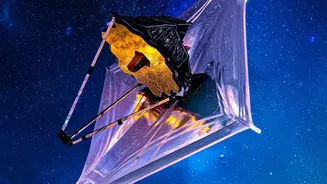
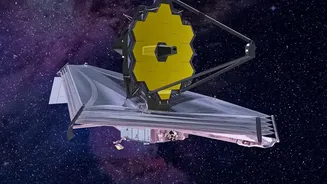
Despite the 'versus' in the headline, Roman is not a Hubble replacement. Instead, it is a powerful new tool that will work in tandem with other observatories, including the James Webb Space Telescope. Roman's talent is finding the 'needles in a haystack'—rare objects, transient events, and areas of particular interest across huge patches of sky. Once Roman identifies these targets, telescopes like Hubble and Webb can perform the deep-dive follow-up observations. This collaborative approach represents the next logical step in astronomy, where wide-angle surveys provide the context for focused, high-detail studies, ensuring the cosmos continues to reveal its secrets.