








The Government's Green Signal
The single biggest catalyst for this boom has been a fundamental shift in government policy. For decades, India's space programme was the exclusive domain of the Indian Space Research Organisation (ISRO). While incredibly successful, this state-led model
had its limits. In 2020, the government announced a landmark reform, opening the space sector to private participation. The creation of the Indian National Space Promotion and Authorisation Center (IN-SPACe) in 2022 was the game-changer. IN-SPACe acts as a single-window agency, facilitating private companies' access to ISRO's world-class facilities, technology, and expertise. This policy shift effectively rolled out the red carpet for private enterprise, signalling that the government was ready to move from being the sole operator to a supportive enabler. This has unleashed a wave of investment and entrepreneurial energy that was previously locked out.
The Rise of Private Pioneers
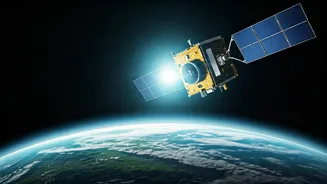
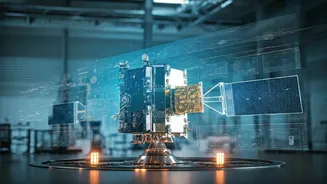
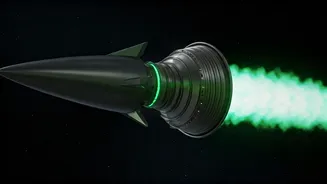
With the policy floodgates open, a vibrant ecosystem of private space-tech startups has emerged. Companies like Skyroot Aerospace, which successfully launched India's first privately developed rocket, Vikram-S, and Agnikul Cosmos, known for its 3D-printed rocket engines, are no longer just ambitious concepts—they are operational realities. These firms are building everything from small satellite launch vehicles to satellite constellations. Pixxel is developing a hyperspectral imaging satellite network to monitor global resources, while Dhruva Space is building satellite platforms and components. This private sector surge is creating a competitive, dynamic market. It's not just about launching rockets; it's about building the entire supply chain, from component manufacturing and testing to ground station management and satellite data analysis. Each new startup and successful funding round creates a fresh batch of high-skill jobs.
More Than Just Rocket Science
The modern space-tech industry demands a far wider range of skills than just aerospace engineering. As space becomes a commercial domain, the required expertise has diversified dramatically. The sheer volume of data beamed back from satellite constellations requires an army of data scientists and AI/ML engineers to process and analyse it for applications in agriculture, climate monitoring, urban planning, and defence. Software developers are needed to write the code that controls spacecraft, manages ground systems, and builds the platforms that deliver satellite services to end-users. Furthermore, the industry needs experts in robotics for in-orbit servicing and manufacturing, materials scientists to develop lighter and stronger components, and cybersecurity professionals to protect critical space assets. There's even a growing demand for space lawyers to navigate complex international treaties and finance professionals to structure deals for these capital-intensive ventures.
A Multi-Billion Dollar Opportunity
The economic potential is staggering. According to the Indian Space Association (ISpA), India's space economy is projected to reach $13 billion by 2025. This growth isn't just theoretical; it's being driven by the global demand for satellite-based services. The 'downstream' market—which includes services like satellite broadband, Earth observation data, and navigation—is where the bulk of the commercial value lies. Startups and established companies are racing to capture a piece of this market. This sustained commercial demand ensures that the career boom is not a temporary bubble. As the cost of launching satellites decreases, thanks to reusable rockets and smaller satellite designs, the number of applications will only multiply, creating a virtuous cycle of innovation and job creation. This makes a career in space-tech not just an exciting prospect, but a long-term, sustainable choice.