




The Gathering Dusk
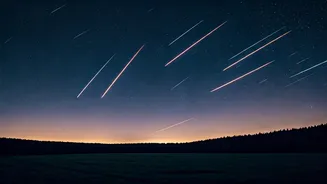
Across India, from the clear skies above Himalayan foothills to coastal clearings away from city lights, a unique kind of celebration is unfolding. It’s not one of loud music or fireworks. Instead, it’s marked by the quiet hum of anticipation. Families
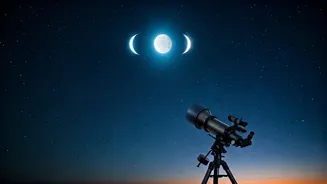
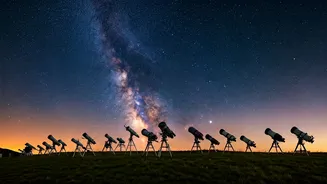
and friends, members of amateur astronomy clubs, and curious first-timers arrange foldable chairs and blankets on the cool grass. Telescopes, looking like strange, futuristic cannons, are carefully assembled and pointed towards the heavens. There’s a shared sense of purpose in the air, a collective holding of breath as the last vestiges of daylight fade and the first pinpricks of starlight emerge. This is the modern ritual of the solstice stargazer, a tradition both ancient in spirit and contemporary in practice.
More Than Just the Longest Day
For most, the summer solstice is simply the day with the most sunlight. Astronomically, however, it’s a precise moment. It occurs when one of Earth's poles has its maximum tilt toward the Sun. For the Northern Hemisphere, this usually falls around June 21st. On this day, the Sun reaches its highest position in the sky, tracing its longest possible path and giving us the most daylight hours. While ancient cultures built monuments like Stonehenge to align with this celestial event, today’s celebrations are more about appreciating the natural spectacle. It’s a perfect excuse to stay up late, shrug off the digital glare of screens, and reconnect with the grand, silent clockwork of the cosmos.
A Tour of the Summer Sky
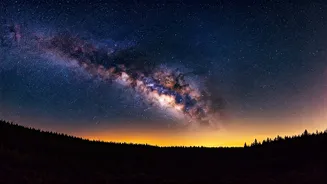
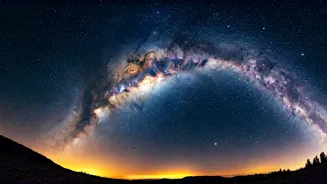
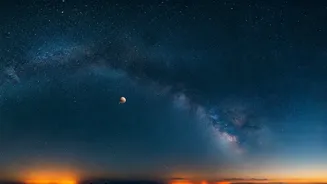
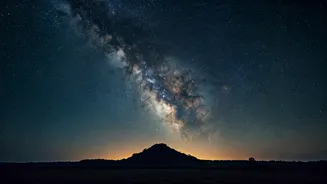
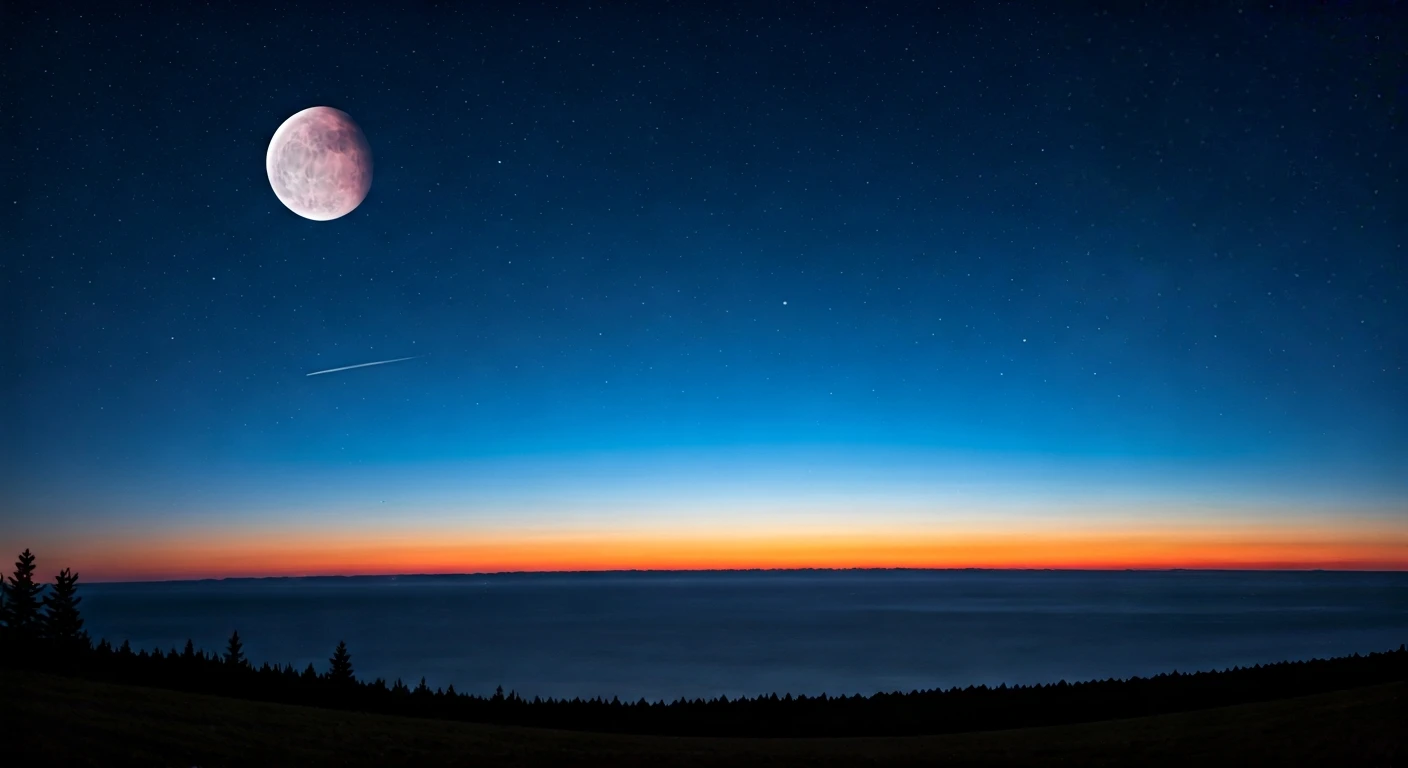
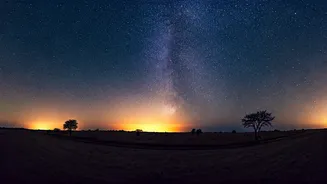
As true darkness settles in, the night sky transforms into a celestial theatre. The star-dusted river of the Milky Way becomes a breathtaking backdrop, especially in areas with low light pollution. Veteran astronomers guide newcomers, their laser pointers cutting thin green lines through the dark to trace ancient patterns. They point out the Summer Triangle, an unmissable asterism formed by three brilliant stars: Vega, Deneb, and Altair. Each star belongs to a different constellation—Lyra the Harp, Cygnus the Swan, and Aquila the Eagle. Other summer highlights include the fiery red star Antares in the heart of Scorpius, and the distinct 'teapot' shape of Sagittarius, which points directly toward the dense, glittering core of our galaxy. For many, seeing these sights through a telescope for the first time—the rings of Saturn, the craters of the Moon, or a distant, fuzzy galaxy—is a moment of pure, unadulterated wonder.
The Human Connection
While the stars are the main attraction, the real heart of these gatherings is the community. It’s the shared gasps of awe, the collaborative effort to focus a tricky lens, and the patient explanations passed from experienced observers to wide-eyed children. In a world that often feels fast-paced and isolating, these stargazing circles offer a space for connection—not just to the universe, but to each other. People from all walks of life bond over a shared curiosity. Stories are exchanged in hushed tones under the vast canopy of night. The simple act of looking up together fosters a powerful sense of unity and reminds us of our shared place in the cosmos, making us feel simultaneously small and infinitely connected.
Finding Your Own Patch of Sky
The beauty of stargazing is its accessibility. You don’t need a sophisticated telescope to start. Many of these solstice gatherings are beginner-friendly, organised by local science centres or astronomy clubs that are eager to welcome new members. If you’re inspired to look up on your own, start simple. Find a spot away from direct city lights, let your eyes adjust to the darkness for about 20 minutes, and use a stargazing app on your phone (in night mode, of course) to identify constellations. A good pair of binoculars can reveal surprising detail, like the moons of Jupiter or the Orion Nebula. The solstice may be the perfect occasion, but any clear night offers a chance to explore the universe from your own backyard.