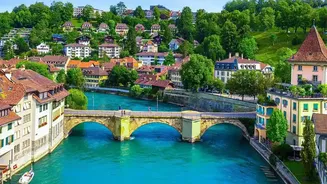


The Bern Old Town Benchmark
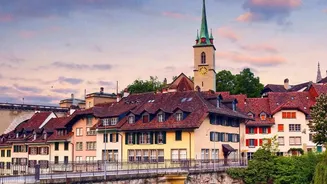
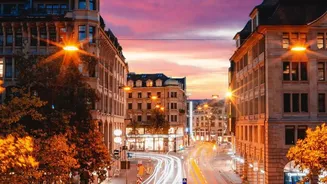
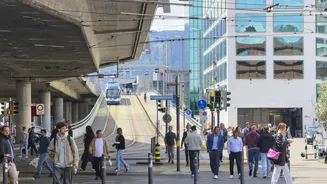
Before we explore other hotspots, let's define our benchmark: Bern's UNESCO-listed Old Town during peak hours. The crowding here is a mix of factors. First, the medieval street layout naturally funnels everyone into the same main arteries like Kramgasse.
Second, key attractions like the Zytglogge clock tower create human traffic jams every hour on the hour as people gather to watch its mechanical show. Add to this the six kilometres of covered arcades, which concentrate shoppers and sightseers into sheltered pathways, especially on rainy days. It’s a crush born of historic architecture, concentrated points of interest, and the simple fact that thousands of people want to experience the same authentic charm at the same time. This is not chaos, but a dense, slow-moving tide of shared appreciation—a feeling you'll find echoed across Switzerland.
1. Zermatt: The Matterhorn Funnel
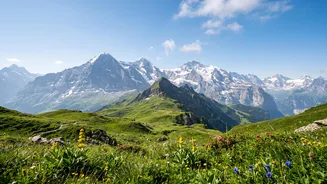
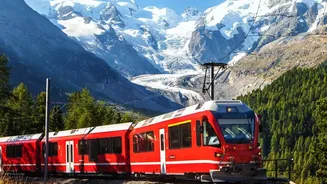
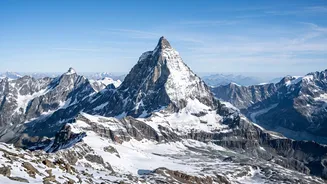
Zermatt experiences a similar funneling effect to Bern, but on a grander scale. This car-free village is the sole gateway to the iconic Matterhorn. Like Bern's main streets, Zermatt's Bahnhofstrasse becomes a congested artery, not with cars, but with hikers, skiers, and day-trippers all moving from the train station towards the cable cars and funiculars. The 'crowd' here isn't just in the village; it's on the transport systems themselves. The Gornergrat railway and the Glacier Paradise cable cars are the Zytglogge of Zermatt—must-do attractions that create long queues and packed carriages, especially mid-morning. The pressure comes from a population of around 6,000 residents hosting nearly two million visitors a year, all channeled toward a few world-famous mountain viewpoints.
2. Lucerne's Chapel Bridge: A Picturesque Bottleneck
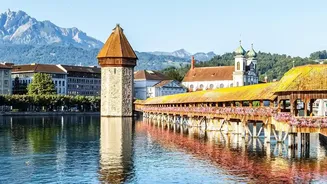
If Bern's Old Town is a network of crowded lanes, Lucerne's Chapel Bridge (Kapellbrücke) is a single, beautiful bottleneck. As Europe's oldest covered wooden bridge, it’s a free-to-access, 24/7 attraction that serves as a primary pedestrian crossing over the Reuss River. An estimated 13,800 people cross it daily. The experience is much like being in Bern's arcades, but suspended over water. Visitors slow their pace to admire the triangular paintings in the rafters, stop for photos of the Water Tower, and create a slow-moving shuffle that can make a simple crossing take several minutes during peak summer afternoons. The crowds here are so predictable that petty theft can be a concern, a common side effect when thousands of distracted tourists are concentrated in one tight, must-see space.
3. Interlaken: The Adventure Transit Hub
Interlaken's crowding is less about a charming old town and more about its function as a massive transit hub, much like Bern's busy train station but for an entire region. The town itself is often described as a functional base rather than the main attraction. The real 'crush' happens at Interlaken Ost station, the mandatory starting point for excursions to the Jungfrau region, including Lauterbrunnen and Grindelwald. This creates a daily pulse of visitors arriving, stocking up on supplies, and transferring to mountain-bound trains. The town's main thoroughfare can feel like a departure lounge for the Alps, filled with tour groups and adventure-seekers. This has led to what locals call 'density stress', a feeling that the town's infrastructure is overwhelmed by its role as a gateway.
4. Jungfraujoch: The High-Altitude Queue
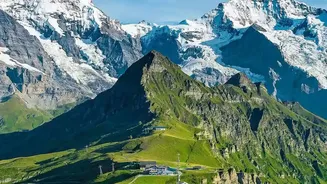
Reaching Jungfraujoch—the 'Top of Europe'—is the ultimate expression of Swiss tourism logistics, and its crowding is a direct result of its success. With over a million visitors annually, the experience is defined by queues and controlled capacity. Much like waiting for Bern's clock tower show, the journey is part of the event. You wait for the Eiger Express gondola, then you wait for the cogwheel train. Once at the top (3,454 meters), the viewing platforms and attractions like the Ice Palace are enclosed spaces that manage a constant flow of visitors. The feeling is less of a gentle crush, like in Bern's streets, and more of a highly organised, high-altitude attraction where your experience is dictated by the movement of the group ahead of you.
5. Lake Geneva: A Seasonal Waterfront Squeeze
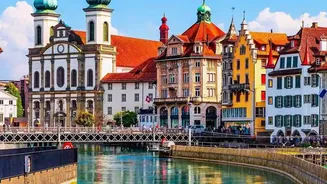
Unlike the contained medieval streets of Bern, the crowds along Lake Geneva are spread out but just as intense, especially during summer. The lakeside promenades in cities like Geneva and Montreux become the main event. The area around the Jet d'Eau in Geneva or the Chillon Castle near Montreux act as focal points, drawing huge numbers of people to a relatively small waterfront area. This is less about architectural funnels and more about seasonal gravity. In summer, everyone wants to be near the water for the views, the breeze, and the atmosphere. This leads to packed lakeside cafes, crowded boat tours, and a constant parade of people along the shore—a more relaxed, spread-out version of the busy but pleasant human tide you find in Bern's Old Town.