


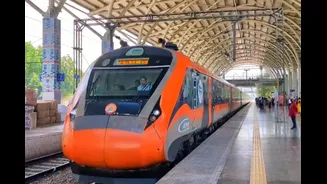




A New Chapter in Overnight Journeys
For decades, Rajdhani Express trains were the gold standard for overnight travel in India. Today, the Vande Bharat sleeper network is poised to redefine that experience. The first commercial service was launched on January 17, 2026, marking a significant
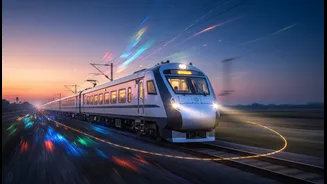
milestone for Indian Railways. These trains are not just an upgrade; they represent a complete reimagining of long-distance rail travel. Designed and manufactured in India, they are self-propelled trainsets, meaning they don't require a separate locomotive. This design allows for faster acceleration and deceleration, cutting down journey times and enabling quicker turnarounds at terminal stations.
The Efficiency Advantage
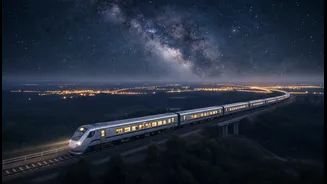
What makes the Vande Bharat sleeper so efficient? The answer lies in a combination of speed, technology, and intelligent scheduling. The trains are capable of reaching speeds up to 180 km/h, though they operate at around 130-160 km/h on most current routes, which is still faster than many existing services. This speed, combined with their rapid acceleration, allows them to cover long distances—typically between 800 km and 1,200 km—in significantly less time. By running overnight, they allow passengers, from professionals to families, to save a travel day and a hotel bill, arriving at their destination refreshed and ready to go.
Connecting Hubs to Holiday Havens
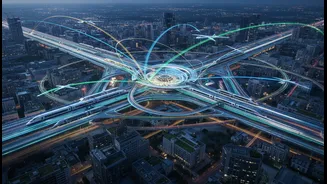
The network is strategically expanding to link major metropolitan centres with popular tourist and pilgrimage destinations. The inaugural route connects Howrah (Kolkata) with Kamakhya (Guwahati), a key corridor for travellers heading to the Northeast. Shortly after, a second service was launched on July 17, 2026, connecting Varanasi with Chheharta (Amritsar), linking two major spiritual centres and boosting tourism in Uttar Pradesh and Punjab. Further routes are already in the pipeline. A much-anticipated service connecting Bengaluru and Mumbai is on the horizon, with trainsets already stationed in Bengaluru awaiting final clearance. Additionally, proposals have been submitted for services connecting Shalimar (West Bengal) to Mumbai and Tatanagar to Varanasi, promising to further weave these efficient sleeper trains into the fabric of national travel.
A Look Inside the Modern Coach
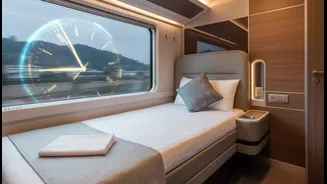
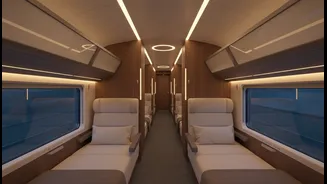
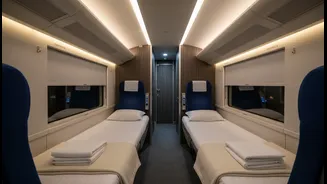
The onboard experience is where the Vande Bharat sleeper truly sets itself apart. Each 16-coach train accommodates 823 passengers across First, Second, and Third AC classes. The interiors are designed with modern aesthetics and passenger comfort in mind. Berths are more ergonomic with better cushioning, and each comes with individual reading lights and USB charging ports. The coaches feature automatic sliding doors, CCTV surveillance, and advanced fire safety systems. Bio-vacuum toilets, similar to those in airplanes, and sensor-based water taps contribute to higher standards of hygiene. Fully sealed gangways keep the interiors dust-free, while noise and vibration have been significantly reduced for a quieter, more stable ride.
The Future of Indian Rail Travel
The introduction of the Vande Bharat sleeper network is more than just the launch of a new train; it's a strategic move to modernize Indian Railways and provide a competitive alternative to road and air travel. By offering a blend of speed, comfort, and safety, these trains are attracting travellers who might have otherwise opted for a flight, especially on routes where total travel time is comparable. With plans to roll out at least 12 more Vande Bharat sleeper services by March 2027, the network is set for rapid expansion. This 'Make in India' success story is not just changing how people travel between cities but also boosting domestic tourism and setting a new global benchmark for overnight rail journeys.