






The Allure of a Career at ISRO
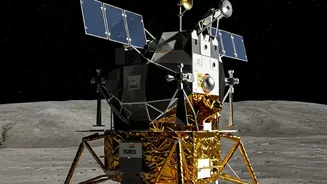
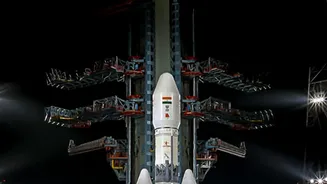
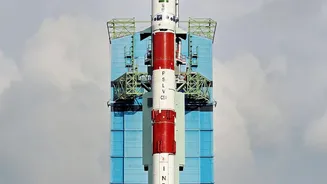
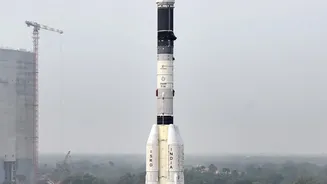
Joining ISRO means becoming part of a legacy of national pride and cutting-edge innovation. From launching lunar missions to developing satellite technology that impacts daily life, ISRO scientists and engineers work on projects of immense national importance.
For a fresh engineering graduate, it represents an opportunity to apply their technical skills to challenging problems while contributing directly to India's technological progress. The role of a Scientist/Engineer 'SC' is the primary entry point for young graduates, offering a launchpad into a secure, respected, and intellectually stimulating career in the space sector.
Understanding the Recruitment Routes
ISRO primarily recruits Scientist/Engineer 'SC' through two main channels. The first is a direct written test conducted by the ISRO Centralised Recruitment Board (ICRB), followed by an interview. The second route involves shortlisting candidates based on their Graduate Aptitude Test in Engineering (GATE) scores, who are then directly called for an interview. The specific route used often depends on the discipline and the particular recruitment cycle. For instance, recent recruitment drives for Computer Science have utilized the GATE score route, while those for Electronics and Mechanical have relied on a dedicated written test. It is crucial for aspirants to check the official notification for their specific engineering discipline to understand which selection method will be applied.
Decoding the Updated Written Exam Format
Recent updates have brought more clarity to the written examination structure for Scientist/Engineer 'SC' positions. The test is a single paper lasting 120 minutes, divided into two distinct parts. Part A focuses on the candidate's core technical discipline, consisting of 80 multiple-choice questions. Each correct answer earns one mark, but there is a penalty of -1/3 mark for each incorrect answer. Part B is a newer component designed to test aptitude and ability. It contains a maximum of 15 multiple-choice questions totaling 20 marks. Significantly, there is no negative marking in Part B, which assesses areas like numerical reasoning, logical reasoning, and diagrammatic reasoning. Final selection for the interview is based on performance in this written test, with candidates often shortlisted in a 1:5 ratio for the number of vacancies.
Eligibility Criteria for Freshers
To be eligible, candidates must possess a B.E. or B.Tech degree in the relevant engineering discipline (e.g., Electronics & Communication, Mechanical, or Computer Science) from a recognized university. A minimum aggregate of 65% marks across all semesters, or a CGPA of 6.84 on a 10-point scale, is mandatory. The upper age limit for applicants is typically 28 years, though relaxations are provided for candidates from reserved categories as per government norms. Aspirants in their final year of study are also often eligible to apply, provided they can produce their final degree certificate by a specified date.
Salary, Perks, and Career Trajectory
A career at ISRO is financially rewarding. Upon joining, a Scientist/Engineer 'SC' is placed in Level 10 of the 7th Central Pay Commission pay matrix, with a basic monthly pay of ₹56,100. Including allowances such as Dearness Allowance (DA), House Rent Allowance (HRA), and Transport Allowance, the gross monthly salary can be between ₹75,000 and ₹90,000, depending on the city of posting. Career progression at ISRO is structured and based on performance through the Merit Promotion Scheme. This allows employees to grow steadily through the ranks from Scientist 'SC' to 'SD', 'SE', and beyond, potentially reaching the level of Distinguished Scientist (Level 16), one of the highest scientific roles in the country. The organization also invests in continuous learning, providing opportunities for further studies and participation in high-profile national missions.