

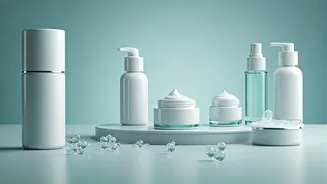




The Golden Age of More
Just a few years ago, our social media feeds were a testament to maximalism. Beauty influencers unboxed massive PR packages, showcasing bathroom shelves groaning under the weight of cleansers, toners, essences, serums, ampoules, sheet masks, eye creams,
moisturisers, and sunscreens. The 10-step routine, popularised by the global rise of K-beauty, became a cultural phenomenon. It promised a meditative, self-care ritual that would culminate in a poreless, luminous complexion. The logic was simple: more steps and more products equalled better skin. It was an alluring promise, and millions bought into it, transforming their evening routines into elaborate, time-consuming projects.
The Case Against Complexity
So, what changed? A new generation of consumers, Gen Z, began questioning the 'more is more' philosophy. Firstly, there’s the sheer cost and time involved. A ten-product routine is a significant financial and daily commitment that many young people find unsustainable. Secondly, a growing awareness around sustainability has made overconsumption feel out of touch. The thought of ten plastic bottles and jars for a single routine just doesn't sit right with an environmentally-conscious generation. But perhaps the most compelling reason for the shift is the skin itself. Dermatologists have increasingly warned that bombarding the skin with multiple active ingredients—think acids, retinoids, and vitamin C all at once—can compromise the skin barrier. This can lead to the very issues people are trying to fix: irritation, redness, sensitivity, and breakouts. The pursuit of perfect skin was, for some, actively making their skin worse.
Enter 'Skinimalism'
The antidote to this exhaustive approach is a trend dubbed 'skinimalism'. It’s not about neglecting your skin, but about being more intentional. Skinimalism champions a minimalist, 'less is more' philosophy, focusing on fewer, better products that deliver multiple benefits. It’s a return to basics, prioritising the health of the skin barrier over chasing fleeting trends. This approach values consistency over complexity. Instead of a dozen steps, the focus is on a core foundation: a gentle cleanser, a targeted treatment serum, a reliable moisturiser, and, crucially, a broad-spectrum sunscreen for the daytime. The goal is no longer an artificially perfect 'glass' look, but healthy, hydrated, and resilient skin that looks and feels like, well, skin.
What the Experts Say
Dermatologists are largely on board with this simplification. Many experts argue that for most people, a simple routine is not only sufficient but often superior. Dr. Anjali Mahto, a leading dermatologist, has often spoken about the risks of 'skincare overload', noting that a compromised skin barrier can take weeks or even months to repair. The consensus among professionals is that a solid routine should be built on three to four key pillars. This streamlined approach reduces the risk of irritation and allows the chosen products to work more effectively. It also empowers individuals to understand what’s actually working for their skin, as it's easier to pinpoint a problematic ingredient when you're only using a handful of products.
How to Build a Minimalist Routine
Ready to declutter your skincare shelf? Start by identifying your primary skin concern. Is it acne, dryness, hyperpigmentation, or fine lines? Build your routine around that. A solid starting point includes:
1. Cleanser: A gentle, pH-balanced formula that cleans your skin without stripping it of its natural oils.
2. Treatment: One targeted serum to address your main concern. This could be a vitamin C serum for brightening in the morning, a hyaluronic acid serum for hydration, or a retinol for anti-ageing at night. Don't layer too many actives.
3. Moisturiser: A simple, effective moisturiser to lock in hydration and support your skin barrier.
4. Sunscreen (AM): A non-negotiable final step every morning. Use a broad-spectrum SPF of 30 or higher to protect your skin from sun damage.
That's it. This core routine is effective, efficient, and much kinder to your skin (and your wallet).