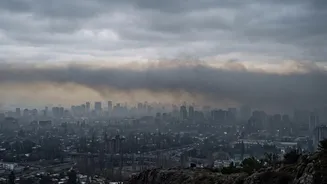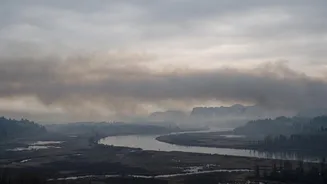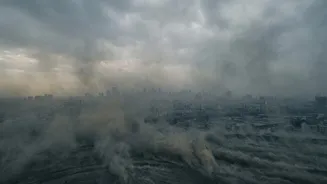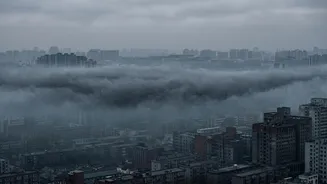



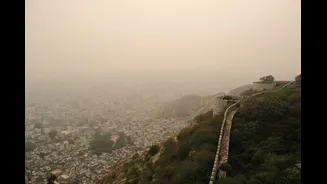
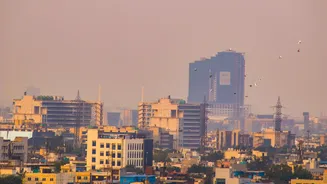

Every winter, a familiar grey haze descends on many Indian cities, making the air feel heavy and breathing difficult. The culprit is often a weather phenomenon called a temperature inversion, which acts like a lid on the atmosphere.
Understanding a Temperature Inversion
Normally, the air is
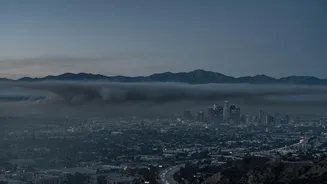
warmest near the ground and gets progressively cooler with altitude. This allows warm, polluted air from the surface to rise, mix with cleaner air, and disperse. A temperature inversion flips this pattern on its head. This phenomenon, common during calm winter nights, occurs when the ground rapidly loses heat, cooling the layer of air closest to it. This leaves a layer of cooler, denser air trapped beneath a layer of warmer, lighter air above. This warm upper layer acts like an atmospheric cap, preventing any vertical movement of the air below.
The Perfect Trap for Pollutants
When an inversion layer forms, it creates a stagnant bubble of air over a city. All the pollutants being pumped into the air from traffic, industry, construction dust, and stubble burning have nowhere to go. Instead of rising and scattering, they are trapped in the shallow layer of cool air near the ground. This causes a rapid accumulation of harmful substances, most notably fine particulate matter known as PM2.5. These microscopic particles, less than 2.5 microns in diameter, are so small they can bypass the body's natural defenses and lodge deep within the lungs. This is why on certain winter mornings, the sky appears murky and visibility is low—you are looking at a concentrated soup of trapped pollutants.
How Outdoor Pollution Seeps Indoors
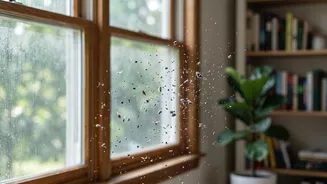
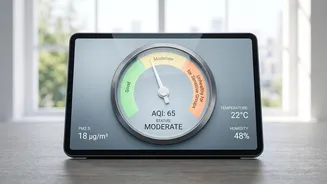
The belief that staying indoors protects you completely from this pollution is a dangerous misconception. Buildings are not airtight fortresses. The same tiny PM2.5 particles that choke the air outside find their way indoors with surprising ease. They infiltrate through cracks in walls, gaps around windows and doors, and ventilation systems. Studies show that indoor PM2.5 concentrations can closely mirror outdoor levels, especially in homes without advanced air filtration. Essentially, if the air outside is hazardous for several hours or days due to an inversion, the air inside your home gradually becomes just as polluted as outdoor air seeps in and accumulates.
Why Your Home Isn't Always a Safe Haven
Beyond the infiltration of outdoor pollutants, our homes generate their own sources of PM2.5. Activities like cooking (especially frying), burning incense or diyas, smoking, and using certain cleaning products all release particles into the air. During a temperature inversion, when you keep windows and doors sealed to prevent outdoor smog from entering, you are also trapping these indoor-generated pollutants. Without proper ventilation to flush them out, their concentrations build up. This creates a double-whammy effect: polluted air is seeping in from outside while more pollutants are being generated inside, leading to indoor air quality that can sometimes be two to five times worse than the air outdoors.
The Undeniable Health Consequences
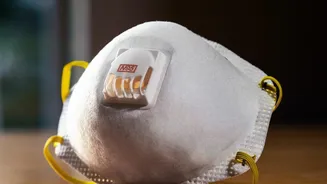
Prolonged exposure to high levels of PM2.5, as seen during extended inversion periods, is linked to a host of serious health issues. Short term effects include irritation of the eyes, nose, and throat, coughing, and shortness of breath. For vulnerable populations—such as children, the elderly, and those with pre existing heart or lung conditions—the risks are much higher, leading to increased hospital admissions for respiratory and cardiovascular problems. Long term exposure is associated with chronic conditions like asthma, reduced lung function, heart disease, and even premature death.