


The Multi-Hour Problem
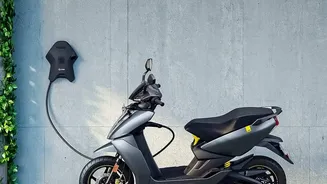
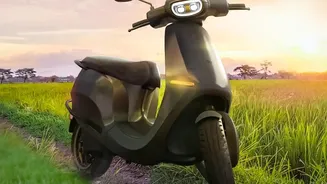
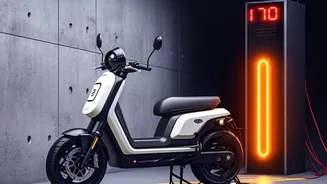
For most electric scooter owners in India, the daily routine is familiar: ride to work, run errands, and plug in the scooter overnight. A full charge can take anywhere from four to eight hours. While this is manageable for many, it eliminates the spontaneity
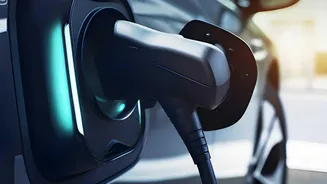
that two-wheelers are famous for. An unplanned trip means facing range anxiety or relying on a public fast-charging network that, while growing, is not yet everywhere. Current fast chargers can add significant range in about 15-20 minutes, but frequent use can stress today's standard lithium-ion batteries. The fundamental limitation lies in the chemistry and structure of these batteries, which can only accept charge so quickly without risking damage or overheating.
Enter the Game-Changers: Solid-State and Graphene
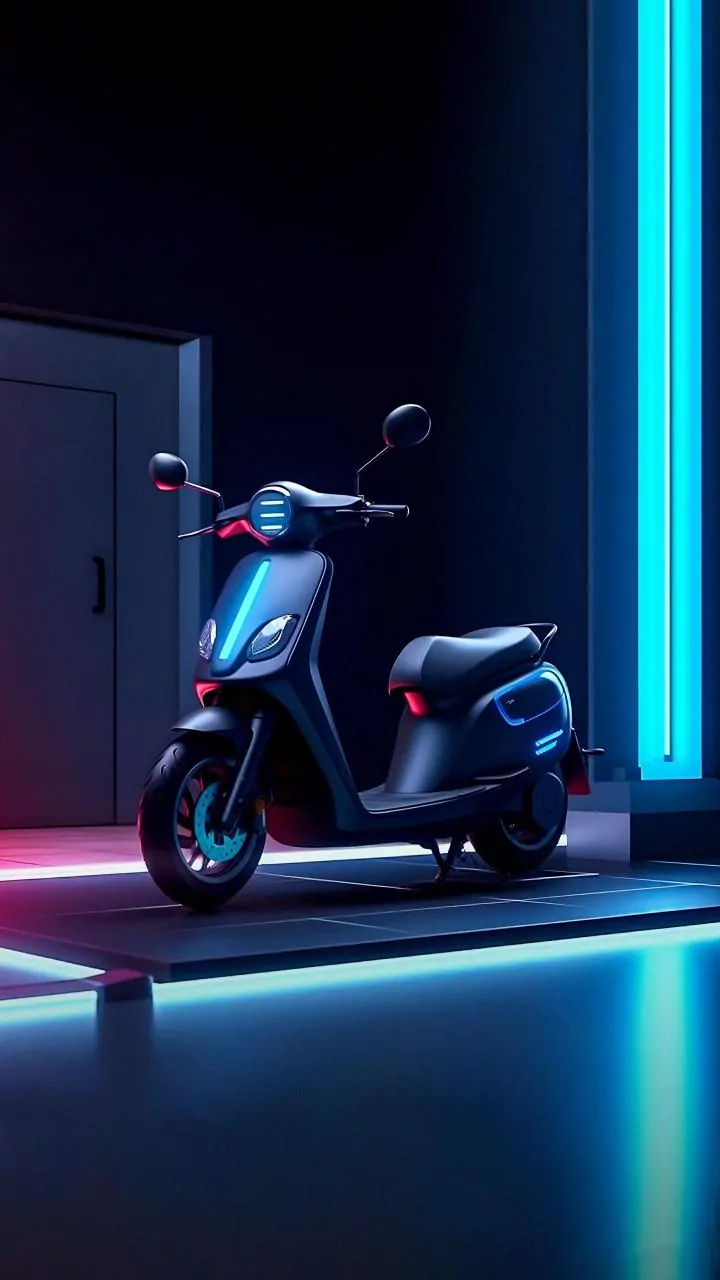
The breakthrough that promises to end this waiting game comes from a new class of energy storage technologies, primarily solid-state and graphene-enhanced batteries. Unlike current lithium-ion batteries that use a liquid or gel electrolyte to move energy around, solid-state batteries use a solid material, like a ceramic or polymer. This simple change has a massive impact. Graphene, a one-atom-thick sheet of carbon, offers another path. When added to battery components, its incredible conductivity allows for shockingly fast energy transfer. These aren't just lab experiments; companies are already producing them for other applications and are actively adapting them for two-wheelers.
Charging in Minutes, Not Hours
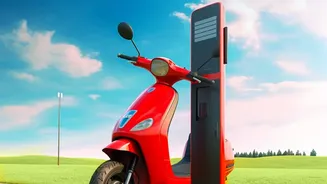
So, how much faster are we talking? Several companies and researchers have demonstrated charging an 80% top-up in as little as ten to fifteen minutes. For a typical city commute, this could mean getting all the range you need in just five minutes. Imagine pulling into a charging station, plugging in, and being ready to go before you've finished replying to a message. This is possible because the new materials can handle much higher rates of electricity without degrading or overheating. Think of it like pouring water into a bottle: a standard battery is like a bottle with a narrow neck, but a solid-state or graphene battery is like one with a wide funnel, allowing you to pour much faster.
More Than Just Speed
The benefits extend well beyond charging speed. Solid-state batteries are significantly safer because they eliminate the flammable liquid electrolyte found in current batteries, drastically reducing the risk of fire. They are also more energy-dense, meaning they can store more power in the same amount of space. This could lead to scooters that are either lighter and more nimble or have a much longer range—potentially double what is currently available—without needing a bigger battery pack. Furthermore, these new batteries promise a much longer lifespan, capable of handling thousands of charge cycles before their capacity drops, making them a more durable and sustainable long-term investment.
When Can We Expect This in India?
The word "soon" in technology can be tricky, but the path to market is becoming clearer. Major automotive and battery manufacturers are investing billions, with some aiming for mass production in vehicles by 2027. However, the application for electric scooters could happen even sooner. Taiwanese company Gogoro, which has a joint venture with Hero MotoCorp, has already developed a swappable solid-state battery. Other companies are also racing to integrate these cells into their new models. While premium models will likely be the first to feature this technology, as manufacturing scales up over the next two to three years, costs are expected to drop, making it a standard feature across the market. Challenges like establishing manufacturing at scale and building out compatible ultra-fast charging infrastructure remain, but the race is on.