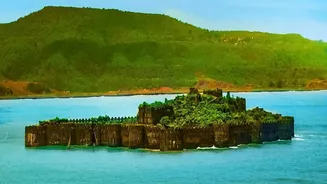





Along Maharashtra's stunning Konkan coast, a formidable fortress rises from the Arabian Sea. The Murud-Janjira fort is not just a relic; it is a testament to incredible ingenuity and a history so resilient, it was never conquered.
An Unconquered Island Bastion
Located on an oval-shaped
rock off the coast of the village of Murud, Janjira is one of India's most formidable marine forts. Its name is believed to derive from the Arabic word 'Jazeera', meaning island. For centuries, this fortress stood as a symbol of power, withstanding repeated attacks from maritime powers including the Portuguese, the British, and even the formidable Marathas under Chhatrapati Shivaji Maharaj and his son, Sambhaji Maharaj. Its legendary status comes from a simple fact: in over 300 years of active history, it was never defeated in battle, a feat few other forts can claim. Today, visitors reach it via a short boat ride from the Rajapuri jetty, a journey that transports you back to an era of naval supremacy.
A Marvel of Military Engineering
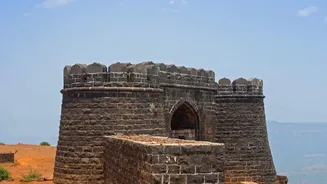
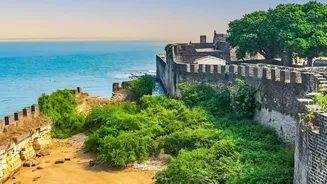
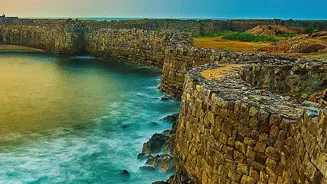
Janjira's invincibility was no accident; it was the result of brilliant strategic design. The fort's main entrance is cleverly hidden from view and only becomes visible at close range, baffling enemy ships. Its towering stone walls, standing 40 feet high, are built from a mixture of lead, sand, and gul (jaggery), and have withstood the constant assault of sea waves for centuries. The fort boasts 26 rounded bastions, which provided a comprehensive defensive perimeter. Within its walls, it was a self-sufficient world. It contained palaces for its rulers, quarters for officers, a mosque, and most remarkably, two natural freshwater lakes, ensuring a sustained water supply during long sieges. It once bristled with 572 cannons; today, only a few remain, including the famed 'Kalaal Bangdi', a testament to its past firepower.
The Siddis of Janjira
The story of Janjira is inseparable from its rulers, the Siddis. Originally of Abyssinian (Ethiopian) descent, the Siddis came to India as elite soldiers and naval mercenaries. Through their military prowess and loyalty, they rose from serving the Deccan Sultanates to becoming independent rulers. The fort's construction is credited to Malik Ambar, a prominent Siddi military leader of the Ahmadnagar Sultanate, who transformed an earlier wooden structure built by local fishermen into the mighty stone fortress around 1567 AD. The Siddis of Janjira became masters of the sea, serving as admirals of the Mughal fleet on the western coast and using their impregnable fort as a base to control maritime trade and assert their sovereignty for generations.
Echoes of a Bygone Era
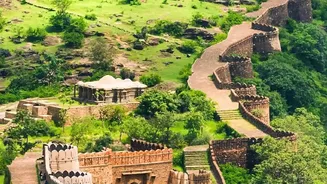
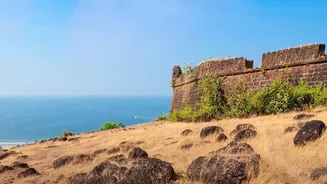
Visiting Murud-Janjira today is like walking through a living history book. Though many of the inner structures are now in ruins, the sheer scale of the fortification is aweing. As you explore the weathered ramparts, you can see the very cannons that once repelled invaders, now silent and rusting but still pointed defiantly towards the sea. The intricate carvings at the main gate, including a powerful sculpture depicting a tiger-like beast overpowering elephants, symbolise the strength of the Siddi rulers. The panoramic views of the Arabian Sea from the top of the bastions are breathtaking, offering a sense of the strategic advantage the fort commanded. Every corner of the fort whispers tales of battles, royal life, and the unyielding spirit of its defenders.
A Legacy Carved in Stone
While its days as a military stronghold are over, Murud-Janjira's legacy endures. It is a powerful symbol of defiance and a masterpiece of medieval Indian architecture. The fort represents a unique chapter in Indian history where a dynasty of African origin established and maintained a powerful, independent state for centuries. It serves as a crucial reminder of the rich and diverse cultural tapestry of the Konkan coast. Though time and the elements pose a new threat to its mighty walls, the fort continues to capture the imagination of all who visit. It stands not merely as a ruin, but as an enduring monument to the resilience and ingenuity that define the historic sea forts of Maharashtra.