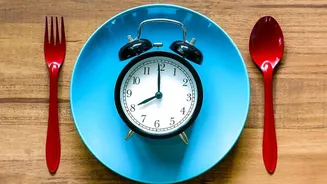








The Rhythm of Your Metabolism
Your body runs on an internal 24-hour clock known as the circadian rhythm. This master clock, which is tied to the cycle of light and dark, doesn't just manage your sleep-wake cycle; it also governs your metabolism. During the day, when you are active,
your body is primed to digest food and burn calories efficiently. As evening approaches, your metabolism naturally begins to slow down as it prepares for a period of rest and repair. Eating a large meal late at night forces your body to focus on digestion at a time when its metabolic processes are less active. This misalignment can lead to less efficient processing of nutrients and calories, which over time, can affect your weight and overall metabolic health.
Unlocking Nighttime Fat Oxidation
One of the most significant benefits of an earlier dinner is its effect on fat oxidation—your body's process of breaking down and using stored fat for energy. When you eat late, your body has a ready supply of glucose from the carbohydrates in your meal. It will use this for energy overnight instead of dipping into your fat reserves. Studies have shown that late-night meals can decrease the amount of fat burned overnight by around 10 percent. By finishing your last meal several hours before bed, you give your body time to process the immediate glucose. This allows for an earlier switch to fat-burning mode while you sleep, effectively turning your rest period into a more metabolically active state for fat loss. This shift is also linked to appetite-regulating hormones; research indicates that late eating can decrease levels of leptin (the hormone that signals fullness) and increase ghrelin (the hunger hormone), potentially leading to increased hunger the next day.
From Full Stomach to Deep Sleep
The connection between meal timing and sleep is profound. An earlier dinner can lead to more restorative, higher-quality sleep. The process of digestion increases your core body temperature, an effect known as diet-induced thermogenesis. However, a slight drop in core body temperature is a key biological trigger that tells your body it's time to sleep. Eating a heavy meal close to bedtime can delay this temperature drop, making it harder to fall asleep and stay asleep. Furthermore, late meals can increase the risk of issues like acid reflux, which can be highly disruptive to sleep. By allowing your digestive system to do most of its work before you lie down, you minimize potential disruptions. This contributes to more time spent in deep sleep, the physically restorative stage where your body repairs tissues, supports immune function, and solidifies memories.
Timing Is Everything: What 'Earlier' Means
So, what is the ideal window for your evening meal? While there is no single magic time that works for everyone, most experts recommend finishing your last meal at least three to four hours before you plan to go to sleep. For someone who goes to bed at 11 p.m., this would mean finishing dinner by 7 or 8 p.m. at the latest. This provides a sufficient buffer for your body to complete the most demanding phase of digestion, allowing your blood sugar levels to stabilize and your body to prepare for a night of rest and recovery. The key is consistency and alignment with your personal schedule and sleep-wake cycle. The goal is not to starve yourself in the evening but to shift your caloric intake to earlier in the day when your metabolism is at its peak.
How to Make the Shift
Shifting your dinner time may seem challenging, especially with busy work schedules or family commitments. The best approach is to do it gradually. Start by moving your dinner time 15 to 30 minutes earlier each week. To avoid late-night hunger pangs, ensure your dinner is balanced with protein, healthy fats, and fiber, which promote satiety. A larger, more substantial lunch can also help reduce the desire for a massive evening meal. If you feel peckish before bed, opt for a very light, non-sugary snack. Listening to your body is key. The transition might take time, but the potential improvements in your energy levels, metabolic function, and sleep quality can make it a worthwhile adjustment to your daily routine.