



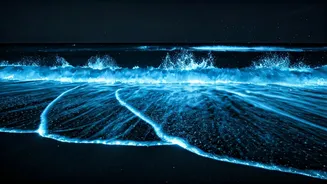


A Sea of Stars on Earth
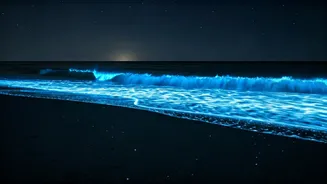
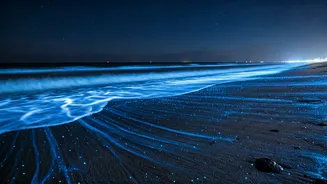
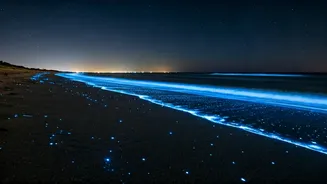
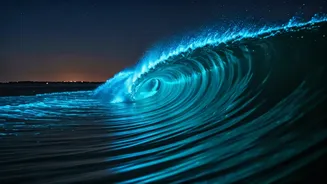
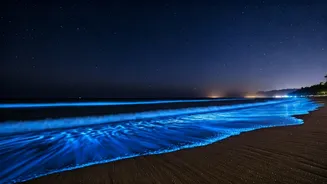
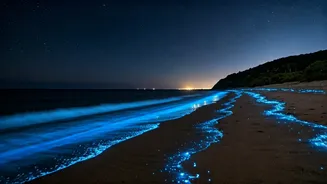
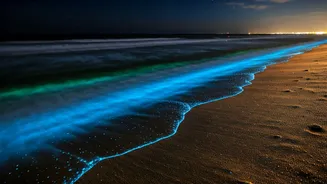
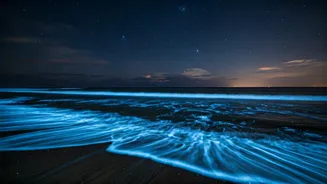
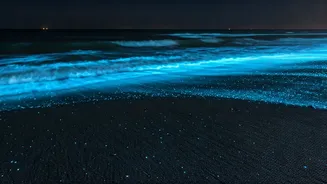
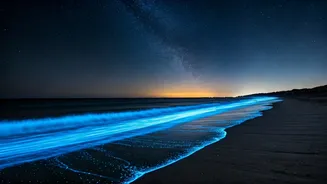
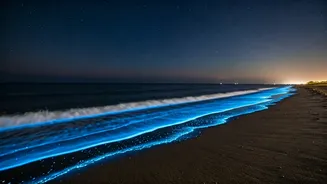
Imagine walking along a dark shoreline as every footstep erupts in a burst of otherworldly blue-green light. This isn't a scene from the movie *Avatar*; it's a real phenomenon happening on the beaches of Karnataka, a state in southwestern India. As waves
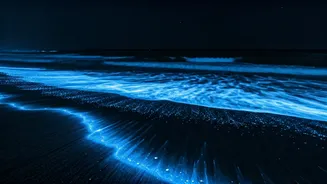
crash, they don't just foam—they glow. Swirling your hand through the water leaves a glittering trail, like liquid starlight. This magical effect, known as bioluminescence, has turned otherwise quiet coastal spots like Mattu Beach and Padukere Beach into bucket-list destinations overnight. Videos and photos showcasing the surreal spectacle have flooded Instagram and TikTok, with mesmerized locals and travelers sharing clips of the glowing tide, drawing global attention to this coastal pocket of India.
The Science Behind the Sparkle
So, what's causing this natural light show? The culprit is a tiny, single-celled organism called a dinoflagellate, specifically a species known as *Noctiluca scintillans*. Often called "sea sparkle," these microscopic plankton are a type of marine life that emits light as a defense mechanism. When the water they inhabit is disturbed—by a breaking wave, a swimming fish, or a human footstep—it triggers a chemical reaction inside their cells, causing them to flash. It’s the same basic principle behind fireflies, but on a massive, aquatic scale. When millions of these organisms are present in the water, their collective glow is powerful enough to illuminate entire shorelines, creating the breathtaking displays that have everyone reaching for their phones. The phenomenon is most visible on dark, moonless nights, when the lack of ambient light allows the faint sparkle to truly pop.
Instagram's Newest Travel Muse
In the age of visual social media, a phenomenon this photogenic was destined for virality. The bioluminescent beaches of Karnataka are the latest example of how Instagram can transform a location from a local secret into an international sensation. The platform's algorithm favors stunning, high-contrast visuals, and glowing blue waves are a perfect fit. The resulting flood of user-generated content acts as a powerful, organic marketing campaign. For travelers seeking unique, off-the-beaten-path experiences that also happen to look incredible online, this is a jackpot. The desire to capture the perfect glowing wave photo or a dreamy nighttime video has sparked a surge in local tourism, with people flocking to the coast for a chance to witness and document the magic themselves. It's a modern travel story: nature provides the spectacle, and social media provides the global stage.
A Beautiful, Troubling Bloom
While the glowing beaches are undeniably beautiful, there’s a more complex ecological story beneath the surface. Scientists and environmentalists note that these massive blooms of *Noctiluca scintillans* aren't always a good sign. These organisms thrive in waters with high concentrations of nutrients, often linked to agricultural runoff and pollution. Unlike other plankton, *Noctiluca* doesn't photosynthesize. Instead, it preys on other microorganisms and excretes ammonia, which can be toxic to fish. When a massive bloom dies and decomposes, the process consumes huge amounts of oxygen in the water, creating oxygen-depleted "dead zones" that can lead to large-scale fish kills. So, while the blue glow is a feast for the eyes, it can also be a warning signal—an indicator of an ecosystem under stress and out of balance. The beauty is real, but it might be the beautiful symptom of a deeper problem.