





The End of the All-or-Nothing Mindset
For years, the prevailing wisdom was that a workout wasn't worthwhile unless it lasted 45 to 60 minutes. This often created a mental barrier, leading to inconsistency. If you couldn't commit to the full hour, you did nothing. Modern fitness science, however,
is dismantling this myth. The concept of a 'minimum effective dose' (MED) has gained traction, suggesting there's a specific, minimal amount of stimulus needed to produce a desired result, like muscle growth or strength gain. Research shows that this dose is much lower than many believe, making fitness more accessible. The new focus is on consistency and intensity over sheer duration, which is great news for anyone with a packed calendar.
The Science of 'Exercise Snacking'
These short, potent workouts are sometimes called 'exercise snacks'—brief bursts of activity spread throughout the day. Even sessions as short as 10 to 15 minutes, if done with enough intensity, can trigger significant physiological responses. When you challenge your muscles, even briefly, you stimulate muscle protein synthesis, the process your body uses to repair and build muscle tissue. Studies indicate that even one to two hard sets per exercise, performed two to three times a week, can lead to significant strength increases. These short bouts can also boost your metabolism, improve cardiovascular health, and even enhance your mood and focus for the rest of the workday.
Making Every Minute Count
The key to an effective short workout is not time, but intensity and efficiency. To maximise a 15-minute session, focus on compound movements. Exercises like squats, push-ups, deadlifts, and overhead presses work multiple muscle groups simultaneously, giving you the most value for your time. Instead of long rest periods, you can use techniques like supersets (pairing two exercises back-to-back) to keep the intensity high. The goal is to perform each set with high effort, working close to what feels like momentary failure. This intensity is what signals your body to adapt and grow stronger, regardless of whether the workout is 15 minutes or 50.
A Sample 15-Minute Strength Session
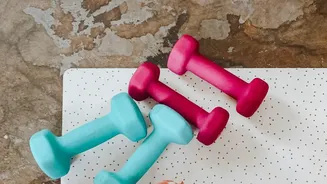
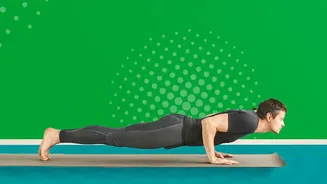
Putting this into practice is simple. A full-body workout is often the most efficient approach for a short session. You don't need a lot of equipment, either. Here is a sample routine using just your bodyweight and a pair of dumbbells: 1. Goblet Squats (Dumbbell): 3 sets of 10-12 repetitions. 2. Push-Ups (or Knee Push-Ups): 3 sets to near-failure. 3. Renegade Rows (Dumbbells): 3 sets of 8-10 repetitions per side. 4. Glute Bridges: 3 sets of 15 repetitions. Perform these exercises with minimal rest between sets to keep your heart rate up and complete the workout within your 15-minute window. Focus on maintaining good form over speed.
Consistency Trumps Occasional Heroics
Perhaps the greatest benefit of short workouts is their sustainability. It’s far easier to build a consistent habit by committing to 15 minutes daily than to find the motivation for a 90-minute gym session once a week. This regularity leads to better long-term results. Research suggests that for maintaining muscle, as few as four to six hard sets per muscle group per week can be sufficient. For growth, the recommendation is generally around 10-20 sets per week. A daily 15-minute session focused on compound lifts can easily meet and even exceed these minimums over the course of a week, leading to measurable progress without the burnout associated with longer, more demanding routines.
Managing Your Expectations
While short strength sessions are incredibly effective, it's important to be realistic. They are a powerful tool for building and maintaining a strong, healthy physique and improving overall health markers like blood pressure and blood sugar regulation. However, if your goal is to become a competitive bodybuilder or powerlifter, these minimalist routines may not be enough on their own. For the vast majority of busy professionals whose goal is to be stronger, leaner, and more energetic, these workouts are not just a compromise—they are a smart, efficient, and science-backed strategy for long-term fitness success.