




Zest vs. Peel: What's the Difference?
While often used interchangeably, 'zest' and 'peel' are not the same thing. The zest is only the very top, colourful layer of the lemon's skin. This yellow part is precious because it contains the fruit's essential oils, where all the concentrated lemon flavour
and aroma reside. Beneath the zest is a soft, white layer called the pith. The entire peel consists of both the zest and the pith. For most recipes, you want only the zest; the pith has a bitter taste that can make your desserts unpleasant.
The Right Tools for the Job
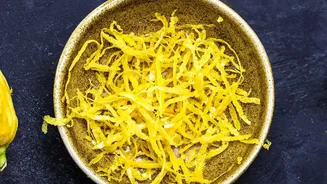
While you can use several kitchen tools to get the zest, some are better than others. The most highly recommended tool by chefs and bakers is a microplane. These long, rasp-style graters have ultra-sharp blades that efficiently shave off only the fine, flavourful zest, leaving the bitter pith behind. A traditional citrus zester, which has small, sharp-edged holes, creates long, slender curls or strands of zest. A box grater can also work in a pinch; just use the side with the smallest holes. You can even use a vegetable peeler or a sharp paring knife to carefully slice off strips of the peel, which you then finely chop, though this requires a steady hand to avoid the pith.
How to Zest a Lemon Perfectly
The process is simple once you have the right technique. First, always wash and dry your lemons thoroughly. Many non-organic lemons are coated in wax to extend their shelf-life, which you don't want in your food. You can remove this by scrubbing the lemon under hot water. Hold the lemon in one hand and your zesting tool in the other. Gently press the tool against the fruit and drag it across the skin, applying light pressure. Rotate the lemon as you go, removing only the yellow part. Stop when you see the white pith underneath. Continue until you've zested the entire fruit. The fine zest that collects on the back of a microplane can be scraped off and added directly to your recipe.
Unlocking Maximum Flavour
Lemon zest's power comes from its volatile oils, which carry its bright aroma and taste. To get the most out of it, many bakers recommend rubbing the zest into the sugar called for in the recipe. Using your fingertips to massage the zest and sugar together helps release those fragrant oils, infusing the sugar and ensuring the lemon flavour is distributed evenly throughout your batter or dough. Because its flavour comes from these oils, zest is perfect for recipes where you want a strong lemon kick without adding extra liquid or acidity from juice, which can alter the chemistry of baked goods.
Common Zesting Mistakes to Avoid
One of the biggest mistakes is zesting too deeply and scraping up the bitter white pith. This will add an unpleasant taste to your final dish. Another common error is zesting the lemon long before you need it. The aromatic oils in the zest are volatile and start to evaporate once exposed to air, meaning your zest will lose its potency and dry out. For the best flavour, zest your lemon right before you plan to use it. Finally, using a dull tool can tear the peel rather than grating it cleanly, making the process more difficult and less effective.
How to Store Leftover Zest
If you have more zest than you need, don't throw it away. Lemon zest freezes beautifully. To prevent clumping, spread the zest in a single layer on a piece of parchment paper on a baking sheet and freeze for about 30 minutes. Once frozen solid, transfer it to an airtight container or a zip-top bag. It will keep in the freezer for several months. There's no need to thaw it before using; you can add the frozen zest directly to your recipes. It’s an easy way to have bright citrus flavour on hand whenever a recipe calls for it.