







What Exactly Is Zone 2 Cardio?
Forget the 'no pain, no gain' mantra for a moment. Zone 2 cardio refers to exercising at a steady, moderate intensity. It’s often called the “conversational pace” because you should be able to hold a full conversation without gasping for breath. On a scale
of five heart rate zones, where Zone 1 is a very light effort and Zone 5 is your absolute maximum, Zone 2 is a comfortable, sustainable effort that sits at about 60-70% of your maximum heart rate. Think of it as an activity that raises your breathing and heart rate, but doesn't leave you feeling breathless or exhausted. It’s the sweet spot where your body builds endurance without accumulating high levels of stress.
The Desk Worker's Dilemma
Sitting for eight hours a day can wreak havoc on your body's energy systems. A sedentary lifestyle leads to a decline in mitochondrial efficiency. Mitochondria are the tiny powerhouses within your cells responsible for producing energy. When you are inactive for long periods, their ability to use oxygen to create fuel diminishes, which is a key reason you might feel tired all the time and lack the stamina for even basic physical tasks. This is why a sustainable form of exercise is so crucial for office workers who want to reclaim their energy and build a solid fitness foundation.
How Zone 2 Builds Your Stamina
Zone 2 training is incredibly effective at improving your stamina because it specifically targets your aerobic system. When you exercise at this moderate intensity, your body becomes better at using oxygen to fuel your muscles. This process stimulates the growth of more mitochondria in your muscle cells and makes them more efficient. Furthermore, Zone 2 is often called the “fat-burning zone” because, at this intensity, your body prefers to use fat for fuel instead of its limited stores of carbohydrates (glycogen). Over time, this makes your body a more efficient energy-burning machine, improving your overall endurance and allowing you to exercise for longer periods with less fatigue.
Finding Your Zone: The Simple Method
You don't need a fancy lab to find your Zone 2. The easiest method is the 'talk test': if you can speak in complete sentences but can't sing, you're likely in the right zone. For a more precise figure, you can estimate your maximum heart rate (MHR) with a simple formula: 220 minus your age. Your Zone 2 heart rate will be 60-70% of that number. For example, if you are 40 years old, your estimated MHR is 180 beats per minute (bpm). Your Zone 2 range would be between 108 bpm (180 x 0.60) and 126 bpm (180 x 0.70). A fitness watch or heart rate monitor can help you track this easily.
Brisk Walking: The Perfect Starting Point
Brisk walking is one of the most accessible and effective ways to do Zone 2 cardio. This isn't a casual stroll; you need to walk with purpose to elevate your heart rate. For most people, this means walking at a pace where you cover a kilometre in about 9 to 12 minutes. If you find a flat walk isn't enough to get your heart rate up, try incorporating hills or increasing the incline on a treadmill. The beauty of walking is its low impact on your joints, making it a sustainable choice that you can easily integrate into your day, perhaps during a lunch break or on your commute.
Cycling: A Low-Impact Stamina Booster
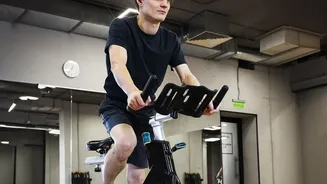
Cycling, whether on a stationary bike at home or outdoors, is another excellent option for Zone 2 training. The key is to maintain a steady pace on relatively flat terrain, keeping your heart rate within that 60-70% range. Unlike running, cycling is a low-impact activity, which reduces the strain on your knees, ankles, and hips. This makes it an ideal choice for desk workers who might be carrying extra weight or are new to exercise. A stationary bike can be particularly useful as it allows you to control the resistance precisely and maintain a consistent heart rate without worrying about traffic or terrain changes.