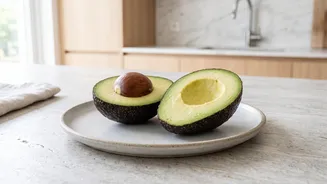







Avocados have achieved 'superfood' status, with claims they do everything from support heart health to boost brainpower. But can eating this creamy fruit actually sharpen your memory? It's time to look past the marketing and into the science.
The Claim: Avocados Are a Miracle Memory Food
You have
likely seen it on social media or in health magazines: the idea that eating avocados can lead to a sharper mind and better memory. They are often included in lists of 'brain-boosting' foods, celebrated for their nutrient density. This narrative suggests that incorporating avocados into your diet is a direct hack for cognitive enhancement, an easy and delicious way to protect your brain against aging and forgetfulness. The marketing is powerful, positioning the avocado not just as a healthy food, but as a functional tool for a better brain. But as with many wellness trends, the reality is often more nuanced than the claims suggest.
The Nutritional Reality: What's Inside an Avocado?
Avocados are undeniably packed with nutrients. A single serving provides significant amounts of monounsaturated fats, fibre, potassium, and various vitamins. Key to the brain health conversation are its healthy fats and a specific antioxidant. Avocados are rich in monounsaturated fats, the same kind found in olive oil, which are known to be heart-healthy. They also contain lutein, a plant compound that is known to accumulate in the brain and eyes. Furthermore, they are a good source of folate (a B vitamin), and vitamins C and E, all of which play roles in the body's overall health. These nutrients are the scientific basis for the health claims, but their presence alone doesn't automatically translate to a 'memory boost'.
Myth: A Daily Avocado Will Immediately Boost Your Memory
The idea that any single food can act as a magic pill for memory is a common misconception. Scientific studies do not support the claim that eating an avocado will result in a sudden, noticeable improvement in your ability to recall information. Research into nutrition and cognition points toward long-term benefits rather than quick fixes. One study on older adults who ate an avocado a day for six months found improvements in sustained attention and working memory, but it took time. Another 12-week study on adults with overweight or obesity showed improved performance on a test measuring focused attention, but not on other cognitive tests. The evidence suggests a supportive role, not an instant enhancement. Meta-analyses on lutein, for example, show it may help prevent cognitive decline over time, but its effect on significantly improving memory is not considered statistically significant.
Reality: Supporting Foundational Brain Health
The real benefit of avocados lies in their ability to support the systems that keep our brains healthy in the long run. The monounsaturated fats in avocados are good for the heart, which is directly linked to brain health; good blood flow delivers essential oxygen and nutrients to the brain. Studies have shown diets high in these fats can support learning and slow age-related cognitive decline. Lutein, the antioxidant found in avocados, is believed to have a protective effect on brain cells. It acts as an anti-inflammatory and antioxidant agent, helping to shield the brain from the cellular damage that can occur over a lifetime. So, rather than being a memory 'booster', avocados are better understood as a 'brain protector', contributing to a healthier internal environment that allows your brain to function optimally for longer.
The Bigger Picture: A Healthy Diet, Not a Single Superfood
Ultimately, experts agree that your overall dietary pattern is far more important than any single food. Healthy eating plans like the Mediterranean, DASH, and MIND diets have been consistently linked to better cognitive outcomes and a reduced risk of dementia. These diets emphasize fruits, vegetables, whole grains, and healthy fats from sources like olive oil, nuts, and yes, avocados. Avocados are a fantastic component of a brain-healthy diet, but they work as part of a team. Relying on one food for brain health while ignoring other lifestyle factors is not an effective strategy. The strongest evidence for preventing cognitive decline points to a holistic approach: a balanced diet, regular exercise, and staying mentally and socially active.