

Why Proper Form Is Crucial
Getting the technique right transforms the activity from a simple stroll with sticks into a powerful exercise that engages up to 90% of your body's muscles. Correct form ensures you are actively propelling yourself forward, burning more calories, and
strengthening your arms, shoulders, core, and back. Without it, you miss out on the upper-body workout and risk developing bad habits that can cause strain or limit your results. The poles are not just for balance; they are active tools for propulsion.
Start with an Upright Posture
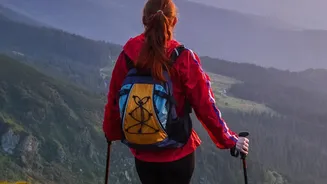
Good Nordic walking technique begins with your posture. Stand tall with your chest lifted and your shoulders relaxed and open, not hunched. Your gaze should be directed forward, not down at your feet. As you move, maintain a slight lean forward from your ankles, not your waist. Bending at the waist can put unnecessary strain on your lower back. This upright and engaged posture gives your lungs space to breathe deeply and helps you engage your core muscles effectively.
Master the Arm Swing and Grip
The arm movement in Nordic walking is different from hiking. The swing should come from the shoulder, with a relatively straight arm, not a bent elbow. Think of a long, flowing pendulum motion. One of the most unique aspects is the hand technique. As your arm swings forward, you lightly grip the pole handle. As the arm swings back past your body, you open your hand, pushing off the pole through the special strap or gauntlet. This 'grip and release' motion is key for propulsion and circulation.
Plant the Poles for Propulsion
Many beginners make the mistake of planting the poles in front of them, like a brake. Instead, the pole tip should land on the ground roughly level with the heel of your opposite foot. The pole should be angled backwards, ready to push off. Focus on pushing the pole backwards to propel your body forwards. The force comes from pushing through the strap as your arm moves behind you. This action is what engages your upper body and turns your walk into a more dynamic workout.
Finding Your Natural Rhythm
Nordic walking follows the body's natural cross-lateral movement: as your right leg steps forward, your left arm swings forward, and vice versa. Sometimes, beginners overthink this and end up moving the arm and leg on the same side together, a movement called pacing. If you find yourself out of sync, a simple trick is to let the poles drag behind you, holding them only by the straps, and just walk naturally. Once you feel your normal arm swing return, gently pick up the grips again. Your body knows the rhythm; the goal is to integrate the pole planting and pushing into that existing pattern.
Choosing the Right Equipment
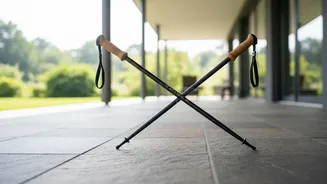
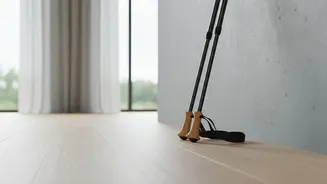
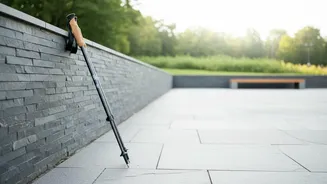
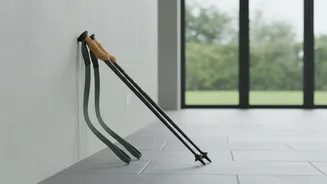
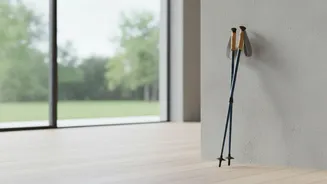
While technique is paramount, the right gear helps. The most common mistake is using poles that are the wrong length. Poles that are too short cause you to hunch over, while poles that are too long can strain your shoulders. A general rule is to multiply your height in centimetres by 0.68 to find a starting length. Look for poles with a proper Nordic walking strap or gauntlet, which is essential for the 'grip and release' technique, and avoid overly rigid aluminium poles that can transfer vibrations to your joints.