






The Basic Rule of Sound
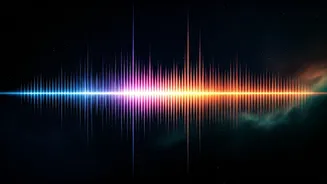
Before we venture into the cosmos, let’s start with a basic concert on Earth. When a guitarist plucks a string, it vibrates. Those vibrations push and pull on the air molecules around them, creating a chain reaction of compressions and rarefactions—a
sound wave. This wave travels through the air until it hits your eardrum, which vibrates in turn, allowing your brain to interpret it as a musical note. Think of it like a line of dominoes. The first domino (the vibrating source) doesn't travel to the end of the line; it just tips over and transfers its energy to the next one. Sound works the same way. It’s not the air itself that travels from the guitar to your ear, but the energy of the vibration passing through it. This is why sound is called a mechanical wave: it absolutely requires a medium—a substance with molecules to knock into each other—whether it's a solid, a liquid, or a gas.
The Great Cosmic Vacuum
Now, let's take that concept to space. The iconic tagline from the 1979 film *Alien* summed it up perfectly: "In space, no one can hear you scream." The reason is simple: space is a near-perfect vacuum. It’s not completely empty—there are stray atoms and particles floating around—but they are so incredibly far apart that they can’t effectively collide to propagate a sound wave. The distance between molecules is vast, meaning there's no medium to carry the vibrations from a screaming astronaut or an exploding starship. So when you see that massive starship detonate in a fiery, thunderous explosion in a movie, you’re witnessing a delightful fiction. In reality, it would be a silent, terrifyingly beautiful light show. The expanding fireball would be brilliant, but the accompanying *boom* would be entirely absent. There are simply no dominoes to knock over.
So How Do Astronauts Communicate?
This begs an obvious question: if space is silent, how do astronauts talk to each other or to Mission Control? The answer lies in creating a localized atmosphere. Inside a spacecraft like the International Space Station (ISS), the air is pressurized and breathable, just like on Earth. In that environment, sound travels perfectly fine. Astronauts can chat, alarms can blare, and equipment can hum just as it would in a terrestrial lab. During a spacewalk, the same principle applies on a smaller scale. An astronaut’s helmet is filled with a breathable gas mixture. When they speak, the sound waves travel through that gas to a microphone in their helmet. The microphone converts the sound into radio waves—which, unlike sound, do not need a medium and can travel through a vacuum. Those radio waves are transmitted to another astronaut’s suit, where a receiver converts them back into sound waves inside their own pressurized helmet. It’s a clever technological bridge across the silent void.
The 'Sounds' We Hear from Space
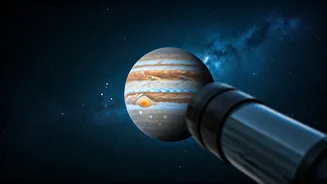
You may have heard recordings from NASA described as the “eerie sounds of Jupiter” or the “whistle of Earth’s magnetic field.” These are real, but they aren't sound in the traditional sense. This process is called data sonification. Scientists take data that is originally non-auditory—like radio emissions, plasma wave fluctuations, or magnetic field data—and convert it into frequencies that fall within the range of human hearing. It's essentially translating one type of wave (like an electromagnetic wave) into another (a sound wave) so our ears can perceive it. It's an invaluable tool for scientists to identify patterns in complex data, but it’s not the same as putting a microphone out in space and recording a noise. The sounds are a representation of other phenomena, a beautiful and informative translation, not a direct recording of an acoustic event.