







What Are AI Reading Helpers?
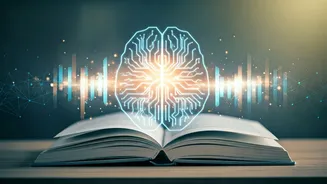
Think of an infinitely patient, always-available reading tutor that lives inside a tablet or a computer. That’s the basic promise of an AI reading helper. These are sophisticated software tools, often integrated into larger educational apps, designed
to listen to a child read aloud. Unlike a simple recording, these AI systems use advanced speech recognition and natural language processing to analyse pronunciation, fluency, pace, and accuracy in real-time. They aren’t just passive listeners; they are active participants designed to guide, correct, and encourage young readers as they navigate a text.
How Does the Technology Work?
The magic behind these helpers lies in machine learning. The AI is trained on vast datasets of human speech, including children's voices with various accents and reading levels. When a student reads into their device’s microphone, the AI compares their speech to its trained models. It can identify mispronounced words, unnatural pauses, or moments of hesitation. Based on this analysis, it provides instant feedback. This might come as a gentle audio prompt suggesting the correct pronunciation, a visual cue highlighting a tricky word, or even a gamified challenge to re-read a sentence for better fluency. The core engine is adaptive, meaning it learns the student's specific weaknesses and adjusts the difficulty and focus of future reading sessions accordingly.
The Promise of Personalisation
The biggest selling point for AI reading tutors is hyper-personalisation. In a traditional classroom of 30 or 40 students, it's impossible for a teacher to provide constant, one-on-one reading support to every child. This technology bridges that gap. For a struggling reader, the AI can slow things down, offer phonetic breakdowns of difficult words, and provide endless, non-judgemental repetition. For an advanced reader, it can introduce more complex vocabulary and longer texts, ensuring they remain challenged and engaged. By tailoring the content and feedback to an individual’s exact level, these platforms promise to make learning more efficient, reduce frustration, and foster a genuine love for reading by matching students with stories that align with their interests and abilities.
Real-World Examples in India
The Indian EdTech market, one of the largest in the world, is quickly adopting this technology. While many platforms are still in the early stages of deployment, major players and innovative startups are making significant strides. For instance, some platforms are incorporating AI-driven reading assessments to provide parents with detailed progress reports. Others are using AI to build vast digital libraries where the book recommendations are algorithmically tailored to each child's reading history and performance. These tools are being marketed as essential supplements to school-based learning, especially in a competitive environment where foundational literacy is seen as a key determinant of future academic success.
Challenges and Human-Centric Concerns
Despite the excitement, the rise of AI reading helpers is not without concerns. Equity is a major issue; these tools are often part of expensive subscription services, potentially widening the gap between those who can afford them and those who cannot. There are also valid questions about data privacy and the amount of student data being collected. Furthermore, educators and child development experts caution against over-reliance on technology. The emotional connection, encouragement, and nuanced understanding a human teacher or parent provides during story time are irreplaceable. The warmth of a shared reading experience builds social-emotional skills that an algorithm cannot replicate. Critics argue that these tools should be seen as supplements, not substitutes, for human interaction.