








A Ground Transport Hub by Design
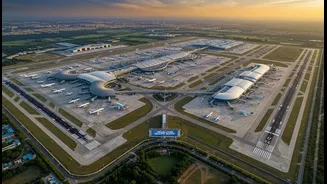
From its very inception, the Noida International Airport (NIA) in Jewar has been envisioned as a multi-modal transport hub, a place where switching between flights, trains, buses, and taxis is seamless. This is a departure from many airports where ground
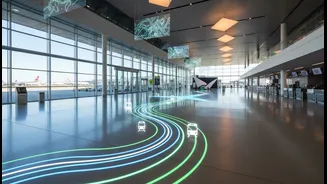
transport is an afterthought. The airport operator, a subsidiary of Zurich Airport International AG, has made this integrated approach a core part of its strategy. The plan involves a dedicated Ground Transportation Centre (GTC), which consolidates all ground-level transport services, from ride-hailing app pickups to interstate buses, within easy walking distance of the terminal. This centre is designed to be the central nervous system for all passenger movement on the ground, aiming to eliminate the usual chaos of finding a ride.
An Ecosystem of Mobility Partners
Instead of leaving passengers to fend for themselves, NIA has proactively forged partnerships with a wide range of mobility providers. Agreements have been signed with ride-hailing giants like Uber and Rapido, ensuring dedicated pick-up zones, on-ground support, and minimal waiting times for app-based taxis. For those preferring public transport, the airport has collaborated with the Uttar Pradesh State Road Transport Corporation (UPSRTC), as well as transport bodies from Delhi, Haryana, and Uttarakhand, to provide direct bus services. A key partnership with redBus, the first of its kind for an Indian airport, allows passengers to book intercity bus tickets to over 20 destinations directly through the platform. This creates a single, streamlined journey from doorstep to destination.
Beyond Cabs and Buses: Rail and Metro Connectivity
The vision for NIA's connectivity extends to large-scale public transit infrastructure. Plans are well underway to integrate the airport directly with both regional and high-speed rail networks. The Ghaziabad-Jewar Namo Bharat (RRTS) corridor, which is in an advanced planning stage, promises to connect the airport to Ghaziabad in under an hour. Furthermore, the proposed Delhi-Varanasi high-speed rail corridor, or Bullet Train, includes a station at Jewar Airport, which would drastically cut travel times to cities like Lucknow and Delhi. While these projects are in development, their inclusion in the airport's master plan underscores the commitment to creating a truly multi-modal hub that reduces reliance on private vehicles and eases road congestion.
The Technology of a Seamless Journey
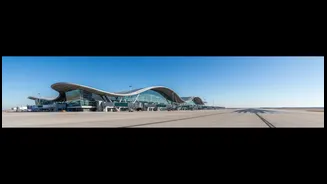
Making this integrated system work requires a strong technological backbone. The partnerships with platforms like redBus, Uber, and Rapido are central to this, allowing passengers to plan and book their complete journey using familiar apps. These services provide features like live tracking, digital ticketing, and transparent pricing, which are crucial for a stress-free experience. The airport itself, which began commercial operations on June 15, 2026, is built with modern infrastructure, including 48 check-in counters and 20 self-baggage drop facilities in its first phase, designed to keep passenger flow smooth and efficient from the kerb to the gate.
Setting a New Standard for Indian Aviation
While the airport is still in its early days, with initial flight operations focused on stabilizing systems, the long-term vision is clear. By prioritizing and integrating ground transport from day one, Noida International Airport is attempting to solve one of the most persistent problems in Indian aviation. This approach contrasts with older airports where connectivity solutions were often added retrospectively. For passengers in the National Capital Region and Western Uttar Pradesh, this could mean more predictable, convenient, and less stressful travel. As NIA expands its operations, with international flights expected by the end of 2026, its success in creating a truly integrated transport network will be a key benchmark for future airport projects across the country.