


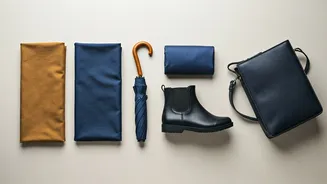


Fabric Is Your First Defence
The foundation of any successful monsoon outfit is the fabric. During days that are both hot and damp, your goal is to choose materials that are breathable and quick to dry. Natural fabrics like cotton and linen are excellent choices for their ability
to let air circulate, which helps keep you cool. However, pure cotton can absorb a lot of moisture and take a long time to dry, so cotton blends are often a smarter pick. Fabrics blended with polyester or rayon maintain cotton's comfort while drying much faster. Rayon, a semi-synthetic fabric, is another monsoon hero; it's lightweight, drapes beautifully without clinging to the body when damp, and feels cool against the skin. Synthetic materials like polyester and nylon are highly effective at repelling water, making them ideal for outerwear, but can feel less breathable in high humidity unless designed as activewear. Avoid heavy materials like denim, wool, and leather, which become heavy and uncomfortable when wet.
Choose Silhouettes That Create Airflow
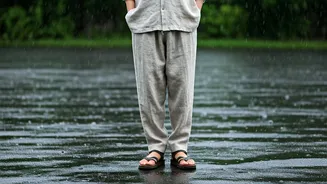
When humidity is high, the last thing you want is fabric clinging to your skin. This is where loose, flowing silhouettes become your best friend. Opt for relaxed fits that allow for ample air circulation around your body. A-line dresses, kaftans, and comfortable co-ord sets are not only stylish but also incredibly practical. Shorter hemlines are a strategic choice to avoid getting your clothes soaked by puddles and street splashback. Cropped trousers, culottes, and midi or knee-length skirts are perfect for navigating wet streets. These styles ensure your outfit stays cleaner and dries faster if you do get caught in a shower. For traditional wear, a shorter kurta paired with palazzos or wide-leg trousers offers a modern and practical alternative to floor-length outfits.
Rethink Your Colour Palette
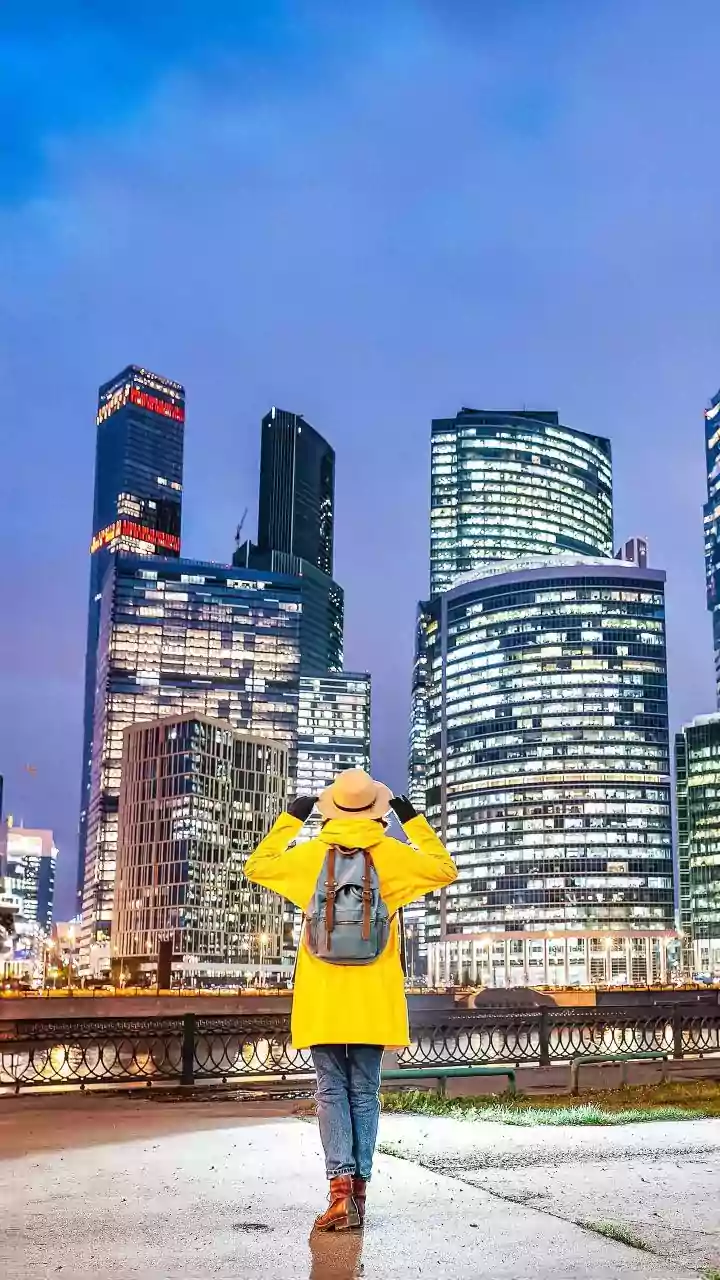
While it might seem counterintuitive, the gloomy, overcast light of a rainy day is the perfect backdrop for bold, vibrant colours. Jewel tones like cobalt, coral, and deep yellows pop beautifully against a grey sky and can instantly lift your mood. Darker shades are also a practical choice as they are more forgiving when it comes to hiding mud splashes or water marks. However, very dark colours like black can absorb more heat, which might be uncomfortable on a particularly warm day. White and very light pastels can be risky, as they show dirt and stains easily. Fun, bold prints can also be a great way to express your style while masking any minor mishaps from the weather.
Sensible Footwear Is Non-Negotiable
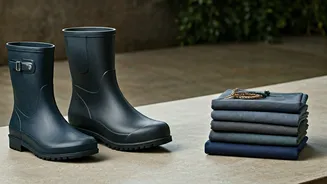
The wrong shoes can ruin your day faster than a sudden downpour. During the monsoon, prioritise footwear that is waterproof, quick-drying, and has anti-slip soles. This is the time to put away your beloved leather, suede, and canvas shoes, as water can cause permanent damage. Instead, opt for stylish rubber or EVA sandals, flip-flops, clogs, and flats. These materials are fully waterproof, easy to clean, and provide a better grip on slippery surfaces. Platforms or wedges can also be a good choice, as they give you a little height to stay above puddles without the instability of a traditional heel. Many brands now offer a wide variety of fashionable and functional rainy-day footwear, so you don't have to sacrifice style for safety.
Accessorise for the Elements
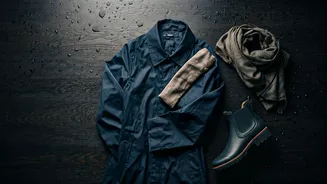
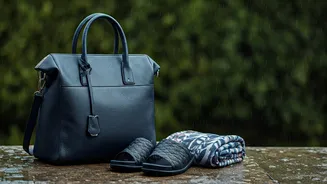
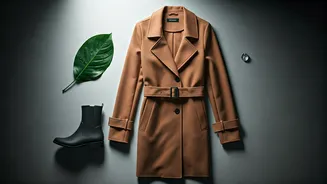
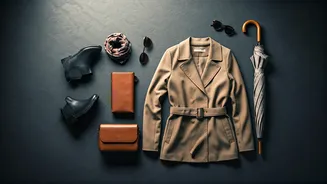
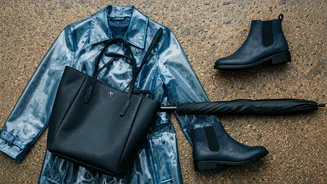
The right accessories can complete your monsoon look while adding another layer of protection. A sturdy, stylish umbrella is, of course, a must-have. Consider investing in a compact one that you can easily carry in your bag. A lightweight, waterproof jacket or trench coat is another essential for staying dry during heavy rain. When it comes to bags, choose one made from a waterproof or water-resistant material like nylon to keep your belongings safe and dry. This isn't the season for delicate leather totes. Finally, keep jewellery minimal. In humid weather, heavy accessories can feel cumbersome and may tarnish due to moisture.