






Thinking Small to Win Big
When we hear about AI, we usually picture enormous systems like the ones powering major search engines and chatbots. These are known as large language models (LLMs). They are powerful but come with high costs, requiring massive data centers and reliable,
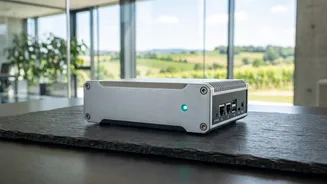
high-speed internet. In contrast, a 'small model' or Small Language Model (SLM) is designed for efficiency. These are compact AI systems trained on more specific, targeted data. This specialization allows them to run on devices with limited processing power, such as a basic smartphone or a simple server, without needing a constant link to the cloud. They are faster, cheaper to run, and can function entirely offline, making them ideal for environments where internet access is patchy or nonexistent.
The World Bank's Vision for Inclusive AI
The World Bank's strategy, officially announced around October 18, 2026, focuses on deploying 'small AI' to tackle development challenges. The goal is to prevent a repeat of past technological revolutions where developing nations were left behind. Instead of countries needing to build billion-dollar infrastructure to compete, they can adopt, adapt, and advance using these more accessible tools. The initiative recognizes that for the benefits of AI to be truly global, they can't depend on Silicon Valley-scale resources. The plan involves a framework to help countries adapt AI to local languages, needs, and data. To kickstart this, the Bank has allocated significant funding for pilot projects in target countries across Africa and Asia, with the first deployments expected in early 2027.
How Small AI Bridges the Digital Divide
As of 2025, over two billion people remained offline, with internet use in low-income countries far below that of high-income nations. This digital divide is a major barrier to accessing modern services. Small, offline models sidestep this problem entirely. For example, a healthcare worker in a remote clinic could use a handheld device with a small AI model to get help screening for diseases like tuberculosis without needing broadband. Similarly, a farmer in a rural village could use a basic smartphone to take a picture of a crop and have an AI model diagnose pests or diseases, providing advice in a local language. These applications deliver crucial expertise directly to the people who need it, on the devices they already have, transforming service delivery in areas that have been historically underserved.
From Theory to Real-World Impact
The potential applications span critical sectors. In agriculture, beyond pest detection, AI can offer smallholder farmers optimized weather forecasts and soil analysis to improve crop yields. In education, lightweight AI tutors that work offline can provide personalized lessons to students, helping to close learning gaps. For financial services, small models can enable credit scoring for microfinance institutions that serve unbanked populations, fostering economic inclusion. These solutions are not just theoretical; early examples are already showing results. The World Bank's analysis suggests this approach could significantly accelerate GDP growth in low-income countries over the next decade.
Challenges and the Path Forward
Despite the promise, the path isn't without obstacles. A key challenge is ensuring that these specialized models are powerful and accurate enough for their specific tasks. There are also concerns around data privacy and security, as even offline models handle sensitive information. Building confidence and creating the right regulatory frameworks will be crucial for widespread adoption. The World Bank's strategy aims to address this by helping countries build the legal and regulatory foundations for responsible AI use. The initiative is not just about providing technology, but about creating an entire ecosystem—including workforce training, stronger data systems, and public-private partnerships—to ensure the benefits are sustainable and shared by all.