


A UNESCO World Heritage Treasure
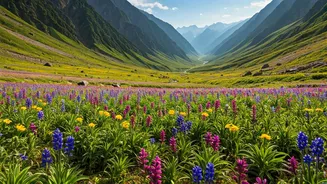
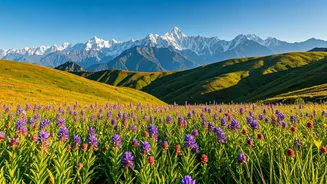
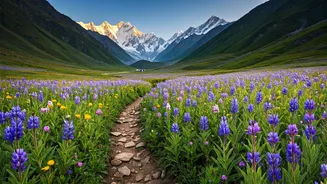
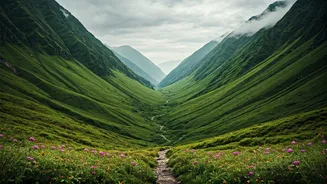
Nestled in the Chamoli district of Uttarakhand, the Valley of Flowers National Park is more than just a beautiful destination; it's a UNESCO World Heritage Site. This alpine valley, set against the majestic backdrop of snow-capped peaks like Nanda Devi,
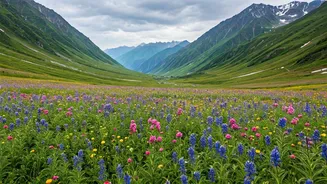
is home to a stunning diversity of endemic alpine flowers. For a few months each year, it awakens from its snowy slumber, and meadows burst forth with over 500 species of flora, including exotic and medicinal varieties. This natural spectacle, accessible only on foot, has drawn adventurers, botanists, and spiritual seekers for decades, ever since it was discovered by British mountaineer Frank S. Smythe in 1931.
The Magic of the Monsoon Bloom
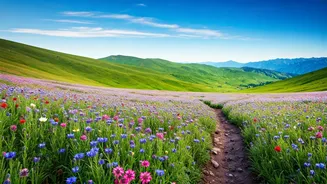
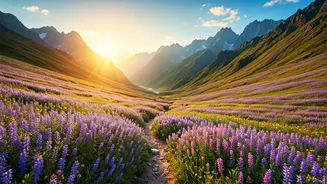
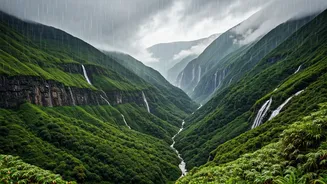
The Valley of Flowers is a monsoon trek, a concept that might seem counterintuitive. But it is precisely the life-giving rains from July to September that trigger this botanical explosion. The park officially opens to the public around the beginning of June and closes in early October, but the peak blooming period is from mid-July to mid-August. During this window, the valley is a kaleidoscope of colours. You can expect to see vibrant carpets of Balsam, Geraniums, and Forget-Me-Nots, alongside the iconic Brahma Kamal (the state flower of Uttarakhand), the elusive Blue Poppy, and the Cobra Lily. The landscape is a living canvas, changing its hues almost weekly as different species come into bloom.
The Trek Itself: What to Expect
The journey to the Valley of Flowers is a rewarding challenge. The trek begins from Pulna village, which is a short drive from the town of Joshimath. From Pulna, it's a 9-kilometre trek to Ghangaria, the bustling base camp for both the Valley of Flowers and Hemkund Sahib. This part of the trail is well-paved but involves a steady ascent alongside the Pushpawati River. After an overnight stay in Ghangaria, the trek to the valley itself begins. It’s a relatively moderate 4-kilometre walk from Ghangaria to the entry gate of the park. Once inside, you are free to explore the 5-6 kilometres of meadows at your own pace. The trail is gentle, but the high altitude (the valley sits at around 3,600 metres) means you must walk slowly and stay hydrated.
A Practical Guide to Your Visit
Proper planning is key to enjoying this trek. You’ll need to obtain a permit from the Forest Department checkpoint just beyond Ghangaria; these are issued on a daily basis. Ghangaria offers basic accommodation in guesthouses and hotels, but it’s wise to book in advance during the peak season. Your packing list is crucial: invest in sturdy, waterproof trekking shoes with good grip. A waterproof jacket and pants are non-negotiable, as rain is a certainty. Pack in layers, as the weather can change rapidly. A daypack, water bottle, sunscreen, hat, and basic first-aid kit are also essential. Remember, there are no facilities inside the valley, so you must carry your own water and snacks, and importantly, carry all your trash back out with you.
Bonus Trek: The Ascent to Hemkund Sahib
Most trekkers who make it to Ghangaria use it as a base to visit two incredible destinations. After exploring the Valley of Flowers, many dedicate the next day to the pilgrimage trek to Hemkund Sahib. This is a much steeper and more demanding 6-kilometre climb to a high-altitude glacial lake and revered Sikh Gurudwara, situated at an altitude of 4,300 metres. The path is challenging, but the spiritual atmosphere and the breathtaking views of the lake, surrounded by seven snow-clad peaks, make it an unforgettable experience. Combining both treks offers a perfect blend of natural beauty and spiritual solace.