

The AI Co-Pilot Is Already Here
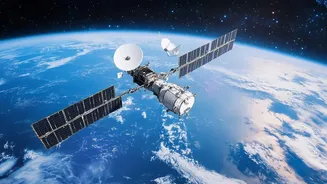
Artificial intelligence in space is no longer science fiction; it's a rapidly expanding reality. Space agencies like NASA and ISRO are already using AI to make missions safer, more efficient, and more autonomous. For instance, AI-powered navigation was
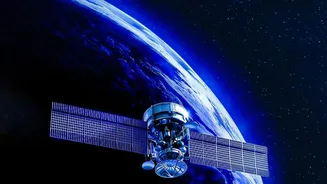
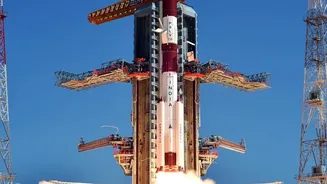
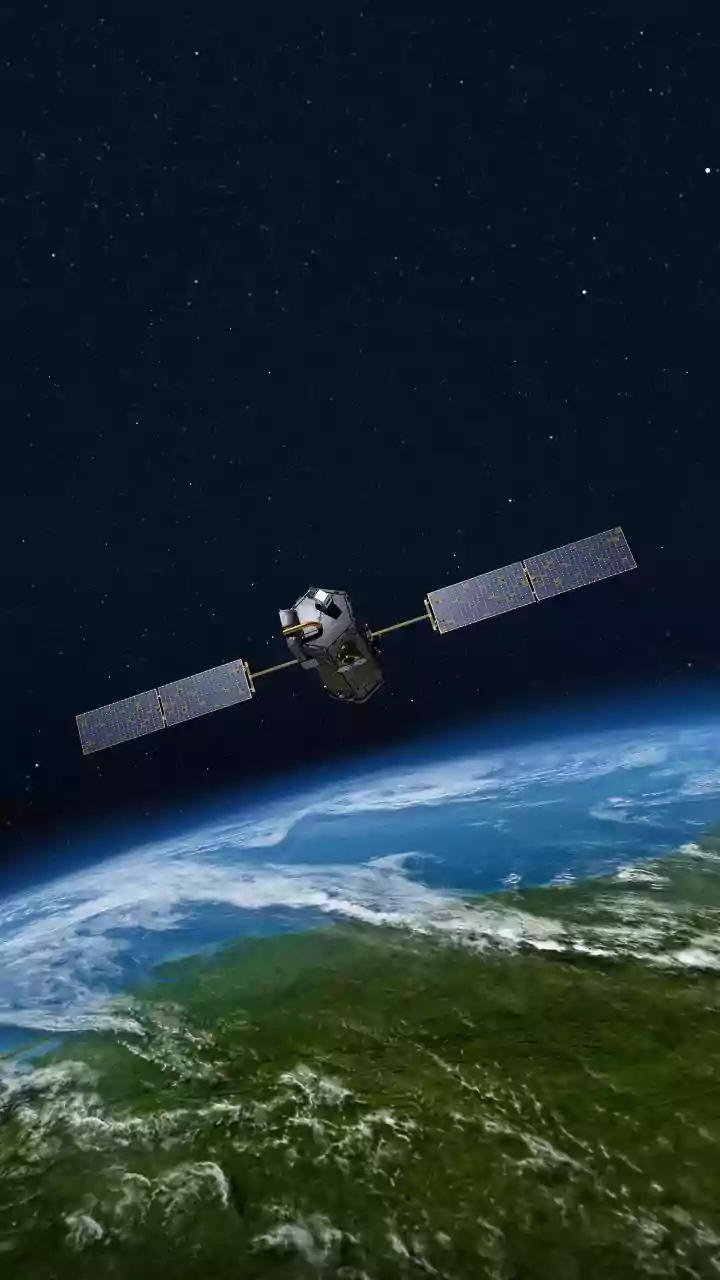
crucial for the safe landing of ISRO's Chandrayaan-3 mission, allowing the lander to analyze the lunar surface and pick a safe spot in real-time. On Mars, NASA's Perseverance rover uses AI to drive autonomously, analyzing terrain and navigating around obstacles without constant commands from Earth. This 'edge AI'—where processing happens on the spacecraft itself—is vital for deep space missions where communication delays can take minutes or hours. Beyond navigation, AI is used to monitor the health of satellites, predict equipment failures before they happen, and manage complex swarms of satellites to optimize communication and Earth observation.
Smarter Decisions in Orbit
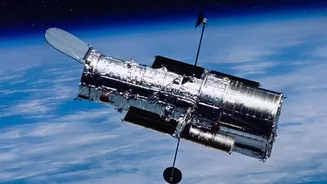
The amount of data being sent back from space is staggering. AI and machine learning algorithms are becoming essential tools for sifting through this cosmic data firehose. They can spot anomalies, classify celestial objects, and help scientists discover things that would otherwise be missed, such as identifying new exoplanets from telescope data. For instance, NASA's ExoMiner system, a deep learning program, has helped validate hundreds of new planets by analyzing data from the Kepler telescope. This ability extends to Earth observation, where AI can process satellite imagery to monitor climate change, track deforestation, or provide real-time data during natural disasters. In India, ISRO has also leveraged AI in its humanoid prototype, Vyom Mitra, designed to assist astronauts on future missions like Gaganyaan by monitoring life support and performing procedures.
The Quantum Leap for Space Problems
While AI is the present, quantum computing is the paradigm-shifting future. Unlike classical computers that use bits (0s and 1s), quantum computers use 'qubits' that can be both 0 and 1 simultaneously. This allows them to explore a vast number of possibilities at once, making them incredibly powerful for solving specific, complex problems that are currently impossible for even the fastest supercomputers. For space infrastructure, this could be revolutionary. Potential applications include designing ultra-lightweight and durable new materials for spacecraft, optimizing complex trajectories for missions to distant planets, and managing the operations of massive satellite mega-constellations. While practical quantum computers are not yet ready to be flown in space, research on the ground is laying the groundwork for these future applications.
Unlocking Deeper Cosmic Mysteries
The synergy between AI and quantum computing holds even greater promise. Quantum machine learning could analyze scientific data from sources like the James Webb Space Telescope in entirely new ways, potentially revealing subtle patterns in cosmic phenomena that current AI would miss. Furthermore, quantum sensors could offer unprecedented precision for navigation and scientific measurement. These sensors could detect minute variations in gravity fields to map planets and asteroids with incredible detail or act as ultra-precise clocks for satellite navigation systems. Quantum communications also promise a new level of security for data transmitted between satellites and Earth, using the principles of quantum physics to create virtually unhackable links. This is a critical step for securing both commercial and national security assets in space.