




From Kerala: Puttu and Kadala Curry
Travel south to Kerala, and you'll be greeted by the sight of Puttu for breakfast. This unique dish consists of steamed cylinders of ground rice layered with fresh coconut. Traditionally prepared in a special 'puttu kutti' vessel, which was originally
a bamboo shell, it has a soft, crumbly texture. It is most famously paired with Kadala Curry, a flavourful and spicy curry made from black chickpeas (kala chana) cooked in a roasted coconut gravy. The combination of the mild, slightly sweet puttu with the robust, spicy curry is a breakfast experience that is both comforting and iconic to Malayali households.
From Gujarat: Methi Thepla
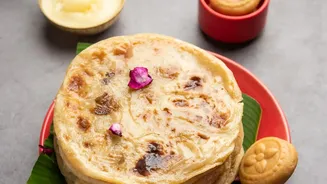
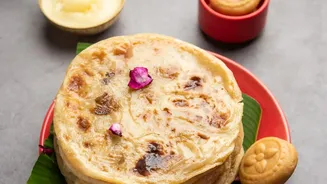
In the western state of Gujarat, the morning often begins with the aroma of freshly made Methi Thepla. These are soft, thin flatbreads made from whole wheat flour, gram flour (besan), fresh fenugreek leaves (methi), and a blend of spices. Yoghurt is often added to the dough to ensure the theplas remain soft. Unlike a paratha, theplas are much thinner and are a staple in most Gujarati homes, enjoyed not just for breakfast but also as a snack or a travel food, as they stay fresh for days. They are typically served with plain curd, pickles, or a hot cup of tea, making for a nutritious and flavourful start to the day.
From Bengal: Luchi and Alur Dom
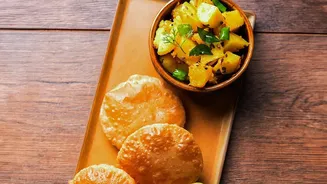
A quintessential Sunday breakfast in many Bengali homes is the indulgent combination of Luchi and Alur Dom. Luchi is a deep-fried, fluffy bread made from all-purpose flour (maida), which makes it distinctively white and softer than a whole-wheat puri. It puffs up beautifully when fried. This is served with Alur Dom, a slow-cooked potato curry. Baby potatoes are first fried and then simmered in a lightly spiced, slightly sweet gravy made with onions, tomatoes, ginger, and aromatic spices. It’s a celebratory meal that feels both special and deeply traditional.
From Himachal Pradesh: Siddu
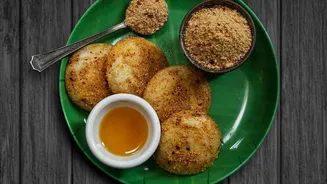
Head to the mountains of Himachal Pradesh, and you will find Siddu, a heartwarming steamed bread. Made from a yeasted wheat flour dough, Siddu is a type of filled bun. The fillings can be savoury or sweet. A popular savoury version uses a paste of urad dal, walnuts, or poppy seeds, seasoned with local spices. The filled buns are then steamed until they are soft and fluffy. Siddu is traditionally served hot with a generous dollop of desi ghee, mint chutney, or even a dal. It’s a dish perfectly suited for the cold climate, providing a filling and comforting meal.
From Maharashtra: Dadpe Pohe
While Maharashtra is famous for Kanda Pohe, a lesser-known but equally delicious variant is Dadpe Pohe. Unlike its cooked cousin, Dadpe Pohe is a no-cook dish. It uses thin flattened rice (poha), which is mixed with freshly grated coconut, finely chopped onions, lemon juice, and salt. The name comes from the Marathi word 'dadapne', meaning 'to press', as the mixture is covered and pressed down for a few minutes to allow the poha to soften by absorbing moisture from the onions and coconut. A final tempering of mustard seeds, curry leaves, and green chillies is poured over the top, adding a flavourful crunch.
From Assam: Jolpan
In Assam, breakfast is often a simple, no-cook affair known as Jolpan. It isn't a single dish but a collection of different forms of rice served together. A typical Jolpan includes items like chira (flattened rice), muri (puffed rice), and kumol saul (a unique soft rice that just needs soaking in warm water). These are commonly served with thick curd (doi) and jaggery (gur). Often accompanied by various pithas (rice cakes), Jolpan is deeply connected to cultural festivals like Bihu and represents a breakfast that is light, seasonal, and rooted in the agricultural rhythms of the region.