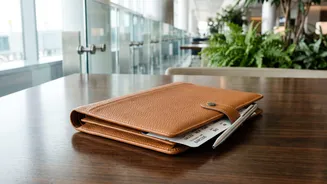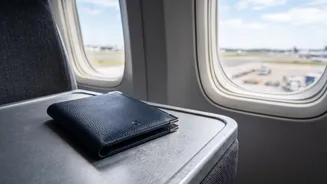







It’s a heart-sinking moment: you’ve landed, left the airport, and suddenly realise your tablet, headphones, or favourite jacket is still on the plane. But what happens next? There is a surprisingly organised system that kicks into gear.
The First Sweep
The journey of
your lost item begins the moment the last passenger steps off the aircraft. Before the next flight boards, cleaning and cabin crews conduct a thorough sweep of the entire cabin. They check seat-back pockets, overhead bins, under seats, and in lavatories for any forgotten belongings. This is the first and most critical step in the recovery chain. If you realise your mistake while still in the terminal, it's crucial to alert an airline agent at the gate immediately. If the plane hasn't departed, there's a good chance an employee can retrieve the item for you on the spot.
Logging the Lost
Once an item is found, it doesn't just get tossed into a random box. Airline staff hand it over to their ground team, who then transports it to either the airline's own lost and found office or the airport's central facility. Here, each item is logged into a database. Staff record a detailed description, including brand, colour, size, and any unique identifying marks. They also note where and when it was found, including the flight number and date. This cataloguing process is what makes a successful reunion possible. Without these precise details, matching a lost phone to its frantic owner would be nearly impossible.
How to File a Claim
The responsibility now shifts to you. As soon as you can, you must file a lost item report with the airline. Nearly all major carriers have a dedicated online form on their website for this purpose. Be as specific as possible in your description. Don't just say 'black backpack'; describe its brand, size, and any unique contents or marks. If it's an electronic device, including the serial number is extremely helpful. You'll also need to provide your flight details, including the date, flight number, and your seat number if you remember it. Once submitted, you will typically receive a reference or tracking number to monitor the status of your claim.
The Matching Game
Behind the scenes,
the airline's lost and found department is playing a matching game. They compare the details in your submitted report against the items logged in their inventory. An exact match between your description and a logged item triggers a notification,
usually via email. This is why a detailed report is so important. A vague claim for 'a pair of glasses' is unlikely to succeed,
but a claim for 'blue-framed Ray-Ban Wayfarers with a scratch on the left lens' has a much higher chance of success. Some systems are even using AI to help parse descriptions and suggest likely matches.